Getting out of bed shouldn’t feel like a daily weather report for your knees. Yet, for millions of adults over the age of 50, that familiar, dull ache in the joints has become an uninvited part of the morning routine.
For decades, the standard playbook for managing aging joints was highly predictable: take over-the-counter pain relievers, try a basic glucosamine chondroitin capsule, and simply accept that slowing down is an inevitable tax collected by time.
But over the last few years, a major shift has occurred in nutritional science. As researchers look deeper into the cellular mechanics of aging tissues, standard generic joint blends are increasingly being left behind.
Instead, a specific botanical compound is currently taking center stage in conversations across the wellness community.
It isn’t a synthetic pharmaceutical or a passing chemical fad. It is an ancient plant extract with modern clinical proof, and it is fundamentally changing how adults over 50 protect their mobility.
That ingredient is Boswellia serrata, more commonly known as Indian Frankincense.
What is Boswellia Serrata?
To appreciate why Boswellia has caught the attention of researchers and health-conscious adults alike, it helps to look at its origins.
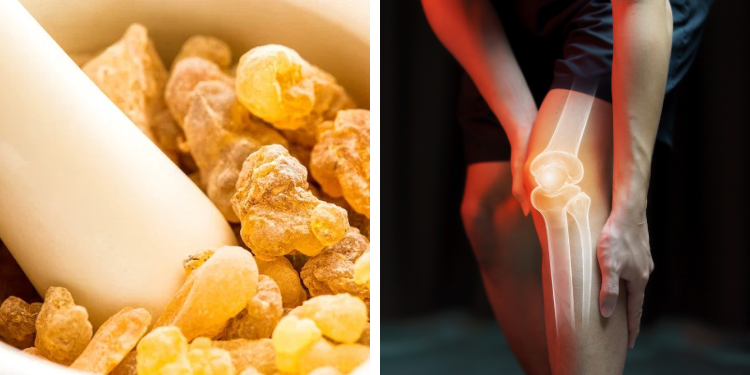
This isn’t a laboratory creation; it is a purified resin harvested from the bark of the Boswellia serrata tree, a rugged perennial that thrives in the dry, mountainous regions of India, North Africa, and the Middle East.
When the bark of this tree is scraped, it secretes a thick, aromatic sap that hardens into golden droplets. For thousands of years, traditional Ayurvedic practitioners prized this purified resin as a cornerstone remedy for soothing systemic heat and physical discomfort.
Today, modern analytical laboratories have confirmed exactly what these ancient traditions observed: the resin is dense with a unique family of active compounds called boswellic acids.
The Molecular Science: How It Protects the Joint Matrix
To understand why traditional options like glucosamine often fall short, you have to look at the primary underlying issue within aging joints.
While glucosamine focuses on providing the basic building blocks of cartilage, it does very little to calm the active, destructive cellular processes that break that cartilage down in the first place.
This is where Boswellia serrata excels. Its primary mechanism of action targeting joint comfort comes down to its interaction with a highly specific enzyme family:
When joint tissues experience wear and tear, the body naturally produces an enzyme known as 5-lipoxygenase (5-LOX).
Left unchecked, 5-LOX triggers the production of aggressive inflammatory molecules called leukotrienes. These leukotrienes act like a corrosive drip inside the joint capsule, continuously attacking healthy cartilage matrix cells and sensitizing nearby nerve endings.
The active components in Boswellia – particularly a powerhouse boswellic acid known as AKBA (3-O-acetyl-11-keto-beta-boswellic acid) – bind directly to the 5-LOX enzyme.
By blocking this specific pathway, Boswellia acts as a powerful brake on leukotriene production, helping shield delicate cartilage from premature breakdown and naturally encouraging comfortable, fluid movement.
4 Reasons Adults Over 50 Are Making the Switch
The sudden surge in popularity surrounding Boswellia isn’t just driven by laboratory test tubes; it is driven by the practical, real-world benefits that individuals experience when incorporating it into their daily routines.
1. Strikingly Fast Structural Comfort
One of the greatest frustrations with traditional joint health ingredients like glucosamine is the long wait time; it can often take up to 8 to 12 weeks of consistent daily usage before an individual notices even a minor shift in comfort levels.
In stark contrast, standardized Boswellia serrata extracts containing high concentrations of AKBA have demonstrated a much faster timeline.
In double-blind, placebo-controlled clinical trials, participants using specialized Boswellia extracts reported significant, measurable improvements in joint comfort and functional mobility in as little as 5 to 7 days.
2. A Gentle, Stomach-Friendly Profile
Many adults over 50 find that long-term reliance on over-the-counter NSAIDs (non-steroidal anti-inflammatory drugs) can eventually take a heavy toll on their digestive health, leading to issues like stomach lining irritation, acid reflux, or general digestive upset.
Because Boswellia suppresses discomfort through the clean 5-LOX pathway rather than interfering with the COX enzymes (which protect the stomach lining), it offers a highly sustainable, long-term option that delivers impressive results without irritating sensitive digestive tracks.
3. Reduced Morning Stiffness and Increased Range of Motion
The true metric of joint health isn’t just the absence of discomfort; it is the freedom of fluid movement. As joints age, the synovial fluid that lubricates the capsule can thin out, leading to that distinct “frozen” feeling upon waking.
By calming the local inflammatory environment within the capsule, Boswellia helps protect the integrity of the surrounding synovial fluid.
Users frequently report a substantial reduction in morning stiffness, making it easier to bend down, climb stairs, and walk comfortably without that lingering feeling of resistance.
4. Preservation of Existing Cartilage Architecture
Beyond simply soothing active physical discomfort, long-term studies suggest that boswellic acids play an important role in preserving the physical architecture of the joint.
By inhibiting the specific enzymes responsible for breaking down collagen type II – the primary structural material that forms a smooth cushion over the ends of your bones – Boswellia helps defend your remaining cartilage from excessive wear and tear.
How to Choose a High-Quality Boswellia Supplement
If you walk into a natural health store or browse online wellness spaces, you will find hundreds of products containing Boswellia.
However, not all extracts are created equal. To ensure you are investing in a product capable of delivering genuine, clinical-grade results, follow this precise purchasing strategy:
Maximizing the Impact: Synergistic Wellness Pairings
While Boswellia serrata is an exceptional standalone performer, nutritional science has shown that its structural benefits can be amplified when paired strategically with other targeted botanicals.
| Synergistic Partner | Primary Target | Why the Combination Works |
| Curcumin (Turmeric) | Broad-Spectrum Comfort | While Boswellia cleanly shuts down the 5-LOX pathway, Curcumin targets the parallel COX-2 and NF-kB pathways, creating a highly efficient, comprehensive shield against joint discomfort. |
| Type II Collagen | Cartilage Rebuilding | Provides the exact raw material building blocks needed to support the structural matrix while Boswellia keeps the local environment calm. |
| Ginger Extract | Enhanced Circulation | Improves localized blood flow around the joint capsule, speeding up the delivery of active nutrients to avascular cartilage tissue. |
Pro Tip: Because boswellic acids are naturally fat-soluble compounds, you can easily double their absorption rate by taking your supplement alongside a meal that contains healthy fats, such as a morning avocado, eggs, or a spoonful of high-quality olive oil.
Essential Safety and Dosage Foundations
Before introducing any highly active botanical extract into your daily wellness routine, it is essential to establish a baseline of safe, intelligent usage guidelines:
-
Optimal Dosing Windows: Clinical studies investigating standardized Boswellia serrata extracts typically utilize a daily dose ranging from 100 mg to 250 mg for specialized, high-AKBA extracts, or 300 mg to 500 mg for general standardized extracts. It is usually best to split this into two smaller doses taken with morning and evening meals.
-
Pharmaceutical Interactivity: While Boswellia features an excellent safety profile, its natural circulatory and immune-modulating properties mean that individuals currently taking prescription blood thinners or immunosuppressive medications should always consult their primary healthcare physician before starting a new routine.
Maintaining independent mobility and joint comfort after the age of 50 doesn’t have to mean relying entirely on temporary synthetic fixes.