Hydrangeas produce some of the most spectacular, head-turning blossoms in the summer garden. Whether you grow the massive, cloud-like blue mopheads of classic French varieties or the cone-shaped, lime-green flowers of modern panicle shrubs, their presence defines the peak of the warm season.
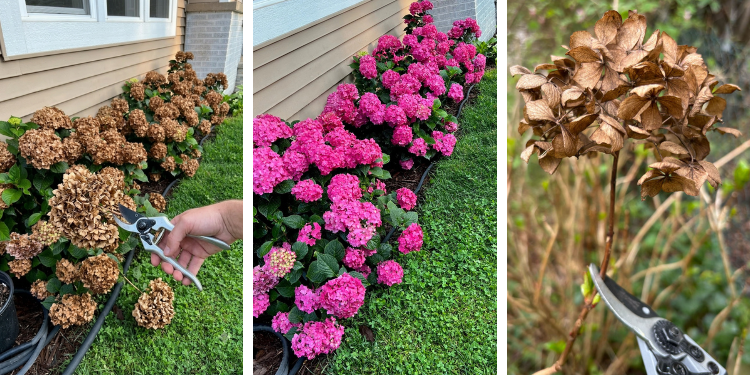
But as late summer approaches and those vibrant flowers begin to fade into shades of dusty pink, rust, or paper-brown, gardeners instinctively reach for their bypass pruners to clean up the shrub.
This is the exact moment a critical, well-intentioned mistake can occur.
Deadheading hydrangeas – the process of removing faded flowers to keep the plant looking tidy—is not a one-size-fits-all chore.
If you snip a spent bloom at the wrong location, or on the wrong type of hydrangea, you risk accidentally cutting away the microscopic flower buds for next summer. The result? A perfectly healthy, lush green bush next year that fails to produce a single blossom.
Understanding the biology of your specific hydrangea is the key to preventing this common gardening setback.
The Golden Rule: Old Wood vs. New Wood
To deadhead a hydrangea safely, you must first determine how your specific shrub sets its flower buds.
Hydrangeas are strictly divided into two biological categories: those that bloom on old wood and those that bloom on new wood.
1. The High-Risk Group: Old Wood Bloomers
This category includes the incredibly popular Bigleaf hydrangeas (Hydrangea macrophylla – such as traditional pink/blue mopheads and lacecaps), Oakleaf hydrangeas (Hydrangea quercifolia), and Mountain hydrangeas (Hydrangea serrata).
These plants produce their flower buds for the following year during late summer and autumn (typically between August and October).
These microscopic buds sit quietly on the green stems just beneath the current fading flowers, overwintering on the brown, woody stalks (the “old wood”).
The Risk: If you wait until autumn or winter to deadhead these varieties, or if you cut too deeply down the stem during the summer, you will inadvertently slice off next year’s flowers.
2. The Forgiving Group: New Wood Bloomers
This category includes Panicle hydrangeas (Hydrangea paniculata – like ‘Limelight’ or ‘PeeGee’) and Smooth hydrangeas (Hydrangea arborescens – like the classic ‘Annabelle’).
These shrubs wake up in the spring, push out brand-new green stems, and then develop flower buds on that fresh growth (the “new wood”) before blooming a few weeks later.
The Safe Zone: Because these plants don’t even create their flower buds until spring, you can deadhead or prune them late in the autumn, winter, or early spring without any risk of losing next year’s crop.
How to Safely Deadhead Old Wood Hydrangeas
If you are caring for a Bigleaf, Lacecap, or Oakleaf variety and want to tidy up the fading blooms in mid-to-late summer, you must use a precise, conservative cutting technique.
The Winter Alternative: Leave the Blooms Alone
If you are ever unsure which type of hydrangea you have in your yard, the absolute safest option is to do nothing at all during the summer and autumn.
Allowing the spent flower heads to remain on the plant through the winter is actually a highly beneficial practice for several reasons:
-
Frost Protection: The dried, paper-like flower skeletons act as natural structural umbrellas, catching heavy snow and shielding the delicate terminal buds lower on the stem from harsh, drying winter winds and deep frosts.
-
Visual Interest: Dried hydrangea blooms turn a beautiful antique sepia or dusty pewter color, adding structural texture and architectural interest to an otherwise bleak, flat winter landscape.
-
Wildlife Support: The dense, dried flower heads offer excellent micro-habitats and shelter for beneficial overwintering garden insects.
If you choose this hands-off route, simply wait until early spring when the plant begins to break dormancy.
As fresh green growth starts to emerge at the base, you can safely snap or snip off the brittle, old winter-worn flower heads with zero risk to the new season’s growth.
Quick Reference: Deadheading vs. Structural Pruning
It helps to remember that deadheading is purely the cosmetic removal of faded flowers. It is entirely different from structural pruning, which involves cutting the bush down to manage its overall size, shape, or wood health.
While new-wood panicle varieties can be cut back aggressively by one-third every winter to encourage massive blooms, old-wood bigleaf varieties should almost never face major structural pruning unless you are removing dead, gray wood or opening up the center of an overgrown, crowded bush to improve air circulation.