July is traditionally viewed as a month for coasting in the garden. As the mid-summer sun reaches its zenith, conventional wisdom counsels against introducing new plants to the landscape.
The combination of scorching afternoon temperatures, dry soils, and high evaporation rates can quickly spell disaster for tender nursery stock, leading to severe transplant shock or withered root systems.
Here are 12 exceptionally heat-tolerant plants you can confidently add to your landscape this month without a shred of gardener’s regret.
12 High-Endurance Plants for Mid-Summer Success
These twelve resilient varieties span the categories of hardy perennials, ornamental grasses, and tough-as-nails annuals, all uniquely equipped to thrive when the heat is on.
1. Purple Coneflower (Echinacea purpurea)
A quintessential icon of the North American prairie, the Coneflower is fundamentally bulletproof under a baking July sun.
Its large, daisy-like blossoms feature prominent, spiky copper-colored central cones that serve as an open buffet for native pollinators and migrating goldfinches.
Once established, its root structure can withstand prolonged dry spells without showing a single sign of distress.
-
Sun Profile: Blazing Full Sun (6+ hours of direct light daily).
-
July Operational Strategy: Select nursery pots that exhibit plenty of tight, unopened flower buds rather than plants already in full bloom. This encourages the specimen to focus its primary sugars on root anchoring rather than keeping old petals alive.
2. Black-Eyed Susan (Rudbeckia fulgida)
Bringing an unmatched blanket of saturated golden-yellow color to mid-summer borders, Rudbeckia is a foundational component of a resilient landscape.
Its coarse, raspy leaves are a masterful evolutionary design: the tiny surface hairs significantly lower water loss caused by hot, sweeping summer breezes.
-
Sun Profile: Full Sun to Light, Open Shade.
-
July Operational Strategy: Maintain a generous 18-to-24-inch spacing between plants. Because July can bring sudden summer humidity, adequate air movement around the coarse foliage is critical for preventing powdery mildew.
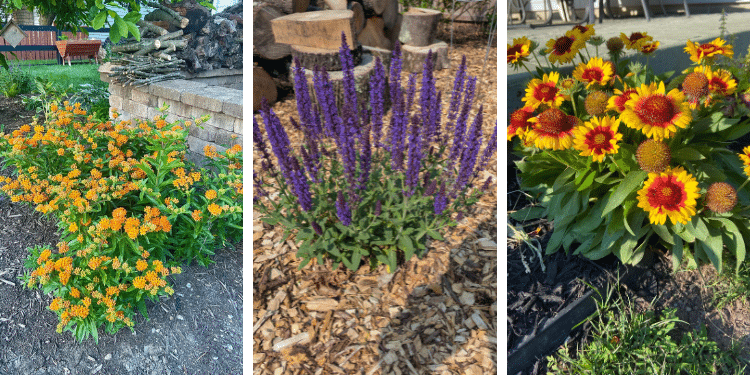
3. Blanket Flower (Gaillardia x grandiflora)
If your garden features sandy, rocky, poor soil that bakes into a hard crust, Gaillardia is your solution.
These short-lived but fiercely heavy-blooming perennials produce striking, multi-toned blossoms with bands of rich crimson, hot orange, and bright yellow tips.
They genuinely thrive on neglect and will develop weak, floppy stems if planted in overly rich, pampered garden loam.
-
Sun Profile: Unchecked Full Sun.
-
July Operational Strategy: Backfill the planting hole with a handful of coarse poultry grit, pea gravel, or sand if your native ground contains heavy clay. Gaillardia requires immaculate drainage around its crown to prevent rot.
4. Autumn Joy Stonecrop (Hylotelephium ‘Autumn Joy’)
Sedums are the undisputed royalty of low-water, low-maintenance landscaping. As true succulents, they hoard water reserves inside their thick, rubbery, pale-green leaves.
In July, ‘Autumn Joy’ presents clean, broccoli-like green flower heads that slowly morph into soft, dusty pink by August, before finalizing a deep, rich rust-red code by late autumn.
-
Sun Profile: Full Sun.
-
July Operational Strategy: Avoid mixing any organic compost or high-nitrogen fertilizer into the planting site. Rich inputs cause sedums to bolt too quickly, resulting in weak, top-heavy stems that split wide open under their own weight.
5. Yarrow (Achillea millefolium)
Yarrow is a historic cottage garden powerhouse that features flat-topped flower clusters hovering over delicate, fern-like green or silver foliage.
These wide flower heads serve as ideal landing pads for beneficial predatory insects like lacewings, ladybugs, and hoverflies.
The highly divided, feathery nature of its leaves dramatically minimizes the total surface area exposed to direct overhead sunlight, making it highly efficient at moisture conservation.
-
Sun Profile: Sharp Full Sun.
-
July Operational Strategy: Shear off the initial flower heads by half immediately upon planting. This mimics a seasonal pruning cycle and coaxes the plant to rapidly redirect its cellular focus downward.
6. Russian Sage (Salvia yangii / Perovskia atriplicifolia)
With its airy, cloud-like wands of lavender-blue flowers and finely cut, silvery-white stems, Russian Sage introduces exceptional texture and cool tones to a sun-baked landscape.
The striking silver coloring of the woody stems isn’t just ornamental—it acts as a physical mirror, bouncing harsh UV rays away from the plant to keep internal tissue temperatures cool.
-
Sun Profile: Intensely Hot Full Sun.
-
July Operational Strategy: Dig a hole twice as wide as the nursery container but exactly the same depth. Planting Russian Sage too deeply can trap moisture against the woody base, leading to crown decline.
7. Perennial Sage (Salvia nemorosa)
Perennial salvias are compact, upright dynamos that produce dense spikes of rich purple, deep blue, or vivid pink flowers.
The leaves are rich in volatile essential oils that give off a distinct, herbal aroma when brushed against.
This oil chemistry serves a dual purpose: it deters browsing deer and rabbits while forming a protective chemical shield that reduces water evaporation through the leaf pores.
-
Sun Profile: Full Sun.
-
July Operational Strategy: If the nursery plant you purchase looks a bit spent or leggy from sitting on a hot garden center asphalt lot, shear the entire plant back by one-third right after planting. It will reward you with a flush of fresh, emerald-green foliage and a secondary wave of blooms in late August.
8. Butterfly Weed (Asclepias tuberosa)
As a native wildflower displaying striking clusters of neon-orange blossoms, Butterfly Weed is both a visual masterpiece and a vital host plant for the monarch butterfly.
Its primary defense mechanism against intense July heat is a massive, deeply anchoring taproot. This taproot drills past the hot, dry surface soil to pull moisture from deep within the water table.
-
Sun Profile: Full Sun.
-
July Operational Strategy: Choose the permanent home for this plant carefully. Because of its long, fragile taproot, Asclepias tuberosa strongly resents being moved once planted and does not transplant well later in life.
9. Lantana (Lantana camara)
Though grown as an annual in cooler climates and a perennial in frost-free zones, Lantana acts as a non-stop flower factory from the moment the summer heat breaks.
Its dense, confetti-like clusters of red, orange, yellow, and pink flowers thrive in conditions that would cause other annuals to melt. Its rough, leathery, dark green leaves form an unyielding seal against moisture loss.
-
Sun Profile: Unforgiving Full Sun.
-
July Operational Strategy: Lantana is remarkably salt-tolerant, making it an exceptional choice for planting along sidewalks, driveways, or curbsides where heat radiates intensely from the pavement.
10. Purple Prairie Clover (Dalea purpurea)
This native legume is an elegant addition to any naturalistic or meadow-style garden design. It features cone-like purple flower heads packed with bright golden anthers that open sequentially from the bottom up.
As a legume, its deep root system naturally fixes nitrogen in the soil, allowing it to stay lush and green in lean, un-amended substrates throughout the dog days of summer.
-
Sun Profile: Full Sun.
-
July Operational Strategy: Do not overwater this plant once its initial two-week settling period is over. It prefers its soil on the dry side and can adapt to extreme mid-summer droughts without dropping its leaves.
11. Blue Fescue (Festuca glauca)
Ornamental grasses add critical architectural movement to summer beds, and Blue Fescue is a stellar choice for hot borders.
Forming tight, symmetrical tufts of icy, needle-like blue blades, this grass features a heavy, waxy coating called a glaucous bloom. This wax reflects sunlight and prevents precious internal moisture from escaping via transpiration.
-
Sun Profile: Full Sun.
-
July Operational Strategy: Plant Blue Fescue along the front edges of your garden paths or rock gardens. It requires exceptionally sharp drainage and can decline if crowded out by larger, floppy neighboring plants.
12. Moss Rose (Portulaca grandiflora)
For absolute zero-regret annual performance in July, look no further than Portulaca. This low-growing, succulent ground cover features cylindrical, needle-like leaves and brilliant, paper-thin blossoms that open wide in bright sunlight.
It treats severe heat like an asset, blanketing bare spots, rock walls, or hanging containers with vibrant color when everything else stalls.
-
Sun Profile: Absolute Full Sun.
-
July Operational Strategy: Portulaca has very shallow roots but handles surface heat effortlessly. Simply clear away a small patch of mulch, scratch it lightly into the dirt, and let it take off.
Tips for Success When Planting in July
Summer planting requires a slightly different approach than spring gardening.
Water deeply immediately after planting and continue watering regularly until roots become established.
Applying a layer of mulch around new plants helps:
- Retain moisture
- Reduce soil temperature
- Suppress weeds
- Improve root development
Whenever possible, plant during the early morning or evening when temperatures are cooler.
This reduces transplant shock and helps plants adapt more quickly to their new location.
July is far from too late to add beauty and color to your landscape. In fact, many flowers and perennials actually prefer the warm temperatures and heated soil that midsummer provides.
Plants such as zinnias, lantana, coneflowers, marigolds, salvia, portulaca, Russian sage, and sunflowers often establish rapidly and reward gardeners with months of blooms despite being planted during the hottest part of the year.