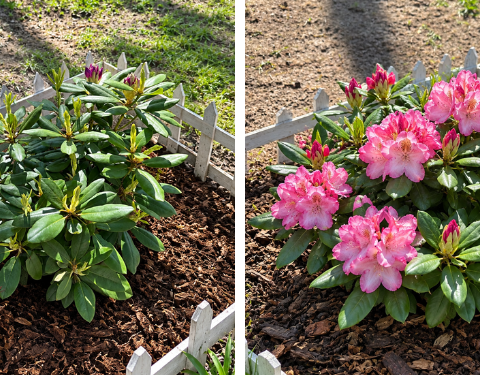
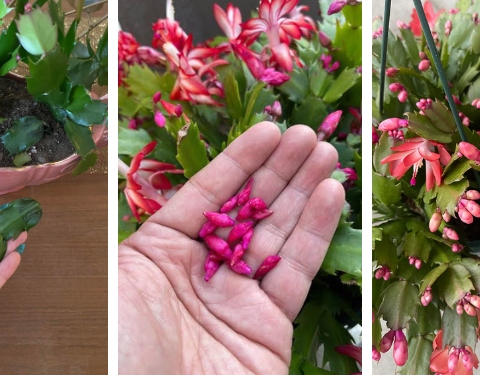
For many gardeners, the dream is simple: a beautiful, full border that looks fresh and intentional all season long.
The reality, however, often includes fallen petals, collapsing stems, constant deadheading, and plants that spread far beyond where they were planted.
This is where plant selection becomes more important than maintenance.
Some flowers naturally create mess – dropping petals, forming heavy seed heads, or flopping after rain.
Others, however, are genetically “well-behaved.” They either hold onto their blooms, drop them cleanly, or maintain structure long after flowering ends.
Choosing these plants allows you to build a border that looks clean, organized, and professionally designed with minimal effort.
In fact, as highlighted in your source material, the secret to a tidy garden is selecting plants that are naturally “self-cleaning” or structurally stable, meaning they maintain their appearance without constant intervention .
What Makes a Plant “Low-Mess”?
Before choosing plants, it helps to understand what creates mess in the first place.
Messy plants typically:
- Drop large amounts of petals
- Collapse under their own weight
- Produce heavy seed heads that require removal
- Spread aggressively into unwanted areas
Low-mess plants behave differently. They:
- Hold their blooms on upright stems
- Fade gradually without dropping debris
- Maintain structure even after flowering
- Grow in defined clumps rather than spreading uncontrollably
These traits reduce the need for constant pruning and cleanup.
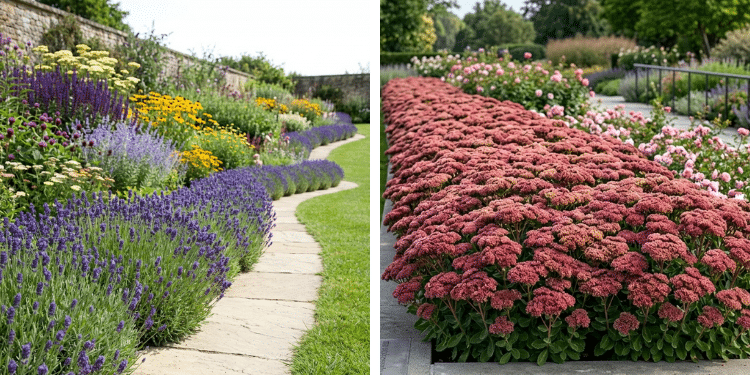
1. Lavender (Lavandula angustifolia)
Lavender is often considered the gold standard for tidy borders.
It grows as a compact, woody perennial with narrow, silvery-green leaves that remain attractive year-round in mild climates. Its flowers rise on stiff, upright stems, creating a clean, structured look.
What makes lavender especially low-maintenance is how it handles its blooms. Instead of shedding petals, the flowers dry in place, fading to a muted tone while staying attached to the plant.
This means you don’t get scattered debris beneath the plant, even after flowering ends.
Lavender also naturally forms a defined shape, making it ideal for edging pathways or creating clear boundaries between lawn and planting areas.
2. Sedum ‘Autumn Joy’ (Hylotelephium)
Sedum is one of the most reliable plants for structure and cleanliness.
It grows in tight, upright clumps with thick stems that rarely bend or collapse. The flower heads develop slowly, changing color from green to pink to copper over time.
Unlike many flowering plants, sedum doesn’t “drop” its blooms. Even when dried, the flower heads remain intact, providing visual interest well into winter.
This makes it a standout choice for gardeners who want a border that looks good beyond the main flowering season.
3. Crane’s Bill Geranium (Geranium ‘Rozanne’)
This hardy perennial is often used as a living ground cover.
It grows in soft, spreading mounds that fill gaps between larger plants, creating a continuous layer of foliage. As noted in your source, many varieties are self-cleaning, meaning faded flowers drop discreetly and are quickly hidden by dense leaves .
Because of this, the plant never looks messy, even during peak blooming.
It also helps suppress weeds, keeping the soil surface covered and tidy.
4. Daylilies (Hemerocallis)
Daylilies are unique in how they manage their blooms.
Each flower lasts only one day, but instead of falling apart dramatically, it fades into a small, unobtrusive form that blends into the plant.
The long, arching leaves create a dense, grass-like clump that hides any spent blooms, keeping the plant looking clean.
Reblooming varieties can produce flowers over an extended period, maintaining color without creating clutter.
5. Salvia ‘May Night’ (Salvia × sylvestris)
Salvia adds vertical structure to a border without the mess.
Its flowers grow on tall, narrow spikes, with each tiny bloom tightly packed along the stem. When the flowering period ends, the entire spike fades uniformly instead of shedding petals.
This gives the plant a neat, consistent appearance throughout its lifecycle.
Another advantage is its strength. Salvia rarely flops, even after rain, helping maintain clean lines in the garden.
6. Coneflower (Echinacea purpurea)
Coneflowers combine beauty with structure.
Their petals surround a firm central cone, which remains intact even after the petals fade. This means the plant continues to look intentional rather than messy.
The upright stems hold their shape well, and the dried seed heads add a sculptural quality to the garden.
They also attract pollinators and birds, adding life without increasing maintenance.
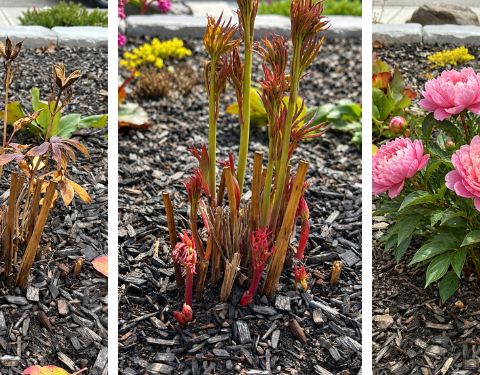
7. Itoh Peonies
Traditional peonies are known for their beauty – but also for their mess. Their large blooms often collapse and drop petals quickly.
Itoh peonies solve this problem.
These hybrids have stronger stems that hold flowers upright, even after rain. The blooms remain elevated and contained, reducing petal drop.
Their foliage also stays healthy and attractive throughout the season, unlike traditional peonies, which can decline quickly.
8. Hostas
Hostas are primarily grown for their foliage, which is one of the best tools for keeping borders neat.
Their broad leaves form a dense canopy that:
- Covers soil
- Suppresses weeds
- Creates a clean visual surface
When they do flower, the stalks are simple and easy to remove, requiring minimal effort.
Hostas are especially valuable in shaded areas where flowering plants may struggle.
9. Coreopsis ‘Moonbeam’ (Coreopsis verticillata)
This variety of coreopsis offers a softer, more refined look.
Its fine, thread-like foliage creates a light, airy texture, while its small flowers appear in abundance.
When blooms fade, they blend into the foliage rather than creating visible debris. This eliminates the need for constant deadheading.
The plant maintains a gentle, flowing appearance that softens hard edges in the garden.
10. Catmint (Nepeta ‘Walker’s Low’)
Catmint forms a soft, rounded mound that spills gently over borders.
Its flowers grow on slender stems that do not drop petals. After the first bloom, a simple trim brings the plant back into shape and encourages new growth.
Because of its growth habit, it naturally hides the soil beneath it, keeping the border looking full and finished.
11. Astilbe
Astilbe is ideal for shaded or moist areas where other plants may struggle.
Its fern-like foliage remains clean and upright, while its plume-like flowers fade gracefully into warm tones rather than collapsing.
Even after blooming, the plant continues to look decorative, maintaining structure and interest.
12. African Lily (Agapanthus)
Agapanthus brings a level of structure that few plants can match.
Its thick, strap-like leaves form a clean base, while tall stems rise above with spherical clusters of flowers.
These flower heads remain intact even as they dry, creating a consistent, architectural look.
The plant grows in defined clumps, making it easy to maintain and position within a border.
Designing a Border That Stays Neat
Choosing the right plants is only part of the process.
To keep borders looking clean:
- Combine upright plants with ground covers
- Use clumping plants instead of spreading ones
- Mix textures for balance
- Maintain spacing to prevent overcrowding
This creates a layered effect where each plant supports the overall structure.
Why Low-Mess Plants Make a Big Difference
Gardens are meant to be enjoyed, not constantly managed.
By choosing plants that maintain their own structure, you:
- Reduce maintenance time
- Keep your garden looking fresh longer
- Avoid constant cleanup
As emphasized in your source, selecting plants that “behave” throughout their lifecycle is the key to a neat, low-maintenance garden .
A beautiful garden doesn’t have to be high-maintenance.
With the right plant choices, you can create borders that stay clean, structured, and visually appealing throughout the entire season.
These 12 low-mess flowers prove that elegance and simplicity can go hand in hand.