July is one of the most colorful months in the garden. Roses are bursting with flowers, coneflowers are attracting pollinators, and containers are overflowing with color.
However, many gardeners notice that by mid-summer, some plants begin slowing down or producing fewer flowers than they did earlier in the season.
One of the simplest ways to keep flowers blooming longer is through deadheading. Deadheading is the process of removing faded or spent blooms before the plant begins producing seeds.
When a flower finishes blooming, the plant naturally shifts its energy toward seed production. By removing old flowers, you encourage the plant to redirect that energy into producing new buds and additional blooms.
While not every flowering plant requires deadheading, many popular garden flowers respond remarkably well to this simple task.
Spending just a few minutes each week removing faded blooms can dramatically extend the flowering season and keep your garden looking vibrant well into late summer and even fall.
Here are eight flowers you should deadhead in July if you want nonstop color for the rest of the season.
1. Roses
Roses are perhaps the most rewarding flowers to deadhead during July. Many modern rose varieties are repeat bloomers, meaning they can produce multiple flushes of flowers throughout the growing season. However, if spent blooms are left on the plant, roses begin forming rose hips, which are seed pods.
Once the plant starts focusing on seed production, flowering often slows considerably.
To deadhead roses, follow the flower stem down to the first set of healthy leaves with five leaflets and make a clean cut just above that point. This encourages the plant to send out new flowering shoots.
Regular deadheading throughout July can significantly increase the number of blooms produced during August and September. It also keeps plants looking neat and prevents petals from dropping onto surrounding foliage where they may contribute to fungal issues.
For gardeners who love having fresh roses for cutting, deadheading often results in stronger stems and larger future blooms.
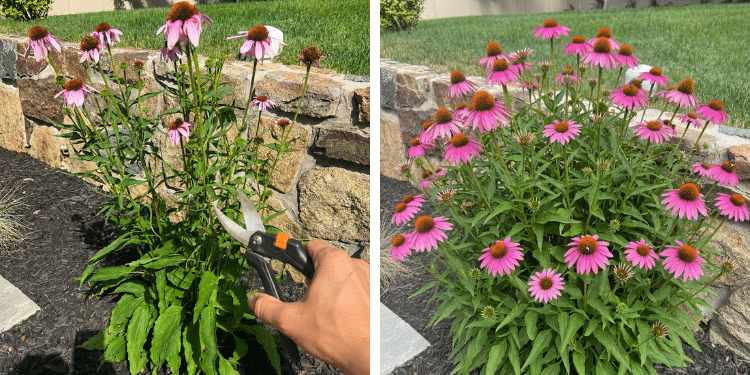
2. Coneflowers (Echinacea)
Coneflowers are famous for their long-lasting blooms and ability to attract bees, butterflies, and other pollinators. While many gardeners leave the seed heads for birds later in the season, removing some spent flowers during July can encourage the plant to continue producing new blooms.
A mature coneflower naturally directs energy toward seed production once the petals begin fading. By cutting off spent blooms before seeds fully develop, the plant often responds by producing additional flowers.
Deadheading also helps maintain a tidier appearance. Old coneflower heads can become dark and ragged, making otherwise healthy plants look tired.
If you enjoy feeding birds in autumn and winter, consider deadheading only some of the flowers. This approach gives you continued summer blooms while still leaving seed heads for goldfinches and other wildlife later in the year.
3. Shasta Daisies
Shasta daisies are classic summer perennials that bloom heavily in early summer but often slow down if faded flowers are ignored.
Each flower stem produces a single bloom, and once that bloom finishes, the plant begins shifting resources toward seed production. Removing spent flowers encourages the plant to continue producing fresh buds.
To deadhead Shasta daisies, simply follow the flower stem down to the nearest set of leaves and cut just above them.
Gardeners who deadhead regularly often enjoy weeks of additional blooms compared to plants left untouched.
The practice also prevents self-seeding and keeps the garden looking fresh throughout the hottest part of summer.
4. Petunias
Petunias are among the most popular annual flowers for containers, hanging baskets, and flower beds. They bloom continuously from spring until frost, but only if they receive regular maintenance.
During July, petunias often become leggy and begin producing fewer flowers because they are spending energy creating seed pods.
Removing faded flowers and developing seed capsules encourages the plant to continue flowering heavily.
For particularly overgrown petunias, gardeners can also trim back a third of the stems in mid-summer. This rejuvenates the plant and often results in an impressive flush of fresh blooms within a few weeks.
Combined with regular watering and feeding, deadheading keeps petunias looking full and colorful all season long.
5. Zinnias
Zinnias are among the easiest flowers to grow and one of the most rewarding to deadhead.
In fact, harvesting zinnias for bouquets essentially acts as deadheading. Every flower you remove encourages the plant to produce even more blooms.
When flowers begin fading, cut the stem back to a healthy set of leaves or side shoots. This stimulates branching and increases flower production.
Many gardeners are amazed at how productive zinnias become when flowers are harvested regularly. A single plant can produce dozens of blooms throughout the season if spent flowers are consistently removed.
Deadheading also prevents plants from becoming cluttered with aging flowers and keeps the garden looking vibrant.
6. Coreopsis
Coreopsis, often called tickseed, is a cheerful perennial that can flower for months when properly maintained.
Without deadheading, many varieties quickly begin producing seeds and flowering slows dramatically.
Removing faded blooms every few days encourages the plant to continue sending up fresh buds. Some gardeners even shear the entire plant lightly after the first major bloom cycle. This often triggers a fresh wave of flowers within a few weeks.
Coreopsis thrives in summer heat and responds exceptionally well to deadheading, making it one of the easiest perennials to keep blooming through late summer.
7. Salvia
Salvia is beloved for its tall spikes of colorful flowers that attract hummingbirds, bees, and butterflies.
After the first flush of blooms fades, many gardeners assume the plant is finished for the season. In reality, deadheading can trigger a second and sometimes even third flowering cycle.
Once the flower spikes begin fading, cut them back to the first set of healthy leaves or side shoots.
The plant often responds by producing fresh stems and additional flower spikes within a few weeks.
Regular deadheading not only extends bloom time but also prevents the plant from looking tired and overgrown during midsummer.
8. Daylilies
Daylilies get their name because each flower lasts only one day. Fortunately, each flower stalk contains many buds that open sequentially over several weeks.
Removing spent blooms daily keeps the plant looking neat and prevents unnecessary seed formation. Once all flowers on a stalk have finished blooming, the entire flower stalk can be removed at the base.
Deadheading daylilies helps direct energy back into root development and future flowering rather than seed production.
Reblooming varieties, such as ‘Stella de Oro’ and ‘Happy Returns,’ benefit especially from regular deadheading because it encourages additional waves of flowers later in the season.
Why July Is the Most Important Month for Deadheading
July is often when flowering plants face their greatest challenge. High temperatures, strong sunlight, and the natural progression of the growing season encourage many plants to begin setting seed.
Once seed production begins, flowering usually declines.
By deadheading regularly during July, you interrupt this process and encourage plants to continue focusing on bloom production. This simple task often extends flowering by several weeks and sometimes even months.
A few minutes spent in the garden every few days can dramatically improve the appearance of flower beds, borders, containers, and hanging baskets.
Common Deadheading Mistakes
One of the biggest mistakes gardeners make is removing only the petals rather than the entire spent flower. If the developing seed pod remains attached, the plant will continue directing energy toward seed production.
Another common mistake is waiting too long. The sooner spent blooms are removed, the more effective deadheading tends to be.
Using clean pruning shears also helps prevent the spread of disease, particularly when working with roses and other woody plants.
Deadheading is one of the easiest gardening tasks and one of the most rewarding.
By removing faded blooms from roses, coneflowers, Shasta daisies, petunias, zinnias, coreopsis, salvia, and daylilies, you encourage plants to continue producing flowers instead of seeds.