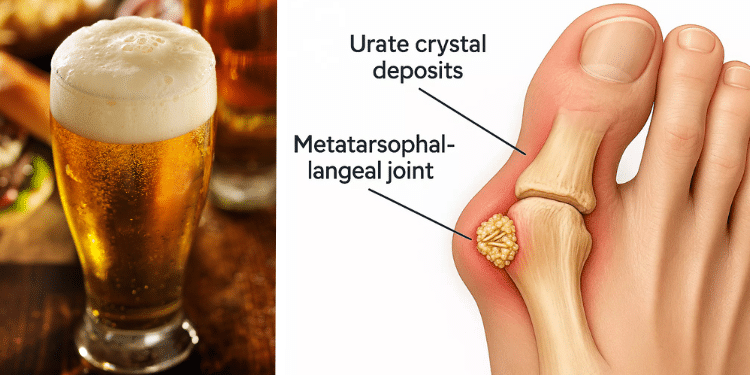
Gout is a complex, intensely painful form of inflammatory arthritis that primarily targets the joints—most commonly the base of the big toe, ankles, knees, and wrists.
Often striking suddenly in the middle of the night, a gout flare-up can cause excruciating swelling, redness, and a burning sensation so severe that even the weight of a bedsheet becomes unbearable.
At the center of this condition is a metabolic imbalance involving uric acid. When the body breaks down certain chemical compounds, it produces uric acid as a standard waste product.
Normally, this acid dissolves smoothly into the bloodstream, passes through the kidneys, and leaves the body through urine.
However, if your system produces too much uric acid or your kidneys excrete too little, the acid concentrates in the blood, forms sharp, needle-like monosodium urate crystals, and settles directly into your joint tissues.
Here is a scientifically grounded look at the biological mechanics of gout flares, alongside 10 common foods that may be making your symptoms worse.
The Purine Pathway: The Biochemistry of Gout
To understand why specific foods trigger joint pain, you must examine the purine degradation pathway.
Purines are natural, nitrogenous organic compounds found in the DNA and RNA of every living thing—including human cells and the plants and animals we eat.
-
The Breakdown to Acid: When you digest foods high in purines, your liver processes and breaks down these cellular structures. The final byproduct of this purine breakdown is uric acid. Consuming a high volume of purine-dense food causes uric acid levels in the blood to spike (hyperuricemia), overloading the kidneys’ ability to filter it out.
-
The Crystal Precipitation: When blood uric acid concentrations cross a critical threshold the acid can no longer stay dissolved. It precipitates out of the fluid, shifting into physical, needle-shaped crystals that lodge themselves in the cool, low-pressure environments of your peripheral joints, triggering a massive immune system attack.
Serum Uric Acid and Metabolic Management Targets
Managing gout successfully relies on keeping your circulating uric acid levels well below the physical crystallization point through specific dietary choices and, when necessary, medical protocols:
| Uric Acid Marker | Target Standard | Clinical Significance |
| Optimal Serum Uric Acid | Below 6.0 mg/dL | The universally recognized target to prevent crystal formation |
| Saturated Crystallization Point | Approx. 6.8 mg/dL | The threshold where dissolved uric acid begins transforming into sharp joint crystals |
| Daily Pure Water Intake | 90 to 125 ounces | Keeps urine diluted and actively assists the kidneys in flushing out acid |
| Kidney Excretion Ratio | Approx. 70% of total waste | The baseline workload your kidneys handle to clear uric acid from the body |
10 Everyday Foods That Can Trigger Gout Flares
1. High-Fructose Corn Syrup (Sodas, Sweetened Juices, and Baked Goods)
You might expect purine-rich meats to be the primary cause of gout, but refined sugar—specifically fructose—is a highly potent, hidden trigger.
Fructose is unique because its structural breakdown in the liver consumes a massive amount of cellular energy (ATP) within minutes.
This rapid energy depletion triggers a chemical chain reaction that generates uric acid as a direct byproduct.
Drinking sugar-sweetened sodas or eating processed sweets can cause blood uric acid levels to spike drastically without consuming a single purine molecule.
2. Red Meat (Beef, Lamb, and Pork)
Standard grain-fed red meats are staple proteins in the modern diet, but they contain a high concentration of intermediate purines.
Beef, lamb, and pork are dense in cellular material, yielding a high volume of purines upon digestion.
Regularly consuming large portions of red meat floods the liver with the raw materials needed to manufacture uric acid, steadily raising your baseline blood levels and making joint tissues highly vulnerable to crystal accumulation.
3. Organ Meats (Liver, Sweetbreads, and Kidneys)
While culinary trends have brought organ meats back into the spotlight for their high vitamin density, they are the most concentrated source of purines in the entire food supply.
Because organs like the liver and kidneys are hubs of high metabolic activity, they contain an immense density of cellular blueprints (RNA and DNA).
Eating even a small portion of liver delivers an overwhelming influx of purines that can easily push a stable system past the crystallization threshold, frequently triggering an acute flare-up within 24 hours.
4. Certain Seafoods (Sardines, Anchovies, and Herring)
Small, oily fish are fantastic for cardiovascular health due to their omega-3 content, but they carry a heavy metabolic cost for anyone prone to gout.
Sardines, anchovies, herring, and mackerel are packed with exceptionally high purine levels.
If you are working to manage joint pain, it is vital to balance your cardiovascular omega-3 needs by prioritizing lower-purine seafood options, like wild salmon, or using highly purified fish oil supplements that have had the purine proteins completely filtered out.
5. Shellfish (Shrimp, Crab, Lobster, and Mussels)
Indulging in a seafood platter rich in shrimp, crab, or lobster is a classic, well-documented trigger for sudden, painful gout attacks.
Shellfish contain high concentrations of specific purine bases that the human liver converts into uric acid with high efficiency.
Furthermore, shellfish dishes are often paired with rich, heavy sauces or alcohol, creating a perfect storm that slows down uric acid clearance while accelerating its production.
6. Beer and Brewer’s Yeast
Alcohol of any kind complicates gout management, but beer is a dual-action trigger that acts as an absolute catalyst for joint pain.
Beer is made using brewer’s yeast, making it rich in a highly absorbable purine called guanosine. When you drink beer, you are consuming a heavy dose of purines while simultaneously introducing ethanol (alcohol) into your system.
Alcohol metabolism creates lactic acid, which competes with uric acid at the kidney level, trapping the uric acid inside your blood while the kidneys focus on clearing the alcohol.
7. Hard Liquors and Spirits
While spirits do not contain the high purine levels found in beer, regular consumption of hard liquor can still aggressively drive up gout symptoms.
The ethanol in liquor dehydrates the body rapidly, concentrating the uric acid already present in your bloodstream.
At the same time, alcohol breakdown stimulates the liver to produce more purines internally, locking your body into a cycle of high production and low excretion.
8. Grain-Fed Poultry (Turkey and Chicken)
While generally viewed as a healthier alternative to red meat, poultry—especially turkey—still contains a moderate-to-high purine baseline that can surprise many gout sufferers.
Chicken and turkey contain enough purines to influence your total daily uric acid load. If you are experiencing frequent flare-ups, eating large portions of dark meat or poultry skin can keep your blood levels elevated, preventing your joints from fully clearing out existing crystal deposits.
9. High-Fat Dairy and Heavy Gravies
Rich, velvety meat gravies, meat extracts, and high-fat cream sauces are major cultural staples that can quietly worsen gout severity.
Industrial meat extracts and long-simmered gravies concentrate the soluble purines leached directly out of the meat tissues during cooking.
Additionally, consuming large volumes of saturated fats from heavy cream or greasy gravies can temporarily reduce the kidneys’ ability to excrete uric acid, keeping blood concentrations high.
10. Yeast Extracts (Marmite, Vegemite, and MSG-Rich Processed Foods)
Savory spreads, packaged instant noodles, and ultra-processed snacks often rely on yeast extracts or hydrolyzed proteins to deliver a rich, umami flavor.
3 Protective Dietary Habits to Flush Uric Acid
If you need to lower your uric acid levels and protect your joints from future flare-ups, integrate these three science-backed dietary habits into your routine:
-
Prioritize Low-Fat Dairy Products: Incorporate low-fat milk, yogurt, and cottage cheese into your meals. Clinical studies show that the proteins in milk (casein and lactalbumin) actively encourage the kidneys to excrete uric acid, helping to lower your blood levels naturally.
-
Embrace Tart Cherries and Vitamin C: Enjoy fresh tart cherries or drink unsweetened tart cherry juice daily. Cherries contain powerful antioxidants called anthocyanins that help soothe systemic inflammation, while a daily dose of Vitamin C has been shown to assist the kidneys in clearing out uric acid smoothly.
-
Hydrate Continuously and Deeply: Drink plenty of pure water throughout the day, aiming for at least 3 liters. Keeping your body fully hydrated dilutes the concentration of uric acid in your urine and blood, preventing the acid from locking together into sharp, painful joint crystals.
Navigating life with gout requires a clear, practical understanding of how specific foods influence your internal chemistry.
Gout is not a sign of a broken body; it is a clear message that your metabolic systems are overloaded with purines and refined sugars.