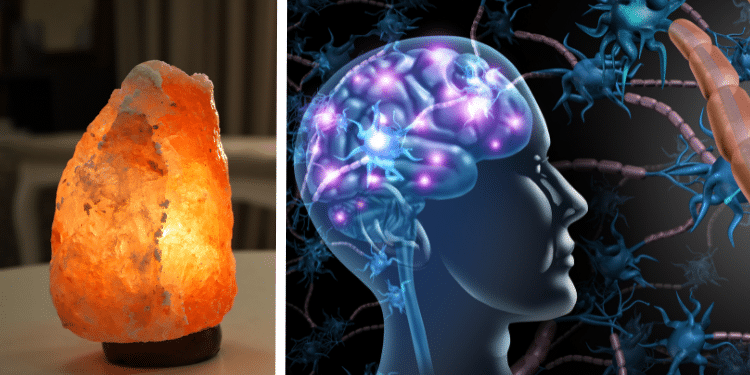
Walk into almost any modern wellness studio, minimalist home office, or bedroom sanctuary, and you are likely to spot a warm, peach-colored glow emanating from a block of crystalline rock.
Himalayan salt lamps have transitioned from a niche holistic curiosity into a global home decor phenomenon, with millions of units sold worldwide every year.
Admired for their soothing, sunset-like aesthetic, these lamps are frequently marketed with grand wellness promises.
E-commerce listings and lifestyle blogs claim they emit a constant stream of health-supportive “negative ions” that purify indoor air, neutralize electromagnetic radiation from your Wi-Fi router, and alleviate respiratory conditions.
However, behind the ambient glow lies a massive gap between wellness marketing and actual material science.
While these lamps are beautiful additions to an interior space, few owners understand the genuine physical mechanism of how salt interacts with indoor air—or the real, scientifically validated reasons why they make us feel so good.
Here is a look at the actual physics, chemistry, and environmental science behind Himalayan salt lamps.
The Core Physics: The Myth of the Negative Ion Factory
The most widespread claim surrounding Himalayan salt lamps is that they act as natural ionizers, pumping negative ions into the room to counteract the “positive ions” emitted by electronic devices.
-
The Science of Ionization: Generating negative air ions requires a substantial energy source capable of stripping electrons from gas molecules. True electronic air purifiers and ionizers achieve this using high-voltage electricity (corona discharge) or ultraviolet light.
-
The Thermal Reality: A 15-watt incandescent bulb inside a block of salt simply cannot generate the energy required to split air molecules or emit measurable amounts of negative ions. Independent atmospheric testing has repeatedly demonstrated that operating a salt lamp does not alter the ion count of an indoor room.
Himalayan Salt Structural Profile
Authentic Himalayan salt is harvested from the Khewra Salt Mine in Pakistan. Its unique physical makeup is identical to standard sea salt, but with a dense inclusion of primordial mineral sediment:
| Component | Percentage | Environmental Role in the Home |
| Sodium Chloride (NaCl) | 96% to 98% | The structural foundation; naturally crystalline and highly hygroscopic |
| Iron Oxide (Rust) | Trace Amounts | Gives the salt its characteristic pink, peach, and deep orange hues |
| Magnesium & Potassium | Trace Minerals | Entrapped inside the crystal matrix duringancient ocean evaporation |
| Thermal Mass | Solid Block | Retains and radiates low-grade heat smoothly from the internal bulb |
The Real Phenomenon: Hygroscopy and How Salt Cleans Air
While salt lamps do not flood your room with negative ions, they do interact with your home environment through a genuine physical process called hygroscopy.
-
The Attraction Phase: Salt is naturally hygroscopic, meaning it attracts and absorbs water molecules directly from the surrounding air. In a typical room, microscopic water vapor is constantly floating around, carrying hitchhiking airborne particles like dust, pollen, pet dander, and smoke.
-
The Trapping Phase: When the lamp is turned on, the internal bulb gently heats the salt crystal. The airborne water vapor is drawn to the warm surface of the lamp. As the water vapor makes contact, it condenses on the salt block, carrying the dust and allergens along with it.
-
The Evaporation Cycle: The low-grade heat from the bulb slowly evaporates the water back out into the room as clean vapor, leaving the microscopic dust, pollen, and pollutants trapped tightly on the outer surface of the salt block.
The True Benefit: Chromotherapy and Circadian Rhythm Support
If Himalayan salt lamps aren’t chemical air purifiers, why do millions of people report feeling genuinely calmer, more focused, and less stressed when using them? The answer lies in chromotherapy (color psychology) and circadian biology.
Eliminating Blue Light Disruption
Modern interiors are flooded with short-wavelength blue light from smartphones, computer screens, and energy-efficient LED overhead bulbs.
Exposure to blue light after sunset suppresses your brain’s production of melatonin, the hormone responsible for signaling sleep, keeping your nervous system in a state of alert.
The Twilight Simulation
Himalayan salt lamps emit a long-wavelength, low-intensity amber and orange light. This specific spectrum perfectly mimics the warm, reassuring glow of a campfire or a setting summer sun.
3 Critical Rules Every Salt Lamp Owner Must Follow
Because a salt lamp is made of a raw, unrefined mineral block that interacts directly with humidity, it requires specific care to keep it functioning safely:
-
Never Use LEDs or Heatless Bulbs: Always operate your lamp with a traditional incandescent bulb or a specialized heat-producing oven bulb. If you use a cool LED bulb, the salt will not warm up. Without heat, the absorbed moisture will pool on the surface, causing the lamp to liquefy and rapidly dissolve.
-
Manage the “Sweating” Effect: If you live in a highly humid environment or turn the lamp off for long periods, it will begin to “sweat”—meaning the collected water vapor will saturate the salt and drip down the sides. Always place a protective coaster or plate beneath the base to prevent the salty runoff from ruining wooden furniture finishes.
-
Clean the Trapped Dust Surface: Because the hygroscopic cycle traps dust and pollen directly on the lamp’s surface, it will slowly build up a layer of grime over time. Every few weeks, turn off the lamp, let it cool completely, and wipe the surface down firmly with a damp (not soaking wet) micro-fiber cloth to remove the trapped particles.
A Himalayan salt lamp doesn’t need to be a high-tech ionizer or a medical-grade air filter to earn a place in your home. Its real magic is rooted in simple physics and biological design.
By acting as a gentle, hygroscopic dust collector and providing a warm, amber light spectrum that respects your body’s natural sleep-wake cycle, a salt lamp is an incredibly effective tool for lowering stress and creating a calm sanctuary.