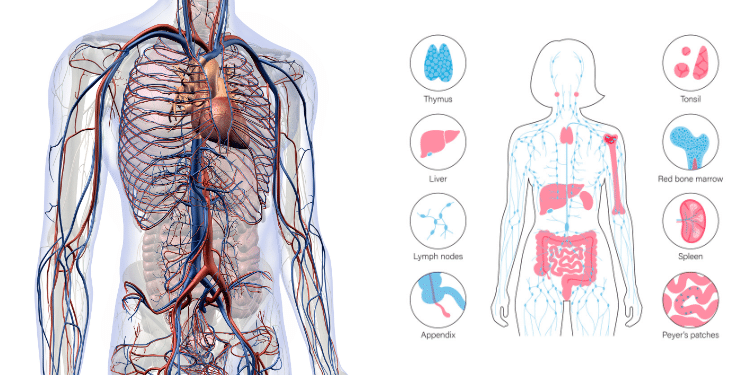
While the cardiovascular system relies on the constant, muscular pumping of the heart to circulate blood, the human body features a second, equally vast circulatory network that operates under entirely different mechanics: the lymphatic system.
Composed of a complex web of drainage vessels, fluid-filtering lymph nodes, and specialized organs like the spleen and thymus, the lymphatic system serves as your body’s cellular waste disposal infrastructure.
It is responsible for clearing metabolic byproducts, cellular debris, excess interstitial fluid, and foreign pathogens from your tissues.
However, because the lymphatic system lacks a central mechanical pump, its clear fluid – lymph – cannot move on its own.
Instead, it relies completely on your physical movements, breathing patterns, and external forces to stay in motion.
When lifestyle habits become sedentary, lymph fluid can stagnate, leading to sluggish cellular waste clearance, feelings of heaviness, and a compromised immune defense.
The Biological Mechanics of Passive Fluid Transport
To support your lymphatic system effectively, you must understand how this fluid moves through the body without a heart to pump it.
The lymphatic system operates as a low-pressure, one-way drainage grid running from your extremities back up toward the chest.
-
The One-Way Micro-Valves: Lymphatic vessels are lined with tiny, overlapping endothelial cells that act as one-way micro-valves. When pressure outside the vessel increases, these flaps push open, allowing fluid from the surrounding tissues to flow inside. Once the fluid enters, the valves snap shut to prevent it from flowing backward.
-
The Skeletal Muscle Pump: Because there is no internal pump, the primary force that pushes lymph fluid forward is the physical contraction of your surrounding skeletal muscles. When you move your arms and legs, your muscles compress the nearby lymph vessels, squeezing the fluid upward through the one-way valves.
-
The Final Drainage Point: After traveling through various filtering lymph nodes, the cleansed lymph fluid eventually empties back into your regular bloodstream via the subclavian veins located just beneath your collarbones.
Lymphatic System Fluid Dynamics
To maintain a healthy, active fluid balance throughout this complex drainage network, your daily habits should aim for these optimal physiological targets:
| Fluid Metric | Ideal Target State | Physiological Function |
| Lymph Viscosity Level | Thin, Fluid, and Free-Flowing | Allows rapid transport of cellular waste through micro-vessels |
| Muscle Activation Frequency | Regular movement every 45–60 minutes | Prevents physical fluid pooling in the lower legs and ankles |
| Diaphragmatic Expansion | Deep, multi-dimensional belly breathing | Creates the internal pressure needed to lift fluid up from the abdomen |
| Interstitial Pressure Balance | Even, gentle external compression | Encourages fluid to move smoothly from tissues into the lymph capillaries |
8 Ways to Activate and Support Healthy Lymph Flow
1. Prioritize Diaphragmatic “Belly” Breathing
Deep diaphragmatic breathing is the closest thing your lymphatic system has to a central engine. The largest lymph drainage vessel in the body, the thoracic duct, runs straight up through the center of your chest and abdomen.
-
The Science: When you take a deep, full breath that expands your belly, your diaphragm moves downward into the abdomen. This movement creates a temporary negative pressure inside your chest cavity that acts like a vacuum, drawing lymph fluid up from your lower legs and abdomen and pulling it safely back into the bloodstream.
2. Practice Daily Dry Brushing
Dry brushing is a traditional self-care technique that utilizes a firm, natural-bristle brush moved over completely dry skin before bathing.
-
The Science: Because a significant portion of your lymphatic network sits just beneath the surface of the skin (the superficial lymphatics), gentle, rhythmic strokes can stimulate these micro-vessels. Always brush with light, sweeping motions starting at your feet and hands and moving upward toward your heart and collarbone drainage zones to support the natural direction of lymph flow.
3. Incorporate Rebounding (Trampoline Jumping)
Rebounding involves spending 10 to 15 minutes bouncing gently on a small, low-to-the-ground fitness trampoline.
-
The Science: Rebounding is exceptionally effective for fluid clearance because of how it utilizes gravity. At the highest point of your bounce, your body experiences a brief moment of weightlessness, allowing your lymphatic valves to open wide. As you land at the bottom of the bounce, the sudden increase in G-force compresses your muscles and vessels, pushing the fluid upward through the one-way valves.
4. Optimize Daily Hydration Levels
Lymph fluid is composed primarily of water, recycled proteins, and white blood cells. Keeping your body well-hydrated is crucial for keeping this fluid moving smoothly.
-
The Science: When you become chronically dehydrated, your lymph fluid thickens and becomes sluggish, making it much harder to pass through the tiny filters inside your lymph nodes. Drinking plenty of pure, clean water throughout the day thins the fluid, allowing your body’s waste disposal system to run efficiently.
5. Utilize Manual Lymphatic Drainage (MLD) Techniques
Manual Lymphatic Drainage is a specialized, ultra-light massage technique focused on opening up the main fluid drainage centers in the body.
6. Commit to Hydrotherapy Contrast Showers
Contrast hydrotherapy is the practice of alternating between hot and cold water during your daily shower.
-
The Science: Spending 2 minutes under warm water dilates your blood and lymph vessels, drawing fluid toward the surface of the skin. Switching to cold water for 30 seconds causes those same vessels to instantly constrict. Alternating between hot and cold 3 to 4 times creates a powerful contraction-and-expansion loop that pumps stagnant fluid right out of your tissues.
7. Move Regularly with Inversion Poses
Your lymphatic system constantly fights against gravity to pull fluid up from your lower extremities. You can give your body a break by spending time in simple inversion poses.
-
The Science: Restive poses—such as lying on the floor with your legs resting vertically up against a wall, or practicing gentle yoga inversions—turn the gravitational equation upside down. Gravity naturally coaxes pooled fluid out of your ankles and calves, guiding it down toward the groin and abdominal lymph nodes for filtration.
8. Wear Graduated Compression Garments During Stagnant Periods
When you have to sit or stand in one place for long stretches—such as during long flights or extended desk work—your skeletal muscle pump stays completely idle, causing fluid to pool in your lower legs.
-
The Science: Graduated compression socks apply firm, calculated pressure at the ankle that gradually eases as it moves up the calf. This external pressure mimics your natural muscle contractions, gently squeezing the superficial lymph capillaries to keep fluid moving upward even when you are sitting still.
Troubleshooting Sluggish Lymph Flow
If you regularly experience mild swelling, low energy, or skin congestion, use this guide to evaluate your routine and keep your fluids moving smoothly:
Puffy Eyes or Face in the Morning
-
The Root Cause: Fluid naturally pools in the facial tissues when you lie flat to sleep for 8 hours without the help of gravity.
-
The Fix: Prop your head up slightly with an extra pillow, and spend 2 minutes gently massaging your face, smoothing outward from the center of your nose toward your ears and down your neck to clear the morning fluid.
Swollen Ankles at the End of the Day
-
The Root Cause: Extended sitting or standing allows gravity to pool fluid in your lower legs, especially if your footwear is tight or restrictive.
-
The Fix: Take a quick 5-minute break every hour to perform 20 ankle circles and calf raises to activate your lower leg muscles, and avoid crossing your legs at your knees or ankles while sitting.
Supporting your lymphatic health is all about building regular, gentle movement into your daily life. Because this vital system has no heart to pump it, your habits act as its manual engine.
By prioritizing deep belly breathing, staying well-hydrated, and using techniques like dry brushing, contrast showers, and regular movement breaks, you can keep your body’s filtration system running clean and clear for long-term health and vitality.