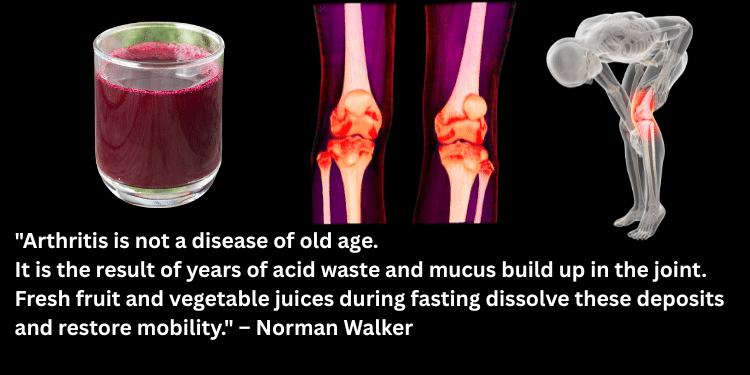
A quote often attributed to health pioneer Norman Walker states:
“Arthritis is not a disease of old age. It is the result of years of acid waste and mucus buildup in the joints. Fresh fruit and vegetable juices during fasting dissolve these deposits and restore mobility.”
This statement reflects a popular belief in natural health circles that arthritis develops because waste products accumulate in the body over time and that dietary changes can help restore joint health.
While modern medical science does not support the idea that arthritis is caused solely by “acid waste” or “mucus buildup,” it does recognize that inflammation, diet, lifestyle habits, excess body weight, and overall health can significantly influence joint function and comfort.
What is especially important about Walker’s message is the reminder that arthritis is not exclusively an old-age condition. Millions of younger adults experience joint pain, stiffness, and inflammation long before reaching retirement age.
Understanding what arthritis is, what contributes to joint degeneration, and how nutrition may support healthy joints can help people take proactive steps toward maintaining mobility and quality of life.
Arthritis Is More Common Than Many People Realize
Many people associate arthritis with elderly individuals because joint problems become more common with age.
However, arthritis affects people of all ages.
In fact, younger adults, athletes, and even children can develop certain forms of arthritis.
Joint discomfort may begin years before significant damage appears on medical imaging.
This is why maintaining joint health early in life is so important.
The gradual wear and tear placed on joints over decades can accumulate silently before symptoms become noticeable.
What Exactly Is Arthritis?
Arthritis is not a single disease.
Instead, it is a general term describing more than 100 different conditions that affect joints and surrounding tissues.
The two most common forms are:
Osteoarthritis
Osteoarthritis develops when cartilage gradually wears down over time.
Cartilage acts as a cushion between bones.
When cartilage becomes thinner, joints may become:
- Stiff
- Painful
- Less flexible
- More prone to inflammation
Rheumatoid Arthritis
Rheumatoid arthritis is an autoimmune condition.
In this disorder, the immune system mistakenly attacks the joints, causing inflammation and damage.
Other forms include:
- Psoriatic arthritis
- Gout
- Ankylosing spondylitis
- Juvenile arthritis
Each condition has different causes and mechanisms.
Why Arthritis Is Not Just About Aging
While age increases risk, arthritis often develops because of multiple factors working together over many years.
These may include:
- Chronic inflammation
- Previous injuries
- Excess body weight
- Poor diet
- Sedentary lifestyle
- Genetic predisposition
- Autoimmune conditions
- Repetitive joint stress
Aging alone does not automatically cause severe joint problems.
Many active older adults maintain excellent mobility, while some younger individuals develop significant arthritis symptoms.
The Role of Chronic Inflammation
Modern research increasingly points to chronic low-grade inflammation as a major contributor to joint discomfort and degeneration.
Inflammation is a normal protective response that helps the body heal injuries.
However, when inflammation remains elevated for years, it may contribute to tissue damage.
Factors that may promote chronic inflammation include:
- Smoking
- Excess sugar consumption
- Obesity
- Poor sleep
- Chronic stress
- Physical inactivity
Over time, these factors may affect joint health and overall wellness.
Understanding the “Waste Buildup” Theory
Natural health traditions often describe arthritis as a condition involving the accumulation of waste products in the body.
While the terminology differs from modern medicine, there are some areas where the concepts overlap.
The body naturally produces metabolic waste every day.
These waste products are processed and eliminated through:
- The liver
- Kidneys
- Digestive system
- Lymphatic system
- Lungs
When these systems function properly, waste removal occurs continuously.
However, lifestyle habits that promote inflammation may create an internal environment that is less supportive of optimal health.
This is one reason nutrition plays such an important role in joint wellness.
How Diet Influences Joint Health
Food affects much more than body weight.
The nutrients we consume help influence:
- Inflammatory pathways
- Tissue repair
- Antioxidant status
- Immune function
- Metabolic health
A diet rich in whole foods may help support healthier inflammatory balance throughout the body.
Many experts recommend emphasizing:
- Vegetables
- Fruits
- Legumes
- Nuts
- Seeds
- Healthy fats
while limiting highly processed foods.
Why Fruits and Vegetables Matter
Fresh fruits and vegetables provide:
- Antioxidants
- Vitamins
- Minerals
- Polyphenols
- Fiber
These compounds help protect cells from oxidative stress.
Oxidative stress occurs when unstable molecules called free radicals damage tissues.
Over time, excessive oxidative stress may contribute to inflammation and aging processes.
Colorful produce often contains powerful protective compounds.
Examples include:
- Blueberries
- Cherries
- Citrus fruits
- Spinach
- Kale
- Broccoli
- Bell peppers
The Benefits of Vegetable Juices
Norman Walker was one of the pioneers who promoted fresh vegetable juicing.
Juices made from vegetables may help increase intake of nutrients such as:
- Vitamin C
- Potassium
- Folate
- Antioxidants
Popular vegetable juice ingredients include:
- Celery
- Cucumber
- Carrots
- Beetroot
- Spinach
- Kale
Juicing can be a convenient way to consume more vegetables, although whole vegetables still provide valuable fiber.
Can Fasting Help Joint Health?
Fasting has received increased scientific attention in recent years.
Some studies suggest certain fasting approaches may help support:
- Metabolic health
- Weight management
- Inflammatory regulation
However, fasting is not appropriate for everyone.
Individuals considering prolonged fasting should consult healthcare professionals, particularly if they have medical conditions or take medications.
The potential benefits of fasting likely involve complex metabolic changes rather than simply “dissolving deposits” within joints.
The Importance of Maintaining a Healthy Weight
Body weight plays a major role in joint health.
Every additional pound places increased pressure on weight-bearing joints.
The knees are especially affected.
Research suggests that losing excess weight may significantly reduce stress on:
- Knees
- Hips
- Ankles
Weight management may be one of the most effective lifestyle interventions for improving joint comfort.
Movement Is Essential for Joint Health
Many people reduce activity when joints hurt.
Unfortunately, complete inactivity often worsens stiffness.
Movement helps:
- Lubricate joints
- Strengthen supporting muscles
- Improve flexibility
- Enhance circulation
Low-impact activities may be especially beneficial.
Examples include:
- Walking
- Swimming
- Cycling
- Yoga
- Stretching
Regular movement helps nourish cartilage and maintain mobility.
Why Strong Muscles Protect Joints
Muscles act as shock absorbers.
Stronger muscles help reduce stress placed directly on joints.
This is particularly important for:
- Knees
- Hips
- Lower back
Even moderate strength training may help support long-term joint function.
Foods Often Associated With Joint Support
Several foods are commonly included in joint-friendly diets.
These include:
Fatty Fish
Salmon, sardines, and mackerel contain omega-3 fatty acids that may help support healthy inflammatory balance.
Berries
Rich in antioxidants that help combat oxidative stress.
Leafy Greens
Provide vitamins, minerals, and plant compounds that support overall wellness.
Nuts and Seeds
Contain healthy fats and minerals important for tissue health.
Olive Oil
A cornerstone of the Mediterranean diet and a source of beneficial compounds.
The Connection Between Sleep and Joint Health
Poor sleep may increase:
- Inflammation
- Pain sensitivity
- Fatigue
Quality sleep supports:
- Recovery
- Hormonal balance
- Tissue repair
People with chronic joint discomfort often report improved wellbeing when sleep quality improves.
Stress and Joint Discomfort
Stress affects the body in numerous ways.
Chronic stress may contribute to:
- Muscle tension
- Elevated inflammatory markers
- Poor sleep
- Reduced recovery
Managing stress through activities such as:
- Meditation
- Deep breathing
- Nature walks
- Exercise
may support overall health and wellbeing.
Supporting the Body’s Natural Systems
Rather than focusing on extreme cleanses or miracle cures, many experts recommend supporting the body’s natural processes through consistent healthy habits.
These include:
- Eating nutrient-dense foods
- Staying hydrated
- Maintaining a healthy weight
- Exercising regularly
- Managing stress
- Sleeping well
These practices help support multiple systems involved in maintaining joint health.
Norman Walker’s statement reflects a natural health perspective that emphasizes the importance of internal cleanliness, nutrition, and lifestyle habits in maintaining mobility and wellness.
While modern science does not support the idea that arthritis is simply caused by acid waste or mucus buildup, it does recognize that inflammation, diet, body weight, physical activity, and overall health have a profound impact on joint function.