Wild lettuce is one of those quiet green presences in the garden and along the roadside – easy to overlook, yet rich with old-world charm.
With its tall stems, prickly leaves, and milky sap, it has long carried the reputation of a humble herb with a deep history, a plant that seems to belong as much to folk tradition as to the field itself.
What Is Wild Lettuce?
Wild lettuce, often referring to Lactuca virosa and sometimes Lactuca serriola, is a tall, airy member of the daisy family.
It can grow in meadows, disturbed soil, fence lines, and garden edges, where it often stands with a kind of wild dignity.
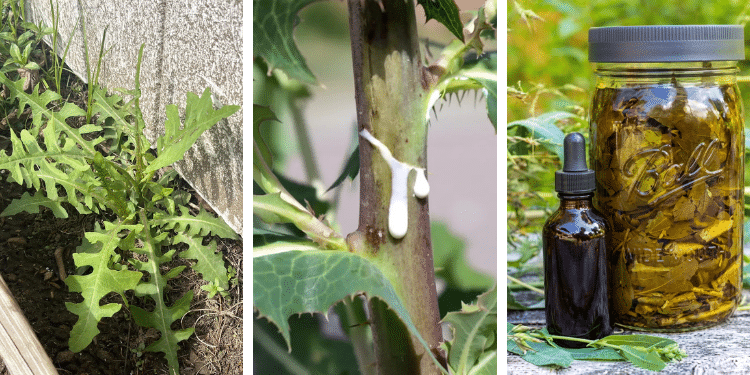
Its leaves are deeply lobed, sometimes spiny, and when broken, the stems release a white latex-like sap that has drawn herbal curiosity for generations.
Though it is related to the lettuce you might toss into a salad bowl, wild lettuce is not a culinary green in the usual sense.
Instead, it has traditionally been used in herbal preparations and folk formulas, especially where a gentle, soothing plant was desired.
Gardeners who learn to recognize it often find themselves appreciating its resilience and its long story in the human herbarium.
A Plant Steeped in Folk Tradition
Wild lettuce has a long-standing place in traditional herbalism, particularly in European and North American folk practices.
It was commonly prepared as a tea, tincture, or syrup and was traditionally used for its calming qualities.
In some old herbals, it was even nicknamed “lettuce opium,” though that name can be misleading and far too dramatic for a plant that has always lived in the quieter corners of home remedy tradition.
Historically, herbalists and home caretakers turned to wild lettuce when they wanted a plant that may support relaxation and restfulness.
Some studies suggest the plant contains compounds of interest, including lactucarium, though the full story of its effects remains the subject of ongoing curiosity rather than firm conclusions.
As with many traditional herbs, its value lies as much in its cultural memory as in its chemistry.
How Gardeners Recognize Wild Lettuce
If you are walking your property or tending an untamed edge of the yard, wild lettuce may reveal itself with a tall central stalk and pale green leaves that clasp the stem.
Many species can grow several feet high and may eventually send up delicate yellow flowers that resemble small dandelion blooms.
The undersides of the leaves or stems may show a line of tiny spines, especially in prickly lettuce.
It is wise to identify it carefully before using it, since several wild plants can resemble each other at a glance. Learn the shape of the leaf, the flower structure, and the characteristic milky sap.
When in doubt, consult a trusted field guide or experienced forager. The garden rewards patience, and so does herbal work.
Why Home Herbalists Are Rediscovering It
In an age of fast everything, wild lettuce offers a slower kind of relationship. People are drawn to it not because it is flashy, but because it feels like an old friend returning from the hedgerow.
Many home herbalists appreciate it for its traditional place in a calming evening routine, especially when used in gentle, well-considered ways.
There is also something satisfying about working with a plant that grows abundantly and asks little in return.
Wild lettuce may support a more self-reliant home apothecary, especially for gardeners who enjoy learning the plants already living around them.
It reminds us that the most useful herbs are not always the prettiest ones, and that wisdom often grows in plain sight.
Harvesting Wild Lettuce with Care
Harvesting should be done thoughtfully and respectfully. The best time to gather aerial parts is usually when the plant is healthy and actively growing, often before it flowers fully.
Many herbalists prefer the leaves and upper stems for drying, while the milky latex is traditionally collected from incisions in mature stems, though this is best left to experienced hands.
Use clean scissors or garden shears, and take only what you need. If the plant is growing on land that may have been exposed to pesticides, roadside runoff, or other contaminants, it is best not to harvest it for home remedies.
As with all wildcrafting, choose clean, healthy sites. The plant’s gifts are most trustworthy when gathered with care.
Simple Ways to Prepare Wild Lettuce
Wild Lettuce Tea
A tea is one of the simplest ways to work with wild lettuce. Dried leaves and upper stems may be steeped in hot water for about 10 to 15 minutes.
Because the flavor can be earthy and somewhat bitter, many people blend it with more pleasant herbs such as lemon balm, chamomile, mint, or rose.
This kind of tea has traditionally been used as part of an evening wind-down ritual.
Use a modest amount at first and observe how your body responds. Herbal teas are often best approached gently, especially with plants that have a strong traditional reputation.
A slow cup at dusk, taken with intention, can be as much a ritual as a recipe.
Wild Lettuce Tincture
A tincture is another classic preparation, especially for those who prefer a shelf-stable remedy. Dried or fresh aerial parts are steeped in alcohol over several weeks, then strained and stored in a dark glass bottle.
Tinctures are valued in folk herbalism because they preserve the plant and offer a concentrated form of its character.
Because tinctures are more potent than tea, they are generally used with more caution and a lighter hand. If you are new to making tinctures, follow a reputable herbal guide and label everything clearly.
The home apothecary should feel orderly, not mysterious in a dangerous way.
Wild Lettuce Salve
Though wild lettuce is more commonly discussed as a tea or tincture, some herbalists also infuse the dried herb into oil and then blend it into a salve.
This kind of topical preparation is traditionally used in soothing body-care blends, often alongside comfrey, calendula, or lavender.
The salve itself becomes part of a comforting herbal routine, especially for those who love making their own household remedies.
To make a simple salve, first infuse dried wild lettuce in olive oil or another carrier oil over low heat or by a slow solar infusion.
Strain well, then combine the infused oil with beeswax until it reaches a spreadable texture. Always patch test a new salve on a small area of skin before wider use, and avoid applying to broken skin unless guided by a qualified professional.
Drying and Storing the Herb
Drying wild lettuce is straightforward and helps preserve it for future use. Bundle small stems and hang them in a cool, airy place away from direct sun, or spread the leaves on a screen.
When fully dry, the leaves should crumble easily and the stems should snap cleanly.
Store the dried herb in a sealed glass jar, labeled with the plant name and date. Keep it in a dark cupboard or pantry to protect its character.
Like most herbs, wild lettuce is best used while still fragrant and vibrant, ideally within a year.
Safety, Sensitivity, and Common-Sense Use
Wild lettuce is a traditional herb, but tradition does not replace caution. Some people may be sensitive to the plant, and it is not a one-size-fits-all remedy.
Pregnant or nursing individuals, children, and those taking medications should seek professional guidance before using it. If you have allergies to plants in the daisy family, extra care is wise.
Because herbal effects vary from person to person, start small and pay attention.
The old herbalist’s rule is simple: let the plant speak, and listen gently. Soft language belongs here because herbs are companions, not guarantees.
A Quiet Herb for the Home Garden
Wild lettuce may never become the star of a vegetable patch, but it has a special place in the landscape of home remedies.
It is the kind of plant that rewards observation, respect, and a little curiosity. For gardeners, it is a reminder that medicine and beauty often grow side by side in the overlooked places.
If you come across wild lettuce in your garden or on a clean wild edge, take a moment to notice it. Learn its shape, consider its history, and perhaps try a simple tea or carefully made tincture with a sense of reverence.
In the patient, green language of herbs, wild lettuce still has something to offer.