In the pursuit of a revitalized home and a balanced mind, we often overlook the potent botanical power resting in our fruit bowls.
The lemon (Citrus limon) is a staple of the modern kitchen, prized for its juice and zest. However, the true “soul” of the lemon resides in the microscopic oil glands of the yellow flavedo – the outer rind.
Lemon peel oil is more than just a pleasant fragrance; it is a concentrated source of limonene, a powerful terpene known for its ability to dissolve fats, neutralize odors, and – most importantly – stimulate the human limbic system.
By learning how to extract this oil at home, you are not just practicing sustainable, zero-waste living; you are creating a biological tool to brighten your mood and sanitize your environment without the use of synthetic chemicals.
Here is the definitive guide to crafting your own lemon peel oil and the science behind how it can transform your home space.
The Science of Scent: Why Lemon Energizes
The human sense of smell is the only sense with a direct line to the amygdala and hippocampus – the areas of the brain responsible for emotion and memory.
When you inhale the molecules of lemon peel oil, they trigger a series of physiological responses:
-
Dopamine Stimulation: Studies have shown that citrus aromas can increase the transmission of dopamine, the “reward” chemical in the brain, leading to a natural lift in mood.
-
Cortisol Reduction: The scent of lemon has been linked to a decrease in heart rate and lower levels of cortisol, the body’s primary stress hormone.
-
Enhanced Alertness: Unlike lavender, which sedates, lemon peel oil is “cephalic,” meaning it clears the mind and improves cognitive focus.
Method 1: The Infused Cold-Press Method (Best for Cleaning and Home Fragrance)
This is the most accessible method for home users. It uses a carrier oil to “pull” the essential oils out of the peels through maceration.
What You Will Need:
-
6–8 Organic Lemons (Organic is crucial to avoid concentrated pesticides in the rind).
-
1.5 cups of a neutral carrier oil (Grapeseed, Jojope, or Fractionated Coconut oil).
-
A clean, airtight glass jar.
-
A fine-mesh strainer or cheesecloth.
Step-by-Step Instructions:
-
Preparation: Wash the lemons thoroughly with warm water and a splash of vinegar to remove any wax coating. Dry them completely; moisture is the enemy of oil infusions and can cause mold.
-
Zesting: Use a vegetable peeler or zester to remove only the yellow part of the skin. Avoid the white pith, as it contains bitterness and water that can spoil the oil.
-
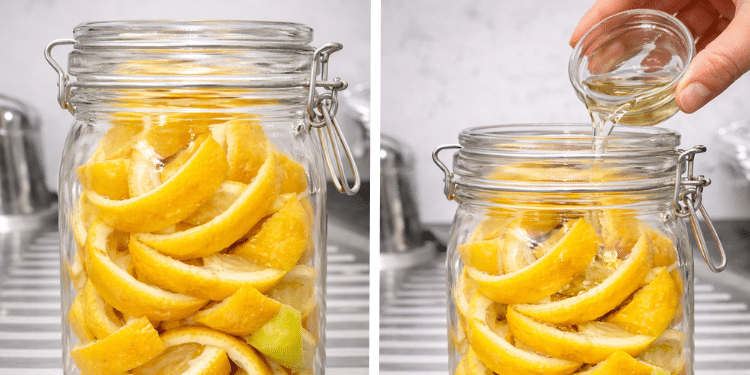
The Maceration: Place the peels in the glass jar and pour the carrier oil over them until they are completely submerged.
-
The Sunlight Trick: Place the jar on a sunny windowsill for 7 to 14 days. Shake the jar gently once a day. The gentle heat from the sun helps the oil glands burst and release their limonene into the carrier.
-
Straining: After two weeks, strain the oil through a cheesecloth into a dark amber glass bottle. Squeeze the peels tightly to get every last drop of essence.
Method 2: The Stovetop Distillation (Best for Mood Elevation and Aromatherapy)
If you want a more potent, concentrated oil that mimics a true essential oil, the stovetop “simmer” method is superior.
Step-by-Step Instructions:
-
Place your lemon peels in a large pot and cover with water.
-
Place a small, heat-resistant glass bowl in the center of the pot (the bowl should float or sit on a small rack).
-
Place the pot lid upside down over the pot.
-
Put ice cubes on top of the inverted lid.
-
The Process: As the water simmers, the lemon oil turns to steam. When the steam hits the cold, inverted lid, it condenses back into liquid and drips into the center bowl. This liquid is a mix of hydrosol (lemon water) and pure lemon oil.
5 Ways to Use Lemon Peel Oil to Energize Your Home
Once you have your oil, it’s time to put it to work. Here is how to maximize the energizing effects in your living space.
1. The “Focus” Desk Diffuser
Place three drops of your lemon oil on a cotton ball and tuck it into a small decorative dish on your desk. The constant, subtle evaporation will keep your mind sharp during long work-from-home sessions, preventing the mid-afternoon “slump.”
2. The Kitchen Counter Sanitizer
Add two tablespoons of your lemon-infused oil to a spray bottle filled with white vinegar and water. The limonene in the oil is a natural solvent that cuts through grease while the scent neutralizes cooking odors like fish or onions.
3. Natural Wood Polish
Mix your lemon oil with a little more carrier oil (like olive oil) and use it to buff your wooden furniture. It nourishes the wood while leaving a scent that makes the entire room feel “clean” on a biological level.
4. Shower Steam Revival
Dab a few drops of lemon oil onto the floor of your shower (away from the direct stream of water). The steam from your shower will act as a natural diffuser, creating an “aromatherapy spa” experience that wakes up your senses in the morning.
5. Mood-Lifting Room Spray
Mix 10 drops of lemon oil with a splash of witch hazel and distilled water in a fine-mist bottle. Spray it into the air of a “stale” room – like a basement or guest room – to instantly change the energetic frequency of the space.
Safety and Storage
-
Phototoxicity: Citrus oils can make your skin more sensitive to the sun. If you apply the oil topically, avoid direct sunlight on that area for 12 hours.
-
Storage: Store your lemon oil in a dark glass bottle in a cool, dry place. Light and heat will cause the oil to oxidize, turning the bright scent into a dull, “turpentine” smell.
-
Shelf Life: Homemade infusions typically last 6 months. If the oil smells sour or “off,” discard it and make a fresh batch.
Making your own lemon peel oil is a ritual of transformation. It takes something destined for the trash and turns it into a high-performance elixir for your home and health.