Planting tiny seeds can be surprisingly challenging for gardeners. Seeds from many herbs, flowers, and vegetables are extremely small – sometimes no larger than grains of dust.
Because of this, they are easy to drop too closely together or bury too deeply, which can lead to poor germination and crowded seedlings.
Seeds from plants such as Daucus carota, Lactuca sativa, and Ocimum basilicum are notoriously tiny and require careful planting.
Fortunately, experienced gardeners use several simple tricks to make sowing tiny seeds much easier.
With a few household tools, you can distribute seeds evenly, avoid overcrowding, and dramatically improve germination success.
Why Tiny Seeds Are Difficult to Plant
Tiny seeds present several challenges during planting.
First, their small size makes them difficult to handle individually. Attempting to drop them one by one into the soil often results in clumps of seeds falling into the same spot.
Second, many small seeds require very shallow planting depths. Some seeds even need light to germinate, which means they should be placed directly on the soil surface rather than buried.
Finally, overcrowded seedlings compete for water, sunlight, and nutrients. This can result in weak plants that must later be thinned out.
Using smart sowing techniques helps gardeners avoid these problems while saving time and seeds.Trick 1: The Egg Carton Spacing Method
One of the simplest and most effective tools for planting tiny seeds is an empty egg carton.
Egg cartons are excellent spacing guides because the cups are evenly arranged. This makes it easy to mark planting holes at consistent distances.
How the Egg Carton Trick Works
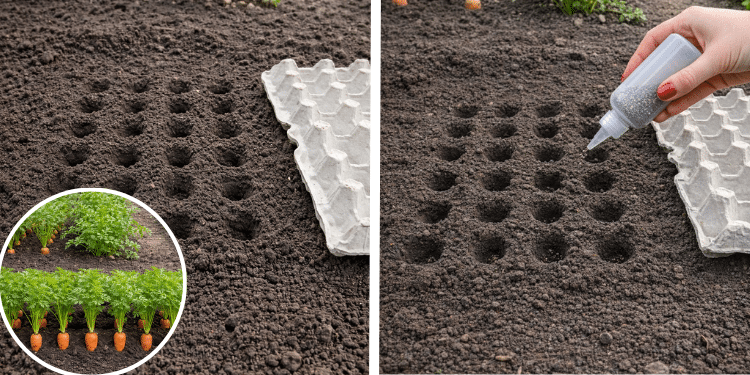
Instead of measuring distances manually, you can use the egg carton to create evenly spaced indentations in the soil.
Simply press the bottom of the carton gently into loose soil. Each cup will leave a small depression in the ground.
These small indentations act as perfect planting spots for seeds.
This method works especially well for small vegetables and herbs that require regular spacing.
How to Use the Egg Carton Method
-
Prepare your garden bed by loosening the soil and removing weeds.
-
Press an empty cardboard egg carton onto the soil surface.
-
Lift the carton to reveal evenly spaced indentations.
-
Place a small number of seeds into each indentation.
-
Cover lightly with soil if required.
This technique creates organized rows without using rulers or complicated measurements.
Why It Works
The egg carton ensures consistent spacing, which improves airflow and reduces overcrowding.
Even spacing also allows each plant to receive adequate sunlight and nutrients as it grows.
For gardeners planting many seeds at once, this method can dramatically speed up the process.
Trick 2: The Squeeze Bottle Seed Dispenser
Another brilliant trick for planting tiny seeds is using a squeeze bottle as a seed dispenser.
This method is especially useful for extremely small seeds such as lettuce, basil, or carrots.
How the Squeeze Bottle Technique Works
Seeds are mixed with dry sand or fine soil and placed inside a small squeeze bottle.
When the bottle is gently squeezed, the mixture flows out slowly, distributing seeds more evenly.
Because the seeds are diluted in sand, they are less likely to clump together.
Steps for the Squeeze Bottle Method
-
Fill a small squeeze bottle with dry sand.
-
Add a small amount of seeds to the sand.
-
Shake the bottle to mix the seeds thoroughly.
-
Gently squeeze the bottle while moving it along the planting row.
This releases a controlled stream of sand and seeds, allowing them to spread evenly.
Advantages of This Method
This technique helps prevent overcrowding and reduces the need for thinning seedlings later.
It also allows gardeners to plant seeds quickly while maintaining even distribution.
Because the sand is visible on the soil surface, it is easy to see exactly where seeds have been planted.
Trick 3: The Paper Fold Seed Guide
A third clever trick involves using a simple piece of folded paper.
This method is ideal when you want precise control over seed placement.
How the Paper Fold Method Works
Seeds are poured onto a folded piece of paper, which acts as a funnel.
By gently tapping the paper, you can release seeds one at a time into the soil.
How to Use This Method
-
Fold a small piece of paper down the middle to create a crease.
-
Place a small number of seeds along the crease.
-
Hold the paper over the planting spot.
-
Tap the paper lightly to release seeds.
This technique gives you excellent control over placement and works well when sowing seeds into individual containers or trays.
Additional Tips for Planting Tiny Seeds
Although these tricks simplify planting, a few additional practices can improve results.
Use Fine Seed-Starting Soil
Small seeds require loose, fine soil that allows delicate roots to grow easily.
Seed-starting mixes are ideal because they retain moisture while allowing good drainage.
Avoid Planting Too Deeply
Many tiny seeds require only a light covering of soil—or none at all.
Always check the seed packet instructions to determine the correct planting depth.
Water Gently
Strong streams of water can wash tiny seeds away.
Using a spray bottle or fine watering can helps keep soil moist without disturbing seeds.
Maintain Consistent Moisture
Seeds require steady moisture during germination.
Allowing the soil to dry out during this stage can prevent seeds from sprouting.
Plants That Benefit From These Seed Tricks
Many garden plants have tiny seeds that benefit from these sowing techniques.
Examples include:
- carrots
- lettuce
- basil
- thyme
- oregano
- snapdragons
- petunias
Because these seeds are extremely small, using tools such as egg cartons or squeeze bottles helps ensure better spacing and stronger seedlings.
Why Proper Spacing Matters for Seedlings
Plant spacing is one of the most important factors in healthy plant development.
When seeds are planted too close together, seedlings compete for sunlight and nutrients.
Crowded plants often become weak and elongated as they struggle for light.
Proper spacing allows each plant to grow stronger and develop deeper roots.
It also improves airflow between plants, reducing the risk of fungal diseases.
The Importance of Thinning Seedlings
Even with careful planting, some seeds may still germinate too closely together.
In this case, thinning seedlings is necessary.
Thinning involves removing extra seedlings so that remaining plants have enough room to grow.
Although it may feel wasteful, thinning improves the health and productivity of the remaining plants.
Using the techniques described earlier can reduce the need for thinning by preventing overcrowding from the start.
Starting Tiny Seeds Indoors
Many gardeners prefer starting tiny seeds indoors before transplanting them outside.
Indoor seed starting provides better control over temperature, moisture, and light.
Seed trays or small containers filled with seed-starting mix work well for this purpose.
Providing bright light from a window or grow light encourages healthy seedling development.
Once seedlings grow strong enough, they can be transplanted into the garden.
Planting tiny seeds does not have to be frustrating. With a few clever tricks, gardeners can distribute seeds evenly and improve germination success.
Using simple tools like egg cartons, squeeze bottles filled with sand, or folded paper seed guides makes the process easier and more precise.