A garden filled with butterflies feels different from an ordinary flower bed. There is constant movement as monarchs, swallowtails, painted ladies, skippers, and other pollinators move from flower to flower, searching for nectar and places to reproduce.
But a true butterfly garden is about much more than planting a few colorful flowers.
Butterflies need nectar for adults, host plants for caterpillars, sunny resting places, water and minerals, protection from strong winds, and a garden that isn’t constantly treated with insecticides.
Here are seven reasons it’s worth creating one – and how to get started.
1. You’ll Provide Butterflies With Much-Needed Food
Adult butterflies spend much of their time searching for nectar.
Flowers provide the sugars that fuel flying, mating, migration, and everyday activity. But not every flower provides the same amount of nectar, and highly modified ornamental varieties sometimes offer less accessible food than simpler blooms.
A butterfly garden intentionally includes nectar-rich flowers that bloom at different times of year.
That’s important because butterflies don’t need food for only two weeks in summer.
Ideally, your garden should provide something from spring until autumn.
Excellent nectar plants can include:
- Coneflower
- Bee balm
- Asters
- Zinnias
- Liatris
- Verbena
- Sedum
- Joe-Pye weed
- Black-eyed Susan
- Goldenrod
- Coreopsis
Choose plants suited to your region, prioritizing locally native species whenever possible.
The more continuous the flowering season, the more useful your garden becomes.
2. A Butterfly Garden Supports the Entire Life Cycle
One of the biggest mistakes people make is creating a garden for adult butterflies only.
Butterflies don’t begin life as butterflies.
Their life cycle is:
Egg → caterpillar → chrysalis → adult butterfly
Adult butterflies may drink nectar from many different flowers, but their caterpillars can be surprisingly selective.
Female butterflies need suitable host plants on which to lay their eggs.
For example, monarch caterpillars depend on milkweed (Asclepias species).
Black swallowtail caterpillars commonly use plants in the carrot family, including parsley, dill, and fennel.
Different butterfly species need different host plants.
That’s why a complete butterfly garden contains two groups:
Nectar plants feed adult butterflies.
Host plants feed caterpillars.
If you plant only nectar flowers, butterflies may visit.
If you provide host plants as well, they may actually reproduce in your garden.
3. Butterflies Help Pollinate Your Garden
Bees may receive most of the attention when people discuss pollination, but butterflies contribute too.
As butterflies move between flowers drinking nectar, pollen can attach to their bodies and be carried to other blooms.
They’re not necessarily as efficient at pollination as many bees, but they still form part of the larger community of insects supporting flowering plants.
A butterfly garden will also attract other beneficial visitors.
You may notice:
- Native bees
- Bumblebees
- Hoverflies
- Moths
- Beetles
- Hummingbirds in regions where they occur
Instead of supporting only butterflies, your flower patch can become a small pollinator garden.
4. Butterfly Gardens Increase Biodiversity
A conventional landscape may contain only a lawn and a few ornamental shrubs.
It can look neat, but it doesn’t necessarily provide much habitat.
A butterfly garden adds another layer of life.
Flowers provide nectar and pollen. Host plants feed caterpillars. Plant stems provide shelter. Seeds may feed birds. Dense vegetation creates hiding places for small beneficial creatures.
Before long, the garden becomes more than a collection of decorative plants.
It becomes a miniature ecosystem.
This is particularly valuable in areas where natural habitat has been reduced by development.
Even small gardens can act as stepping stones between larger habitat areas.
5. Many Butterfly Plants Are Beautiful Perennials
Creating wildlife habitat doesn’t mean sacrificing appearance.
Some of the best butterfly plants are among the most attractive flowers you can grow.
Coneflowers, asters, bee balm, liatris, coreopsis, yarrow, black-eyed Susans, and sedums can provide weeks of color.
Better still, many are perennials.
Plant them once in suitable conditions and they can return for years.
Once established, many locally appropriate native perennials also need less intensive maintenance than high-input annual bedding plants.
You get:
Flowers + pollinators + perennial growth + seasonal interest.
That makes a butterfly garden both practical and beautiful.
6. Butterfly Gardens Can Reduce the Need for a Perfectly Manicured Yard
Butterflies don’t necessarily need a perfectly sterile garden.
In fact, slightly less aggressive cleanup can sometimes benefit them.
Chrysalises may be attached to stems, leaves, fences, or other protected surfaces. Some butterflies and moths overwinter as eggs, caterpillars, pupae, or adults among plant material and sheltered areas.
If every stem is immediately cut to the ground and every fallen leaf removed, some of that habitat disappears.
This doesn’t mean your garden needs to look abandoned.
Instead, think of it as intentional natural gardening.
Leave some seed heads standing through winter. Allow a few stems to remain. Maintain a small patch of leaf litter where appropriate.
You can still keep pathways, edges, and highly visible areas neat.
7. Watching Butterflies Makes the Garden More Enjoyable
Not every benefit has to be practical.
Butterflies simply make gardens enjoyable.
Watching a butterfly discover a flower you’ve planted, return repeatedly, and perhaps eventually lay eggs on a host plant adds another dimension to gardening.
A butterfly garden can also be a wonderful way to introduce children to nature.
They can observe the transformation from caterpillar to chrysalis to butterfly directly in the backyard.
Instead of reading about metamorphosis in a book, they can potentially watch it happen.
And once you begin noticing butterflies, you’ll probably start recognizing individual species and learning which plants they prefer.
How to Create Your Own Butterfly Garden
You don’t need to redesign your entire yard.
Start with one sunny area and gradually build from there.
Step 1: Choose a Sunny Location
Butterflies are cold-blooded insects and rely on external warmth to become active.
Most butterfly gardens therefore perform best in full sun.
Aim for an area receiving around six or more hours of direct sunlight per day if possible.
A south- or west-facing garden can work well, although local climate matters.
Sunlight also benefits many of the nectar-producing flowers butterflies prefer.
Step 2: Protect the Garden From Strong Wind
Butterflies can fly surprisingly well, but feeding becomes difficult in constantly windy locations.
If your garden is exposed, create sheltered areas using:
- Shrubs
- Ornamental grasses
- Fences
- Trellises
- Hedges
You don’t want to block all airflow.
Simply provide pockets where butterflies can feed and rest without fighting strong wind.
A sunny garden protected by shrubs on one side can be ideal.
Step 3: Plant Flowers in Groups
Instead of planting one coneflower here, one zinnia there, and one aster on the opposite side of the yard, create clusters of the same plant.
Masses of color are easier for butterflies to notice.
Groups also allow them to move between several flowers without repeatedly flying across the garden.
Try planting three, five, or more plants of the same species together where space allows.
Then repeat this approach with several different nectar plants.
The result is attractive to people and much easier for pollinators to use.
Step 4: Choose Different Flower Shapes
Butterflies differ in size and feeding behavior.
Providing several flower shapes makes your garden accessible to more species.
Flat-topped flowers provide convenient landing platforms.
Examples include:
- Yarrow
- Milkweed
- Sedum
- Verbena
Daisy-shaped flowers such as coneflowers, asters, and black-eyed Susans also provide excellent landing surfaces.
Other butterflies may happily feed from tubular flowers such as bee balm.
Diversity is the goal.
Step 5: Plant for Continuous Bloom
Don’t create a garden that looks spectacular for three weeks and then provides nothing for the rest of the season.
Plan your flowers according to bloom time.
Spring
Depending on your region, consider plants such as:
- Phlox
- Native violets
- Penstemon
- Early-blooming native shrubs
Summer
The garden can become packed with:
- Coneflowers
- Bee balm
- Milkweed
- Coreopsis
- Liatris
- Zinnias
- Verbena
Late Summer and Fall
This period is especially important.
Plant:
- Asters
- Goldenrod
- Sedum
- Joe-Pye weed
- Late-blooming native species
Late flowers can provide important fuel for butterflies that remain active or migrate during autumn.
Step 6: Don’t Forget Host Plants
If you want butterflies to do more than visit, research the butterflies native to your region and determine which plants their caterpillars require.
This can transform your garden.
You may suddenly discover tiny eggs beneath leaves or colorful caterpillars feeding on plants.
And when that happens, don’t panic about the chewed foliage.
That’s exactly what host plants are for.
A butterfly garden needs to tolerate a little damage.
Some familiar examples include:
Monarch → milkweed
Black swallowtail → parsley, dill, fennel and related plants
Other butterfly species use different trees, shrubs, grasses, wildflowers, and vines.
Whenever possible, choose host plants native to your region.
Step 7: Include Native Plants
Native plants deserve special attention when building wildlife habitat.
Local butterflies evolved alongside local plant communities, and some have close relationships with particular native species.
Native plants are also often well adapted to local:
- Rainfall
- Temperature
- Soil
- Seasonal cycles
That doesn’t mean every plant in the garden has to be native.
Zinnias and other garden favorites can still provide useful nectar.
But incorporating a strong foundation of native host and nectar plants can dramatically improve habitat value.
Step 8: Give Butterflies a Place to Bask
Have you ever seen a butterfly sitting with its wings spread open?
It may be warming itself.
Butterflies often bask in sunlight to raise their body temperature before becoming fully active.
You can create simple basking areas by placing a few flat stones in sunny locations among your flowers.
The stones absorb warmth from the sun and provide convenient resting surfaces.
No elaborate butterfly furniture is required.
Sometimes a warm rock beside a flower patch is enough.
Step 9: Create a Butterfly Puddling Area
Butterflies need more than flower nectar.
Some species—particularly males—visit damp soil where they obtain water, salts, and minerals. This behavior is called puddling.
You can create a simple puddling station with a shallow dish.
Fill it with:
- Sand
- A little garden soil
- Small stones
Add enough water to keep the material damp without creating a deep pool.
Place the dish somewhere sunny and protected.
Important:
Don’t leave deep standing water where insects can drown or mosquitoes can readily breed.
The goal is damp sand or soil, not a miniature pond.
Step 10: Avoid Broad-Spectrum Insecticides
This is one of the most important rules in a butterfly garden.
A pesticide doesn’t necessarily distinguish between the insect eating your roses and the caterpillar you’re trying to protect.
Broad-spectrum insecticides can kill butterflies, caterpillars, bees, and other beneficial insects.
Even some products marketed as natural can harm caterpillars or pollinators if applied incorrectly.
Instead:
Monitor plants regularly and identify the insect before deciding whether control is necessary.
Use nonchemical approaches when practical, and if treatment truly becomes necessary, choose the most targeted option available and follow the label carefully.
Remember:
If you want butterflies, you need to tolerate caterpillars.
Step 11: Leave Some Garden Debris Over Winter
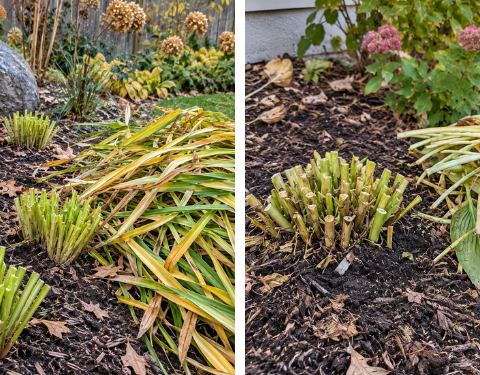
When autumn arrives, resist the temptation to cut every perennial to ground level immediately.
Some butterflies and other beneficial insects may spend winter among stems, leaves, bark, or other sheltered plant material.
Consider leaving some perennial stems and seed heads standing until later.
They can also provide:
- Winter structure
- Seeds for birds
- Shelter for insects
- Visual interest
You can clean pathways and remove diseased plant material while leaving selected healthy areas relatively undisturbed.
12 Great Plants for a Butterfly Garden
If you’re unsure where to start, consider a mixture such as:
- Milkweed – Essential host plant for monarch caterpillars and also provides flowers for pollinators.
- Purple coneflower – Long-lasting summer blooms with broad landing surfaces.
- Asters – Valuable late-season nectar when many summer flowers are finished.
- Liatris – Tall purple flower spikes that attract numerous butterflies.
- Bee balm – Colorful summer flowers popular with a wide range of pollinators.
- Black-eyed Susan – Tough, cheerful perennial that performs well in sunny gardens.
- Joe-Pye weed – Large flower clusters can become butterfly magnets in suitable locations.
- Goldenrod – An excellent late-season nectar source.
- Sedum – Late-blooming varieties provide accessible clusters of nectar-rich flowers.
- Coreopsis – Long-blooming flowers that add bright color.
- Verbena – Produces clusters of flowers that many butterflies readily visit.
- Zinnias – Easy annuals that can provide abundant summer flowers, especially varieties with accessible centers.
Choose species and cultivars appropriate for your climate and growing conditions.
Can You Create a Butterfly Garden in Containers?
Absolutely.
You don’t need a large backyard.
A sunny balcony, patio, or small courtyard can support visiting butterflies if you choose appropriate plants.
Use several containers rather than one tiny pot.
Include different flower types and bloom periods.
Depending on your location, pots could contain:
- Compact milkweed species
- Zinnias
- Verbena
- Coreopsis
- Asters
- Herbs used as host plants
- Other locally appropriate pollinator flowers
Place the pots close together so they form a recognizable patch of color.
Just remember that containers dry quickly during hot weather, so check them regularly.
A butterfly garden is one of those gardening projects where the benefits extend far beyond appearance.
You get beautiful flowers, but you also create food, shelter, breeding habitat, and resting places for butterflies and other pollinators.
The best gardens don’t just brighten your yard – they become something you can enjoy season after season.
If you’re ready to grow your own backyard pharmacy, the Medicinal Garden Kit is a wonderful place to begin.
Inside you’ll find 2,409 non-GMO seeds, a detailed Herbal Medicinal Guide, and 2 FREE bonuses to help you grow a wide variety of traditional medicinal herbs with confidence.
Take a look at the Medicinal Garden Kit and start growing something truly rewarding.