Nothing beats the refreshing taste of a sweet, juicy, deep red watermelon—especially on a hot summer day. But let’s face it: picking the perfect watermelon can feel like a gamble.
Ever brought one home only to slice it open and find it pale, mushy, or bland? You’re not alone.
The good news is, choosing a ripe, sweet, and crisp watermelon isn’t as tricky as it seems.
With a little know-how, you can pick a winner every single time—whether you’re at a grocery store, farmers market, or picking straight from the vine.
These 5 science-backed and time-tested tricks will help you select a watermelon that’s perfectly ripe, nutrient-rich, and incredibly delicious.
Why Choosing the Right Watermelon Matters
A ripe watermelon isn’t just about taste. When harvested at the perfect time, watermelon is:
-
Higher in natural sugars, making it more flavorful.
-
Denser in nutrients, including vitamin C, lycopene, potassium, and antioxidants.
-
Easier to digest, as ripe fruit has broken down certain fibers and starches.
-
More hydrating, thanks to a high water content locked inside the firm flesh.
Unripe watermelons tend to be lower in nutritional value and flavor. That’s why choosing the right one ensures you’re maximizing taste and health benefits with every slice.
1. Look for a Creamy Yellow Field Spot
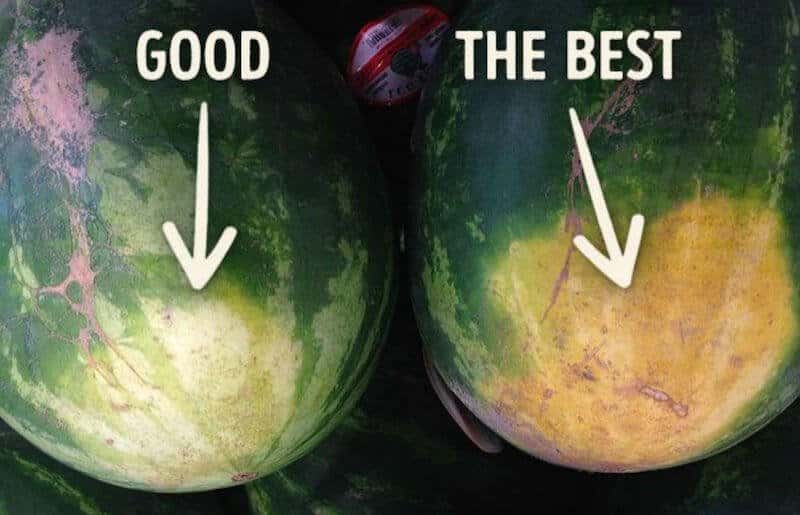
One of the most important signs of a ripe watermelon is the field spot, the area where the melon rested on the ground as it ripened in the sun.
-
What to look for: A large, creamy yellow or dark golden spot.
-
Avoid: Melons with a white, pale, or nonexistent field spot. These were likely harvested too early and haven’t developed full sweetness.
The darker and richer the yellow, the longer the melon ripened on the vine—which usually translates to better flavor and more sugar content.
2. Check for Sugar Webbing or Scarring
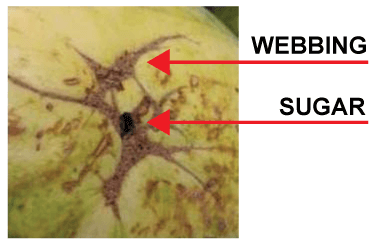
Next, inspect the surface of the watermelon for brown, rough webbing that looks like a spider web or scarring.
-
What it means: These web-like scars are created when the fruit is pollinated multiple times by bees.
-
Why it matters: More pollination equals more seeds and sweeter fruit. It’s a natural indicator that the watermelon had enough time to mature fully.
A melon with heavy webbing might look less “perfect” on the outside—but don’t let appearances fool you. These melons are often the sweetest of the bunch.
3. Don’t Fear the Black Spots or Sugar Leaks
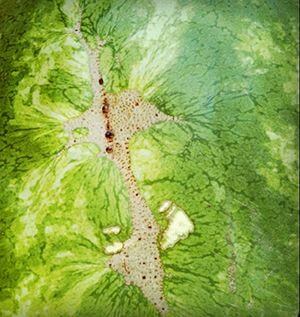
If you notice small, black, sticky-looking dots or hardened sap on the rind of the watermelon, take it as a good sign.
-
What’s happening: These black spots are called sugar spots, formed when the sugar inside the melon begins to leak out through the rind.
-
What it means: The watermelon is packed with natural sugars, making it ultra-sweet.
Many shoppers mistakenly pass on these melons thinking they’re damaged. In truth, these melons are often the best ones in the bin.
4. Pick a Heavy, Medium-Sized Watermelon
Weight is a key indicator of ripeness and juiciness. Ripe watermelons contain lots of water and sugar, which makes them feel heavier than they look.
-
What to do: Pick up several melons of the same size and choose the one that feels heaviest for its size.
-
Size tip: Aim for a medium-sized watermelon—not too small (likely underripe) and not too large (which may be overripe or watery inside).
A heavy melon equals a hydrated melon—and that means it’s full of juice and flavor.
5. Use the Hollow Sound Test
This is one of the most reliable and old-school methods: the knock test. Tapping or knocking on a watermelon can tell you how dense or hollow it is inside, which is a major clue to ripeness.
Here’s how to do it:
-
Hold the melon close to your ear.
-
Gently tap it with your knuckles.
-
Listen for the sound.
-
A ripe watermelon will produce a deep, hollow, resonant sound—almost like a drum or a vibration.
-
An unripe or overripe watermelon will sound dull, flat, or thick.
With a little practice, you’ll be able to instantly recognize the sound of a melon that’s bursting with juice and flavor.
Bonus Tip: Inspect the Shape and Skin
-
Uniform shape: Choose a melon that’s symmetrical and evenly shaped. Lumps and irregularities can indicate uneven ripening.
-
Dull rind: A matte finish on the skin is another good indicator. Shiny watermelons tend to be underripe.
-
No soft spots: Avoid melons with indentations or soft spots, which can signal overripeness or internal damage.
Picking a delicious watermelon doesn’t have to be a guessing game.
With these 5 simple tips—field spot color, webbing, sugar spots, weight, and sound—you can confidently choose a watermelon that’s sweet, ripe, and ready to eat.
When you find the perfect melon, cutting into it will feel like popping open a pressurized container of summer refreshment. The rind splits with ease, the flesh glistens, and the flavor is unmatched.
So next time you’re at the market, take a few extra seconds to inspect your watermelon. Your reward? A perfectly ripe, juicy, and nutrient-rich fruit every time.