In container gardening, soil structure dictates root health. A common belief among gardeners is that adding sand to potting soil automatically improves drainage, loosens heavy mixtures, and prevents root rot.
While sand can be an exceptional tool for specific plant species and propagation tasks, misusing it can ruin your potting mix.
Depending on the type of sand you select and the soil components you mix it with, sand can either create an airy, fast-draining medium or turn your container soil into a dense, concrete-like mass that smothers roots.
Here is a guide on when to add sand to potting soil, when to avoid it, and how to select the right materials for container success.
The Physics of Soil Texture: Coarse vs. Fine Sand
To understand when sand helps or hurts potting soil, it helps to look at particle size:
-
Fine Sand (Play Sand / Beach Sand): Features uniform, microscopic particles (0.05 to 0.25 mm). When mixed with fine peat moss, coconut coir, or organic compost, these tiny grains slip directly into the air spaces between soil particles. Instead of improving aeration, fine sand fills the pores, resulting in heavy compaction, poor drainage, and root suffocation.
-
Coarse Sand (Horticultural Sand / Builder’s Sand): Composed of large, jagged, irregular particles (0.5 to 2.0 mm). Because the particles are large and angular, they cannot pack tightly together. They create permanent macroscopic air pockets that allow excess water to drain away rapidly while maintaining root aeration.
5 Times You SHOULD Add Sand to Potting Soil
1. Potting Cacti, Succulents, and Desert Flora
Desert natives like cacti, agaves, echeverias, and aloes evolved in mineral-rich, low-organic soils where water drains instantly.
Standard peat-based potting mixes retain far too much moisture for these species, leading to stem rot and root decay (Pythium).
Mixing 30% to 50% coarse horticultural sand with standard potting soil creates a gritty mix that mimics desert environments. Water flows straight through the container, allowing roots to take up hydration without sitting in damp soil.
2. Weighting Top-Heavy Outdoor Containers
Lightweight potting mixes made from peat moss, perlite, and coconut coir work well indoors, but they lack ballast.
Tall outdoor container plants – such as potted citrus trees, ornamental grasses, or topiary shrubs – are easily tipped over by strong winds.
Adding 15% to 20% coarse builder’s sand adds physical weight to the potting mix without compromising drainage. This extra ballast lowers the container’s center of gravity, keeping tall pots upright on windy patios.
3. Propagating Softwood and Hardwood Cuttings
When rooting plant cuttings, moisture control is critical. Soil that stays too wet rots the raw cut stem, while soil that dries out completely halts root development.
A propagation mix consisting of 50% coarse horticultural sand and 50% peat moss or perlite provides an ideal balance.
The coarse sand anchors the delicate stems in place, maintains oxygen flow around the stem base, and prevents water stagnation while roots form.
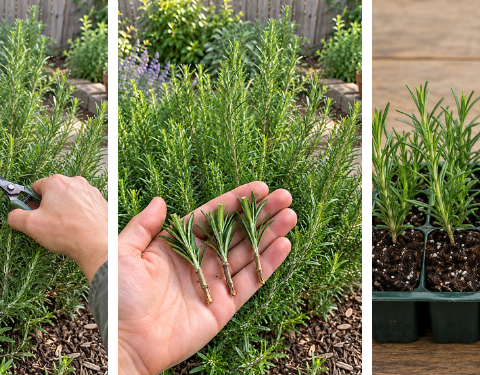
4. Cultivating Native Mediterranean Herbs
Herbs native to the rocky Mediterranean region – such as rosemary, lavender, thyme, oregano, and sage – thrive in lean, gravelly, low-nitrogen soils.
When grown in rich, moisture-retentive potting soils, these herbs often suffer from root rot or develop weak, flavorless growth.
Adding 20% to 30% coarse sand lowers moisture retention and creates the lean soil conditions these herbs need to produce concentrated essential oils.
5. Growing Taprooted or Tuberous Root Crops in Containers
Growing root crops like carrots, radishes, or dwarf root tubers in pots requires loose, uncompacted soil. Heavy or lumpy soil forces taproots to split, fork, or stunt.
Mixing 20% coarse sand into a lightweight compost-based potting mix reduces soil resistance, allowing taproots to grow straight, smooth, and deep without encountering dense soil pockets.
5 Times You SHOULDN’T Add Sand to Potting Soil
1. Your Potting Mix Contains Heavy Clay or Silt
If you are blending garden soil containing clay into your container mix, adding sand is a common mistake.
When fine or medium sand particles mix with microscopic clay platelets, they form a matrix similar to concrete.
The small sand grains lock between the clay particles, eliminating air spaces and creating a dense, impervious block that roots cannot penetrate. Use perlite or pumice instead to aerate clay-heavy soils.
2. You Only Have Access to Fine Play Sand or Beach Sand
Using play sand from a sandbox or sand gathered from an ocean beach is detrimental to potted plants:
-
Play Sand: The particles are too fine and rounded, causing severe soil compaction.
-
Beach Sand: Contains high concentrations of sodium chloride (salt) and carbonates. As water evaporates, salt builds up in the root zone, scorching root tips and killing sensitive potted plants.
3. Growing Moisture-Loving Indoor Tropicals
Tropical houseplants – such as calatheas, ferns, peace lilies, monsteras, and pothos – prefer evenly moist, humus-rich soils that retain hydration without staying waterlogged.
Adding coarse sand speeds up drainage too much and strips the soil of its water-holding capacity. Tropical plants in sand-heavy mixes will wilt quickly, requiring constant watering and suffering from dry leaf margins.
4. Potting Seedlings with Fragile, Fibrous Root Systems
While coarse sand works well for unrooted stem cuttings, young seedlings with fine, thread-like root systems (such as begonias, petunias, or delicate vegetables) struggle in sandy mixes.
The jagged edges of heavy, coarse sand particles can shear or crush delicate root hairs when the container is moved or watered.
Seedlings grow best in smooth, lightweight seed-starting mixes made from fine peat moss, vermiculite, and perlite.
5. Planting Heavy-Feeding Garden Vegetables
Container-grown vegetables like tomatoes, peppers, eggplants, and squash are heavy feeders that require high nutrient retention and consistent moisture to produce fruit.
Sand is an inert mineral containing zero organic nutrients or cation exchange capacity (CEC) – meaning it cannot hold onto applied liquid fertilizers.
Adding sand to vegetable container mixes dilutes the available nutrients and causes liquid fertilizers to wash straight out the bottom drainage holes before plants can absorb them.
Comparison Matrix: Sand vs. Alternative Aeration Amendments
When deciding whether sand is the right addition for your potting soil, compare it to common alternative soil amendments:
| Soil Amendment | Particle Size / Characteristics | Primary Benefit | Best For | Main Drawback |
| Coarse Hort Sand | Heavy, jagged, non-porous | Adds physical weight & fast drainage | Cacti, lavender, top-heavy pots | Heavy to transport; no nutrient holding |
| Perlite | Ultra-lightweight, volcanic glass | Maximum aeration & light weight | Indoor tropicals, seed starting | Floats to top of pot over time |
| Pumice | Medium-weight, porous rock | Superior aeration; doesn’t float | Succulents, bonsai, cacti | More expensive; harder to source |
| Coarse Vermiculite | Lightweight, expanded mica | Holds moisture & nutrients while aerating | Ferns, seedlings, moisture lovers | Holds too much water for cacti |
How to Mix Coarse Sand Into Potting Soil Safely
Follow this procedure to blend a safe, well-aerated potting mix for sand-tolerant plants:
Safety Guidelines & Precautions
When handling dry soil amendments like sand and perlite, keep these safety practices in mind:
-
Avoid Inhaling Silica Dust: Dry horticultural sand contains fine crystalline silica dust. Always work in a well-ventilated area, or lightly dampen the sand before mixing to prevent airborne dust.
-
Check Soil pH: Unwashed construction sand can contain crushed limestone, which raises soil pH. Check that your sand is labeled “neutral” or “washed” if you are growing acid-loving plants like blueberries or azaleas.
Pro-Tip on Sand Alternatives: If you want the drainage benefits of coarse sand without the heavy container weight, consider pumice. Pumice is a porous volcanic rock that provides the same gritty structure and aeration as coarse sand, but weighs significantly less and holds trace minerals in its porous pockets.
Adding sand to potting soil is neither universally good nor bad – it depends entirely on particle size, plant species, and overall soil composition.