Ginger (Zingiber officinale) is a cornerstone of both culinary arts and holistic wellness. Renowned for its pungent heat and high concentration of gingerols and shogaols, it is a staple in everything from anti-inflammatory tonics to spicy stir-fries.
However, fresh ginger root is notorious for its short shelf life; left on the counter or in the refrigerator crisper, it quickly becomes shriveled, woody, or prone to mold.
The solution to preserving the biological potency and flavor profile of this rhizome lies in the freezer.
Freezing ginger is not merely a storage hack – it is a method of “functional preservation” that actually makes the root easier to use.
Here are 5 reasons why you should freeze your fresh ginger and the professional protocol for doing it correctly.
1. Effortless Grating and “Fiber-Free” Texture
The most significant barrier to using fresh ginger is its fibrous, stringy texture.
When ginger is at room temperature, the tough cellulose fibers can make grating a frustrating task, often resulting in a “mushy” pile of pulp and long, woody strands.
-
The Mechanism: Freezing ginger solidifies the water content within the plant cells. This turns the soft, fibrous root into a firm, crystalline structure.
-
The Result: When you grate frozen ginger, the fibers break cleanly and effortlessly. It creates a fine, snow-like zest that dissolves instantly into sauces, teas, and dressings, ensuring you get the flavor without the stringy mouthfeel.
2. Preservation of Volatile Gingerols and Shogaols
The health benefits of ginger are derived from its bioactive compounds, specifically gingerols.
When ginger sits in the refrigerator, it undergoes a slow process of oxidation and enzymatic breakdown, which diminishes these medicinal properties over time.
-
The Mechanism: Sub-zero temperatures significantly slow down the molecular degradation of the root. Freezing “locks in” the essential oils and phenolic compounds at their peak potency.
-
The Result: Frozen ginger retains its “bite” and its anti-inflammatory efficacy for months. Whether you are using it for nausea relief or to support muscle recovery, frozen ginger provides a more consistent therapeutic dose than aged, refrigerated root.
3. Total Elimination of Food Waste
Ginger is often sold in large, multi-fingered rhizomes, yet most recipes only call for a “one-inch knob.”
This leads to the “forgotten ginger” syndrome, where the remainder of the root is pushed to the back of the fridge and eventually discarded.
-
The Strategy: By freezing ginger immediately upon purchase, you transition from a “perishable” mindset to a “perpetual” one.
-
The Result: You can grate exactly what you need—even a teaspoon’s worth—and return the rest to the freezer. This ensures that 100% of the ginger you pay for is actually consumed, reducing your household food waste and saving money.
4. Superior Peel Management
Peeling fresh, room-temperature ginger is often a wasteful process, as knives or traditional peelers tend to remove a significant amount of the nutrient-dense flesh along with the skin.
-
The Mechanism: The skin of frozen ginger becomes slightly more brittle, while the flesh remains firm.
-
The Result: You often don’t even need to peel frozen ginger. Because the grating process is so fine when the root is frozen, the skin (which is paper-thin) is pulverized along with the flesh, making it indistinguishable in most cooked dishes. If you do choose to peel, a spoon can easily scrape away the skin of a frozen knob with surgical precision.
5. Instant Availability for “Rescue Remedies”
Ginger is a primary “first-aid” food, often used to treat sudden bouts of indigestion, motion sickness, or the early onset of a sore throat.
-
The Convenience: Searching for a fresh, viable piece of ginger when you are feeling unwell is a hurdle.
-
The Result: Having a pre-frozen stash means you are always 60 seconds away from a potent ginger tea. You can simply grate the frozen root directly into a mug of hot water, providing an immediate infusion of heat and digestive support without a trip to the grocery store.
How To Freeze Fresh Ginger: 3 Professional Methods
To get the most out of your frozen ginger, choose the method that best fits your cooking style.
Method A: The Whole-Root Method (Best for Grating)
This is the simplest and most versatile method for those who use ginger in small amounts for teas and stir-fries.
-
Wash and Dry: Thoroughly wash the ginger and pat it completely dry. Any surface moisture will cause the root to stick to the freezer bag.
-
Airtight Seal: Place the entire rhizome (or large “fingers”) into a heavy-duty freezer bag. Squeeze out as much air as possible to prevent freezer burn.
-
Usage: When a recipe calls for ginger, take the root out, grate what you need (skin and all), and put the remainder back in the freezer immediately.
Method B: The “Coin” Method (Best for Infusions and Soups)
If you frequently make broths, soups, or infused waters that require ginger slices rather than zest, this is the preferred technique.
-
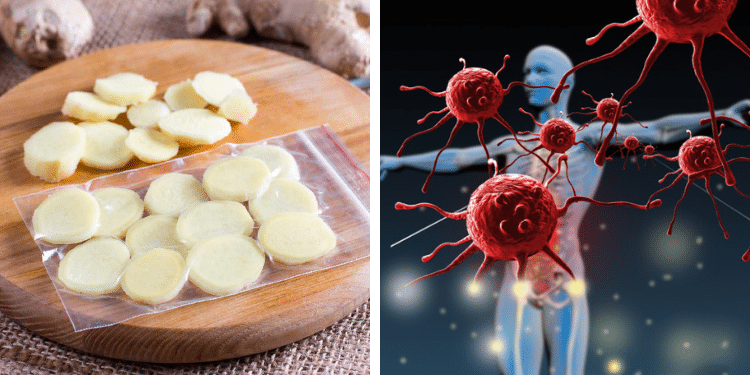
Slice: Peel the ginger (optional) and slice it into 1/4-inch “coins.”
-
Flash Freeze: Lay the slices on a baking sheet so they are not touching. Freeze for 2 hours. This prevents them from clumping together into a single block.
-
Store: Transfer the frozen coins into a freezer bag. You can now grab a single slice whenever you need to drop one into a pot of simmering soup.
Method C: The “Paste” Method (Best for High-Volume Cooking)
If you cook Indian or Thai cuisine frequently, having ginger paste ready to go is a massive time-saver.
-
Puree: Peel and roughly chop the ginger. Pulse it in a food processor with a teaspoon of neutral oil or water until it forms a thick paste.
-
Portion: Spoon the paste into an ice cube tray (each compartment roughly equals one tablespoon).
-
Freeze: Once frozen solid, pop the “ginger cubes” out and store them in a bag. Drop a cube directly into your hot pan at the start of your cooking process.
Freezing fresh ginger is a masterclass in functional kitchen efficiency. It solves the problems of texture, waste, and potency in one simple step.
By moving your ginger from the crisper drawer to the freezer, you ensure that you always have access to the bright, anti-inflammatory power of this ancient root, ready to be grated into your next meal at a moment’s notice.