Gardening can be one of the most rewarding hobbies—whether you’re growing vegetables, herbs, or flowers.
But one challenge every gardener eventually faces is how to protect their plants from pests like aphids, caterpillars, spider mites, and fungus gnats.
While chemical pesticides can be effective, they often pose risks to the environment, beneficial insects, pets, and even your health.
The good news is that you can make your own natural garden pesticides at home using safe, common ingredients.
These homemade solutions are not only cost-effective and easy to prepare, but they also provide targeted protection without harming the overall garden ecosystem.
Here are four powerful ways to create your own natural garden pesticide, using items you probably already have in your kitchen or pantry.
1. Garlic Spray – A Powerful All-Purpose Insect Repellent
Garlic has long been known for its antimicrobial and insect-repelling properties.
It’s one of the most effective ingredients for a DIY pesticide because of its strong smell and sulfur content, which naturally deters many common pests, including aphids, beetles, and caterpillars.
How to make garlic pesticide spray:
Ingredients:
- 2 full heads of garlic (not just cloves)
- 1 tablespoon of liquid dish soap (biodegradable and unscented)
- 4 cups of water
- 1 tablespoon of vegetable oil (optional, helps with adherence to leaves)
Instructions:
-
Peel the garlic and blend it with water to form a liquid paste.
-
Let it sit overnight to infuse the water.
-
Strain the mixture through cheesecloth or a fine sieve.
-
Add the dish soap and vegetable oil.
-
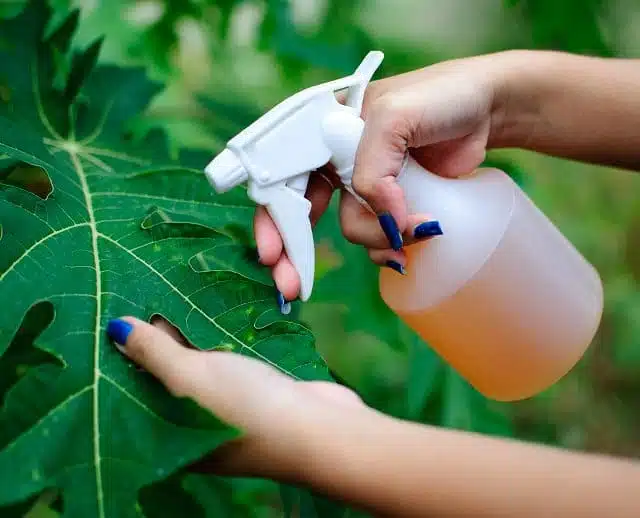
Pour the mixture into a spray bottle.
How to use: Spray the garlic solution on the leaves and stems of affected plants. Focus on the undersides of leaves where pests often hide. Reapply every 5–7 days or after rain.
2. Neem Oil Spray – A Natural Pesticide and Fungicide
Neem oil, extracted from the seeds of the neem tree, is a staple in organic gardening. It works by disrupting the life cycle of insects—making it harder for them to eat, grow, and reproduce.
Neem oil is especially effective against soft-bodied insects like whiteflies, aphids, mealybugs, and spider mites. It also helps control powdery mildew and fungal issues.
How to make neem oil pesticide spray:
Ingredients:
- 1 tablespoon of cold-pressed neem oil
- 1 teaspoon of liquid dish soap or insecticidal soap
- 1 quart (4 cups) of warm water
Instructions:
-
Mix the dish soap with the water in a spray bottle.
-
Add the neem oil and shake well to emulsify.
-
Use immediately for best results.
How to use: Spray directly onto affected plant areas, ideally in the early morning or late afternoon to avoid leaf burn. Reapply every 7–10 days or after heavy rain. Avoid spraying when pollinators like bees are active.
3. Chili Pepper Spray – A Hot Solution for Stubborn Pests
Chili peppers contain capsaicin, the compound responsible for their heat. It’s also what makes them excellent natural pest repellents.
Chili spray is highly effective against chewing insects like beetles, ants, and larger garden pests like squirrels and rabbits.
How to make chili pepper pesticide spray:
Ingredients:
- 1 tablespoon of chili powder (or 2 fresh hot peppers, chopped)
- 1 quart of water
- 1 teaspoon of liquid dish soap
Instructions:
-
Boil the water and add the chili powder or fresh peppers.
-
Let the mixture simmer for 10–15 minutes.
-
Allow it to cool completely, then strain if needed.
-
Stir in the dish soap.
-
Pour into a spray bottle.
How to use: Spray on plant leaves and stems. Be cautious not to touch your eyes or face during or after application. Test on a small portion of the plant first, as chili spray can be strong. Reapply every few days as needed.
4. Baking Soda Spray – A Natural Fungicide for Mildew and Leaf Spots
Fungal diseases like powdery mildew, rust, and black spot can spread rapidly through a garden if not managed early. Baking soda helps raise the pH on plant surfaces, creating an environment that’s inhospitable to fungi.
How to make baking soda fungicide spray:
Ingredients:
- 1 tablespoon of baking soda
- 1 tablespoon of vegetable oil
- 1 teaspoon of dish soap
- 1 quart of water
Instructions:
-
Mix all ingredients thoroughly in a spray bottle.
-
Shake well before each use.
How to use: Spray the solution on affected plant areas in the early morning to allow drying time. Apply weekly as a preventive measure or after signs of infection appear. Avoid spraying in full sun to prevent leaf burn.
Additional Tips for Natural Pest Control
-
Inspect regularly: Check your plants every few days to catch problems early.
-
Encourage beneficial insects: Ladybugs, lacewings, and parasitic wasps help control pest populations naturally.
-
Use companion planting: Marigolds, basil, garlic, and nasturtiums repel many garden pests when planted near vegetables.
-
Keep it clean: Remove fallen leaves, rotting fruit, and dead plants to minimize hiding spots for insects.
Using natural, homemade pesticides is not only safer for the environment and your health, but it also helps preserve beneficial insects that keep your garden thriving.
These four DIY solutions—garlic spray, neem oil, chili pepper spray, and baking soda fungicide—offer effective ways to protect your plants without resorting to harsh chemicals.
By incorporating these methods into your gardening routine, you can enjoy a healthier, more vibrant garden while reducing your ecological footprint.
Try one or all of these natural solutions and experience the satisfaction of chemical-free pest control right from your own home.