
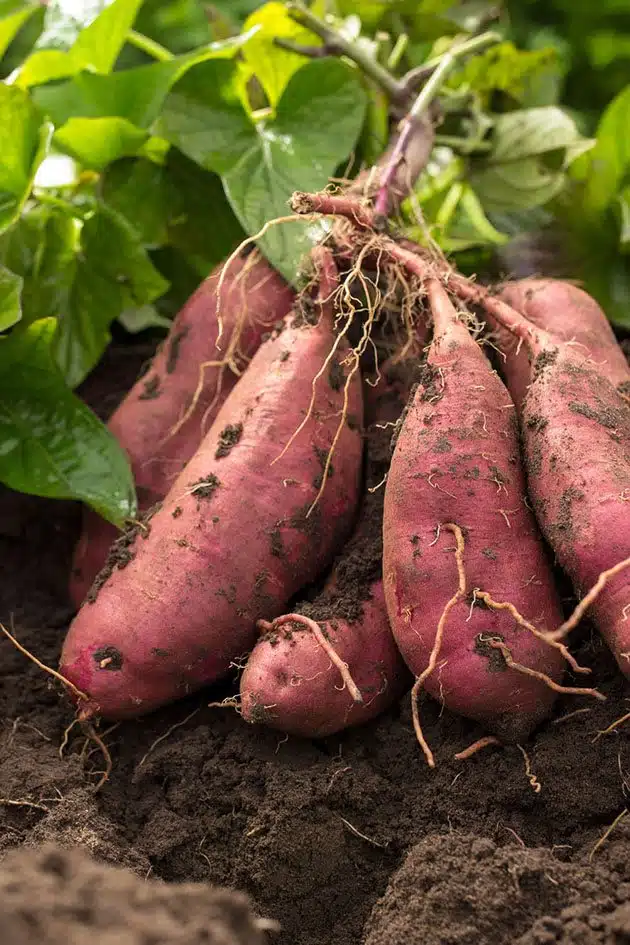
Perennial vegetables are a fantastic addition to any garden, providing fresh produce year after year with minimal effort.
Unlike annuals, which need to be replanted each season, perennials return every year, making them a sustainable and cost-effective choice.
Here are 18 perennial vegetables you can plant today and enjoy for many years to come.
1. Asparagus (Asparagus officinalis)
Asparagus is a popular perennial vegetable known for its tender spears. It takes a few years to establish, but once it does, it can produce for up to 20 years.
Planting Tips:
- Plant in well-drained soil in a sunny spot.
- Space crowns 12-18 inches apart.
- Mulch to retain moisture and control weeds.
2. Rhubarb (Rheum rhabarbarum)
Rhubarb is known for its tart stalks, which are often used in pies and desserts. The leaves are toxic, so only the stalks are harvested.
Planting Tips:
- Plant crowns in early spring in rich, well-drained soil.
- Space plants 3 feet apart.
- Harvest lightly in the first few years to allow plants to establish.
3. Jerusalem Artichoke (Helianthus tuberosus)
Also known as sunchokes, Jerusalem artichokes produce edible tubers that taste similar to potatoes.
Planting Tips:
- Plant tubers in spring or fall in well-drained soil.
- Space tubers 12-18 inches apart.
- Harvest tubers in the fall after the plants have died back.
4. Horseradish (Armoracia rusticana)
Horseradish is a hardy perennial known for its pungent roots, used to make horseradish sauce.
Planting Tips:
- Plant root cuttings in early spring.
- Space plants 24 inches apart.
- Harvest roots in late fall after the first frost.
5. Globe Artichoke (Cynara scolymus)
Globe artichokes produce large, edible flower buds that are harvested before they open.
Planting Tips:
- Plant in well-drained soil in full sun.
- Space plants 3-4 feet apart.
- Cut back the plant after harvest to encourage new growth.
6. Walking Onion (Allium proliferum)
Walking onions, or Egyptian onions, are unique perennials that produce small bulbs at the top of their stems.
Planting Tips:
- Plant bulbs in fall or spring in well-drained soil.
- Space bulbs 6-8 inches apart.
- Harvest the topsets and underground bulbs.
7. Sorrel (Rumex acetosa)
Sorrel is a leafy green with a tangy, lemony flavor, perfect for salads and soups.
Planting Tips:
- Plant seeds or transplants in spring or fall.
- Space plants 12 inches apart.
- Harvest leaves regularly to encourage new growth.
8. Sea Kale (Crambe maritima)
Sea kale is a coastal plant with edible leaves, shoots, and flowers. It has a mild, cabbage-like flavor.
Planting Tips:
- Plant in well-drained soil in full sun.
- Space plants 24-36 inches apart.
- Blanch shoots by covering them with soil or a pot for tender, white stems.
9. Lovage (Levisticum officinale)
Lovage has a celery-like flavor and can be used in soups, stews, and salads. Both the leaves and stalks are edible.
Planting Tips:
- Plant seeds or transplants in spring.
- Space plants 24-36 inches apart.
- Harvest leaves and stalks regularly.
10. Good King Henry (Blitum bonus-henricus)
Good King Henry is an old-fashioned perennial vegetable with spinach-like leaves and asparagus-like shoots.
Planting Tips:
- Plant in rich, well-drained soil in full sun or partial shade.
- Space plants 18 inches apart.
- Harvest leaves and shoots regularly.
11. Turkish Rocket (Bunias orientalis)
Turkish rocket is a hardy perennial with edible leaves and flower buds, similar in taste to broccoli.
Planting Tips:
- Plant in well-drained soil in full sun.
- Space plants 18-24 inches apart.
- Harvest leaves and flower buds regularly.
12. Perennial Kale (Brassica oleracea var. ramosa)
Perennial kale, such as ‘Daubenton’ kale, produces leaves year-round and can live for several years.
Planting Tips:
- Plant in well-drained soil in full sun.
- Space plants 24-36 inches apart.
- Harvest leaves regularly to promote continuous growth.
13. Watercress (Nasturtium officinale)
Watercress is a fast-growing, aquatic or semi-aquatic plant with peppery leaves, perfect for salads.
Planting Tips:
- Plant seeds or transplants in moist, rich soil or a shallow water container.
- Harvest leaves regularly to encourage new growth.
14. Scorzonera (Scorzonera hispanica)
Scorzonera, also known as black salsify, produces edible roots and young leaves.
Planting Tips:
- Plant seeds in early spring in well-drained soil.
- Space plants 12-18 inches apart.
- Harvest roots in the second year for best flavor.
15. Perennial Leeks (Allium ampeloprasum)
Perennial leeks, such as ‘Babington’s Leek,’ produce edible bulbs and leaves.
Planting Tips:
- Plant bulbs in well-drained soil in full sun.
- Space bulbs 6-8 inches apart.
- Harvest bulbs and leaves as needed.
16. Crosnes (Stachys affinis)
Crosnes, also known as Chinese artichokes, produce small, knobby tubers with a nutty flavor.
Planting Tips:
- Plant tubers in spring or fall in well-drained soil.
- Space tubers 12 inches apart.
- Harvest tubers in late fall or winter.
17. Tree Collards (Brassica oleracea var. acephala)
Tree collards are tall, perennial greens with a similar taste to collard greens and kale.
Planting Tips:
- Plant cuttings in well-drained soil in full sun.
- Space plants 3-4 feet apart.
- Harvest leaves regularly.
18. Chinese Chives (Allium tuberosum)
Chinese chives, or garlic chives, have a mild garlic flavor and produce edible leaves and flower buds.
Planting Tips:
- Plant seeds or transplants in spring.
- Space plants 12 inches apart.
- Harvest leaves and flower buds regularly.
Planting perennial vegetables is a smart investment for any garden, providing a reliable source of fresh produce year after year.
These 18 perennial veggies are not only easy to grow but also offer a variety of flavors and uses in the kitchen.
By incorporating these perennials into your garden, you’ll enjoy a bountiful harvest with less effort and more sustainability. Happy planting!


