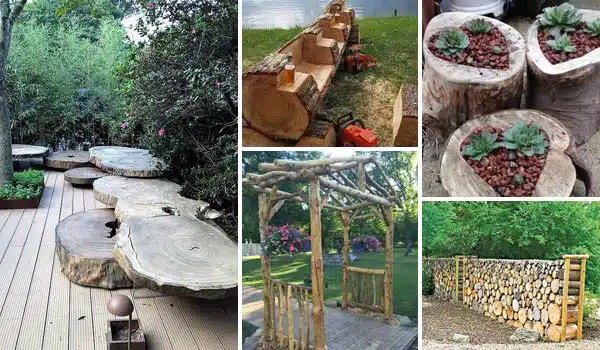
When a tree falls or is cut down, the leftover logs and trunks don’t have to go to waste. In fact, tree logs and fallen trunks are some of the most versatile and charming materials you can use for creating nature-inspired garden decorations.
They bring a beautiful rustic appeal, seamlessly blending into outdoor spaces while serving functional and decorative purposes.
If you’re feeling crafty, or if you’ve always found satisfaction in creating something beautiful with your own hands, then these DIY tree log projects are exactly what you need.
With the right tools, a little imagination, and a love for natural materials, you can turn even the most ordinary garden into a unique, enchanted space.
Whether you want to create focal points, garden furniture, or whimsical accents, here are 15 brilliant ways to transform tree logs into stunning garden features.
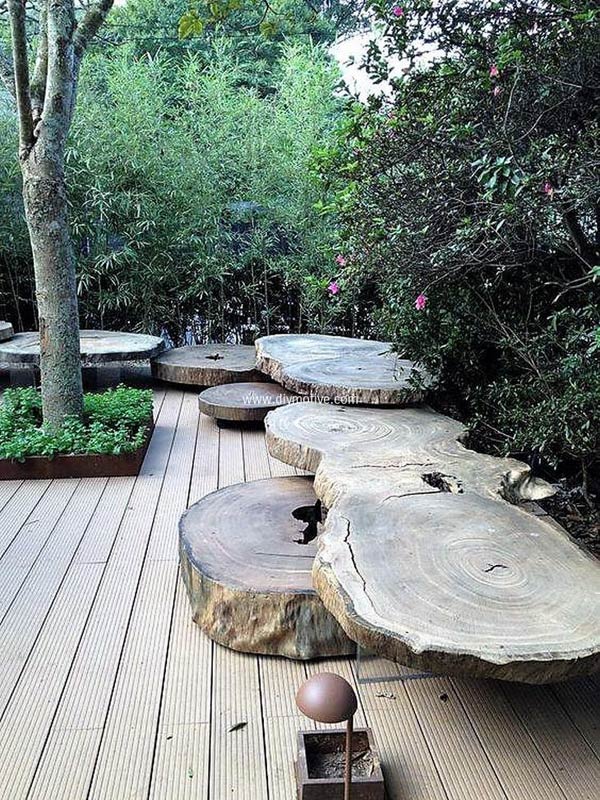
1. Big Sliced Tree Logs as Garden Benches
Thick slices of large tree trunks make sturdy, rustic benches that fit perfectly into any garden setting.
Sand the surfaces smooth, seal them with a weatherproof finish, and place them near flower beds or under a shade tree.
The natural rings and textures of the wood give each bench a distinct character, making them both functional and artistic.
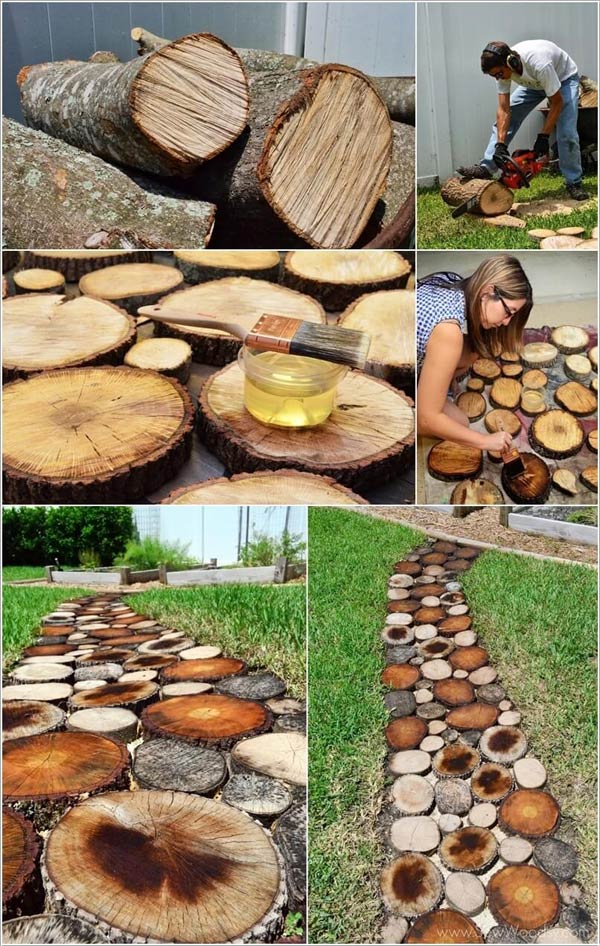
2. Build a Tree Log Slice Walkway
Create an enchanting path through your garden using tree log slices as stepping stones.
Cut logs into even slices, lay them in a pattern over a bed of gravel or sand, and you’ll have a beautiful, rustic walkway.
Log slice walkways are not only visually stunning but also environmentally friendly, giving you a durable path using natural materials.
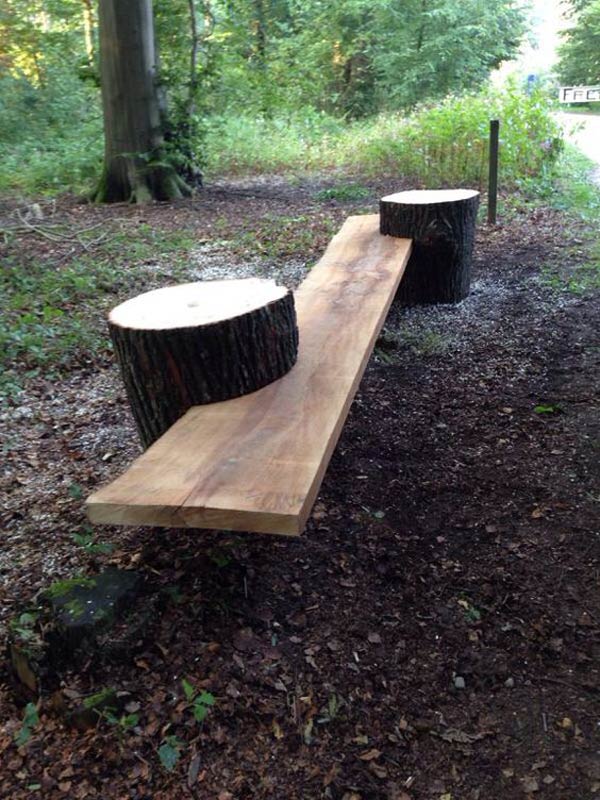
3. Garden Bench from Two Tree Logs and a Slice
Use two upright tree logs as supports and lay a large, flat slice across them to create a simple yet stylish garden bench.
This is an excellent project for beginners because it requires minimal carpentry skills.
Position the bench beside a pond, under a tree, or along a garden trail for a peaceful spot to sit and enjoy nature.
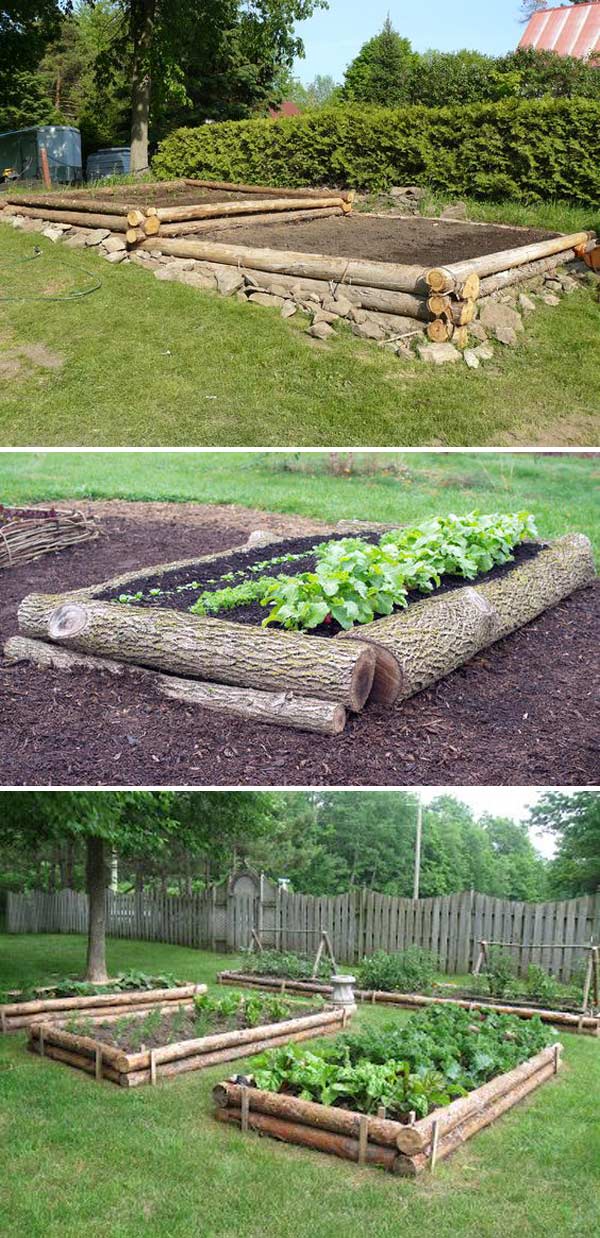
4. Raised Garden Beds from Logs
Logs can be used to form the walls of raised garden beds.
Stack and secure logs horizontally to create a frame, then fill it with rich soil for growing vegetables, herbs, or flowers.
The thick wood walls naturally insulate the soil, helping to retain moisture and maintain a stable temperature for plants.
5. Log Stairs on a Slope Garden
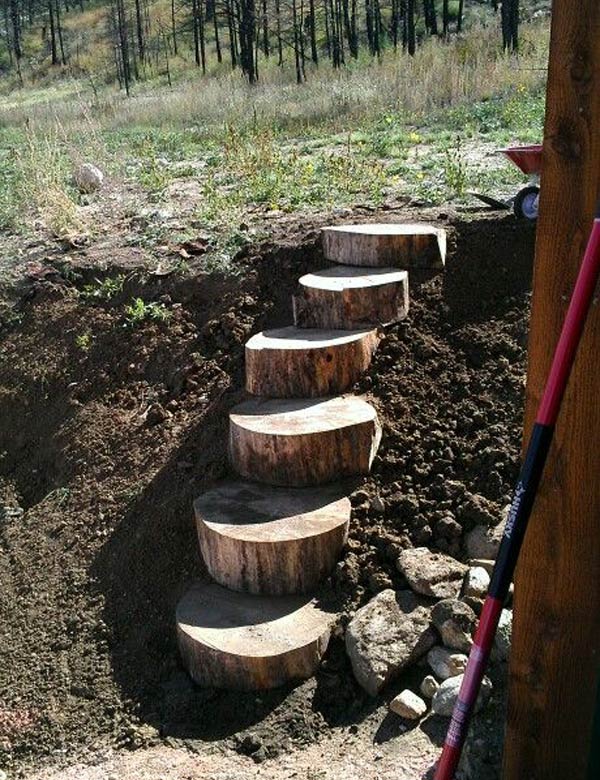
If your garden is on a slope, use cut logs to create rustic stairs.
Set horizontal logs into the hill to form the front edge of each step, backfilled with compacted soil or gravel.
Not only will this create a safer and more usable space, but the natural look will blend perfectly into the landscape.
6. Tree Log Fence
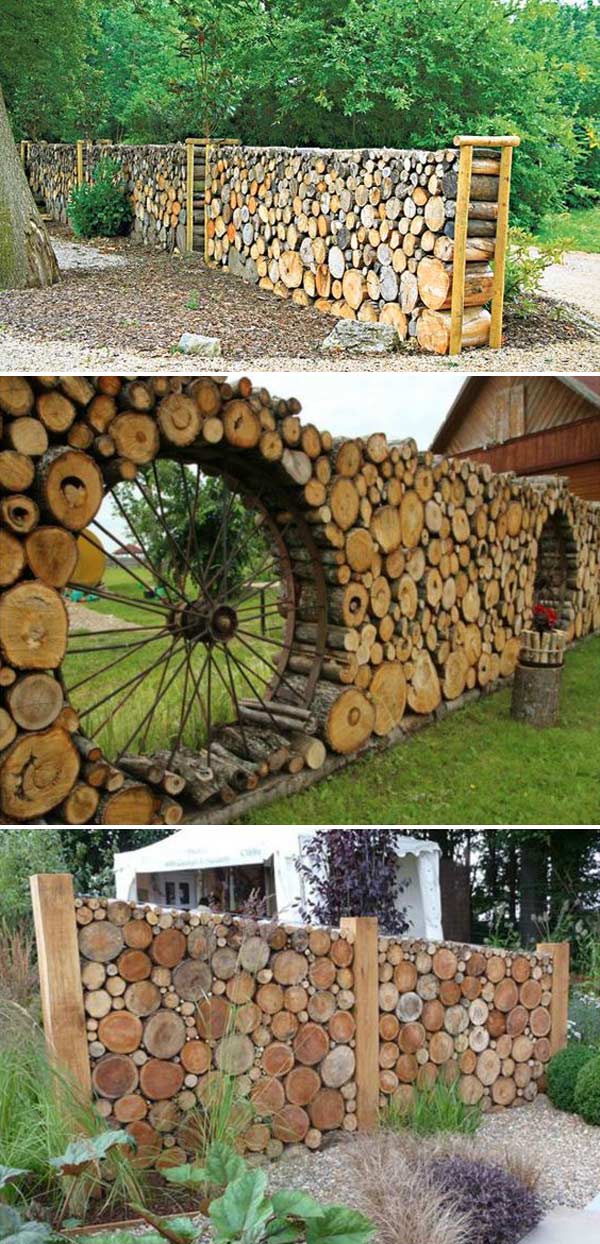
A log fence offers both privacy and an authentic, woodland look for your garden.
Lay logs horizontally or vertically, secure them together, and you have a durable boundary that feels like it belongs in nature.
Add climbing plants like ivy or clematis for an even more picturesque result.
7. Wooden Log Forest Toadstools
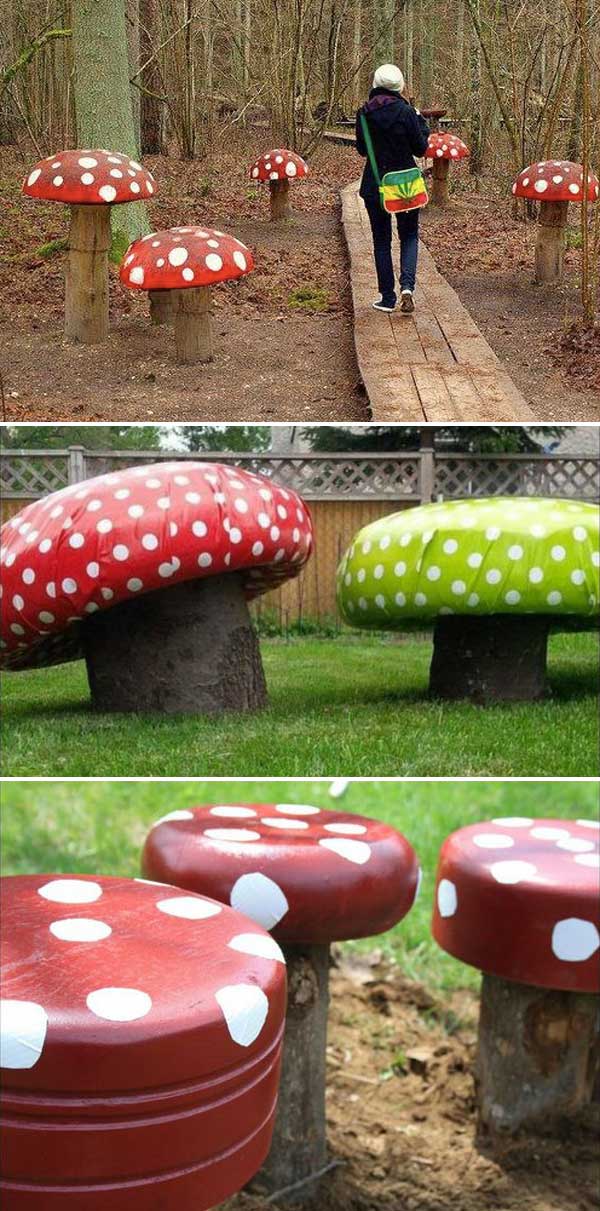
Turn small logs into charming wooden toadstools to decorate garden beds or shady corners.
Top shorter logs with rounded wooden discs to mimic mushroom caps, and paint them if desired.
These whimsical features look particularly magical among ferns, hostas, and mossy areas.
8. Stunning Tree Log Garden Gate
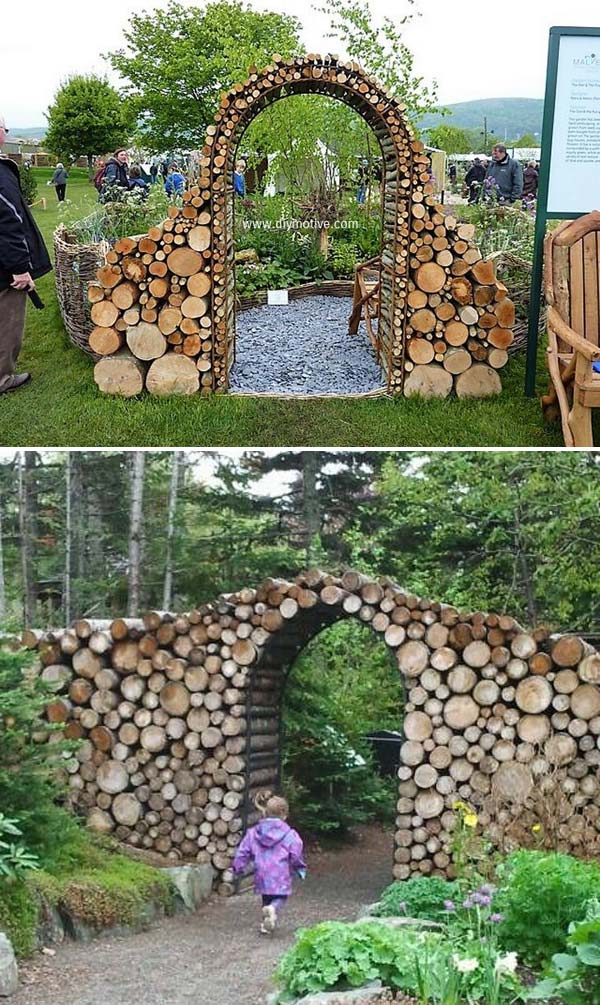
Craft a garden gate from sturdy branches and thicker logs for a fairytale-worthy entrance.
Whether it’s simple and rustic or intricate and artistic, a wooden log gate will frame your garden beautifully and make a strong first impression.
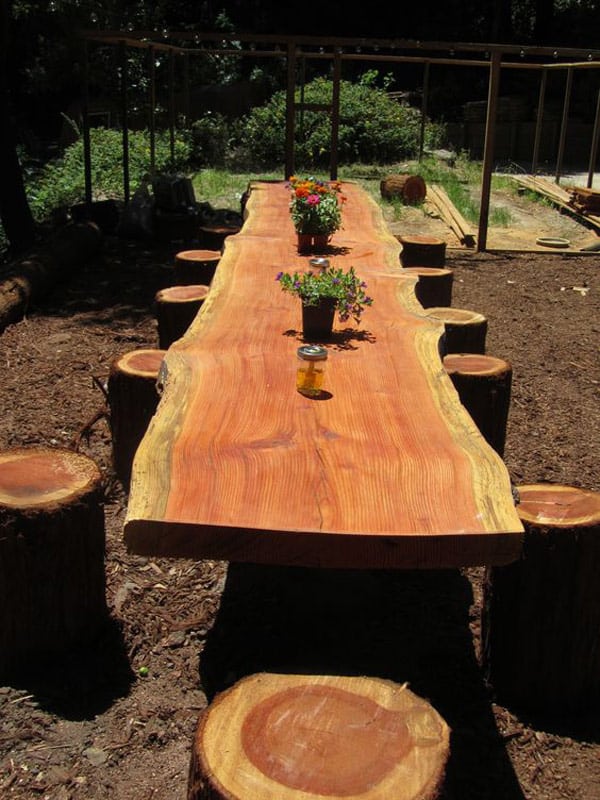
9. Dining Table from a Fallen Tree
Create a striking outdoor dining table by slicing a large fallen trunk lengthwise to form a tabletop, and use sturdy log sections as legs.
Finish with sanding and sealing, and you’ll have a unique, handcrafted table perfect for al fresco meals with family and friends.
10. Swing for Your Chickens
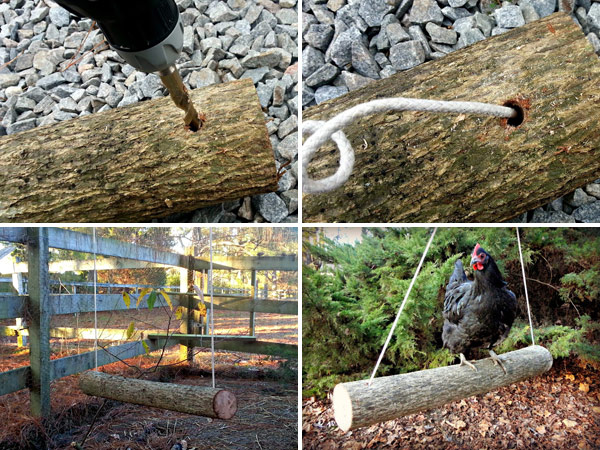
If you raise chickens, why not use an old tree trunk to build a fun swing for them?
Attach a sturdy wooden log horizontally with strong ropes or chains, and hang it in their run. Chickens love perching and swinging—it provides entertainment and keeps them active.
11. Succulent Planters from Rotted Tree Trunk Pieces
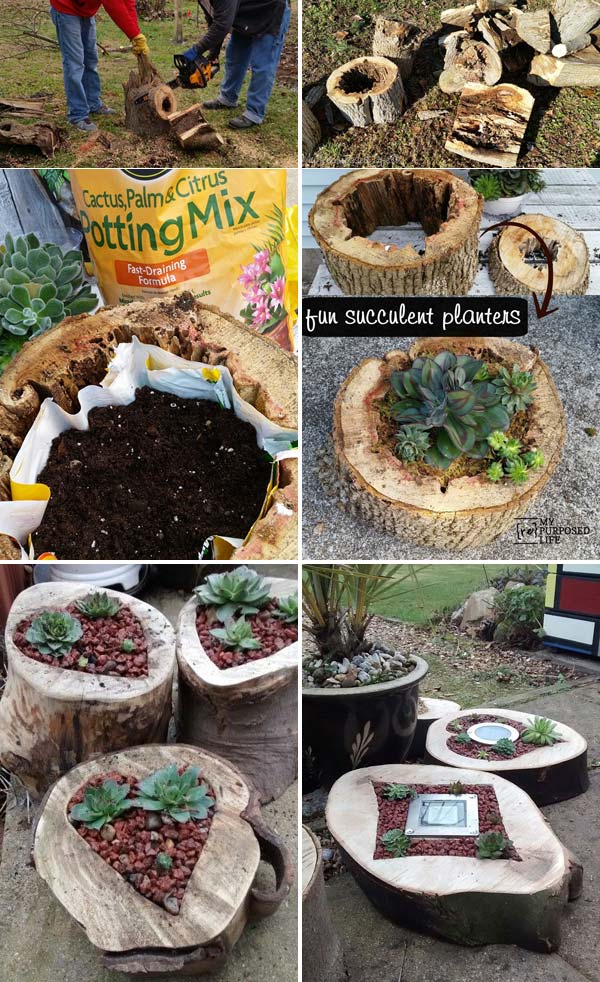
Hollow out pieces of rotted or partially decayed trunks to create natural planters for succulents, mosses, or small flowering plants.
The texture and irregularities of the old wood pair beautifully with drought-tolerant plants, making these living sculptures a showpiece in your garden.
12. Fallen Tree Log Couch
Repurpose large sections of a fallen tree into an outdoor garden couch.
Shape the log with a chainsaw or carving tools to form a backrest and seat.
After smoothing and sealing, you’ll have an incredibly sturdy and conversation-starting piece of outdoor furniture.

13. Cracked Log Lamps
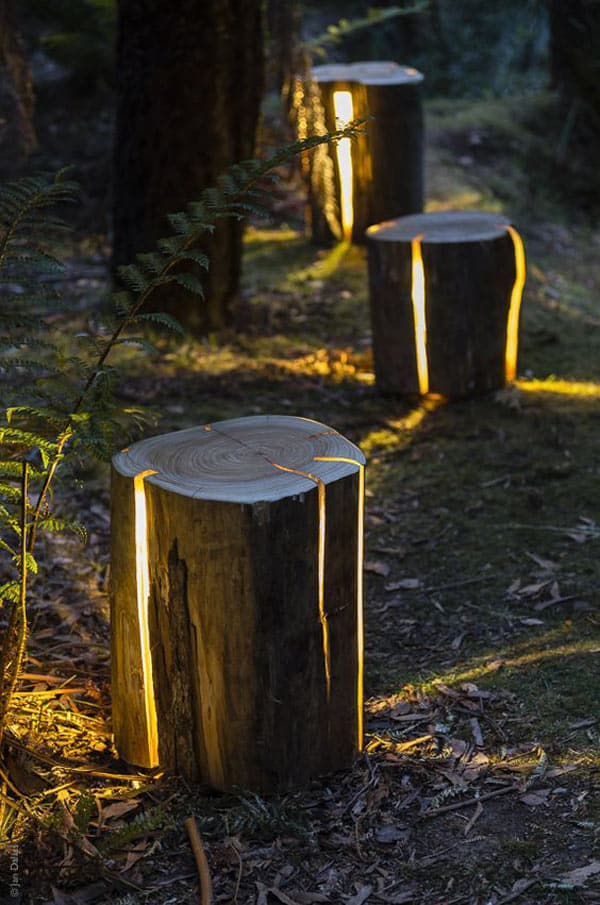
Transform cracked or split logs into stunning garden lamps by embedding lights inside.
At night, the warm glow shining through the natural cracks creates a mesmerizing effect. Use solar-powered lights for an eco-friendly, low-maintenance addition to your garden’s nighttime atmosphere.
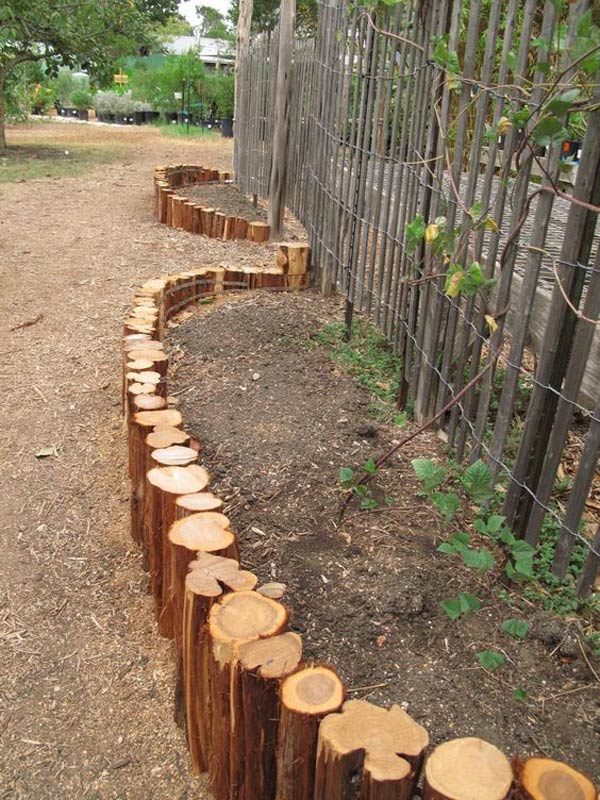
14. Vertical Log Retaining Wall
Use thick vertical logs set side-by-side to construct a retaining wall for terraced gardens or steep slopes.
This method is not only practical for erosion control but also adds a dramatic, natural backdrop to your landscaping.
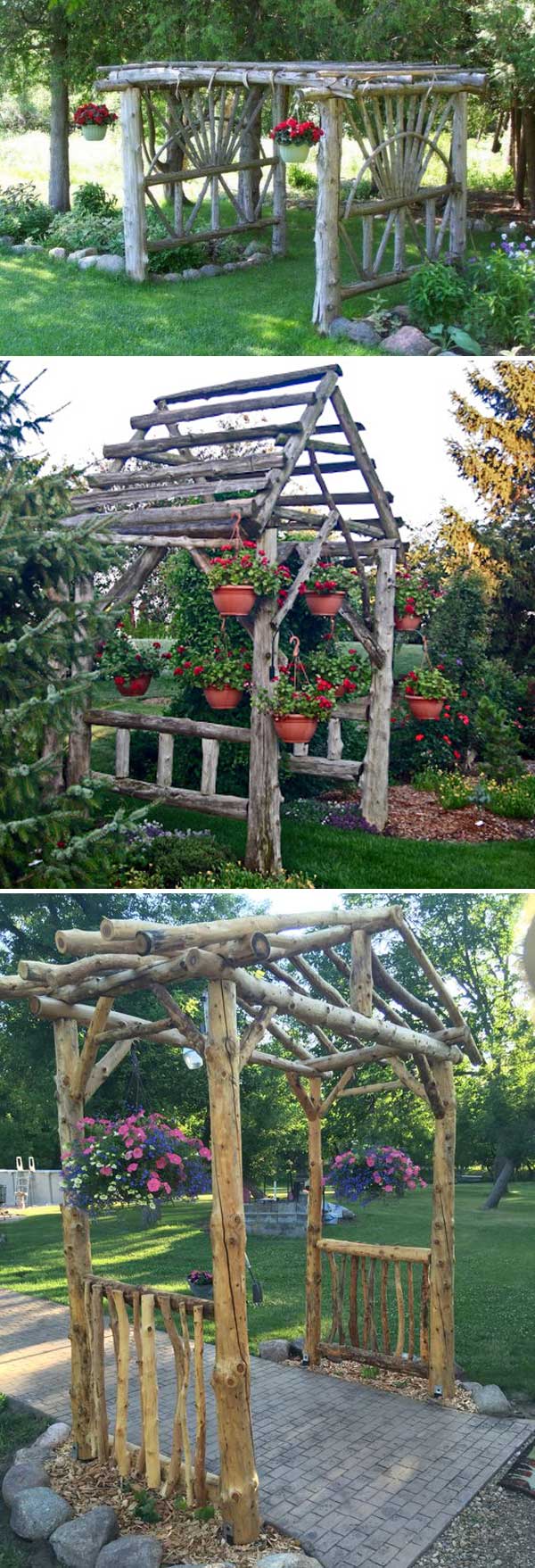
15. Wooden Logs Arbor
Construct an arbor or garden archway using tall, sturdy logs as the main posts and crossbeams.
Train climbing roses, clematis, or wisteria up the structure for a breathtaking floral canopy.
A log arbor creates an inviting entrance and a stunning feature that adds height and drama to any garden space.
Using tree logs and fallen trunks in your garden is a beautiful way to celebrate nature’s bounty and create unique, lasting structures and decorations.
These projects invite rustic charm, functionality, and whimsy into your outdoor space—all while recycling materials that might otherwise go to waste.
Whether you’re looking to build a simple bench, craft an enchanting walkway, or design a show-stopping garden gate, tree logs offer endless possibilities.
With a little creativity and some basic tools, you can transform your garden into a magical, natural retreat full of handmade touches and woodland beauty.