Gardening is a rewarding hobby, but it often feels like the season is too short.
Whether you’re dealing with early frosts, late springs, or unpredictable weather, the growing season can sometimes feel like it’s working against you.
However, with the right techniques, you can extend your gardening season and keep harvesting fresh produce long after others have stopped.
If you’re wondering how to outsmart nature and make the most of your garden year-round, here are 11 proven ways to extend your gardening season and maximize your harvest.
1. Use Cold Frames to Protect Plants from Frost
A cold frame is a simple, low-cost way to extend your gardening season by protecting plants from frost and cold winds.
It works like a mini-greenhouse, trapping heat from the sun and insulating your crops.
How It Works:
- A wooden or metal frame with a clear plastic or glass top allows sunlight to reach plants while keeping them warm.
- You can use cold frames to harden off seedlings, extend lettuce and spinach production, or grow hardy herbs year-round.
Best Crops for Cold Frames:
- Lettuce
- Spinach
- Kale
- Radishes
- Carrots
Pro Tip:
Position your cold frame facing south or west to maximize sunlight absorption during the colder months.
2. Try Row Covers for Frost Protection
Row covers are lightweight, breathable fabrics that shield plants from frost while still allowing air, light, and moisture to penetrate.
Why Row Covers Work:
- They provide 2-6°F of additional warmth, protecting plants from early frosts.
- You can use them throughout fall and early spring to keep plants producing longer.
Best Crops for Row Covers:
- Broccoli
- Cauliflower
- Lettuce
- Swiss chard
- Beets
Pro Tip:
Secure row covers with rocks, bricks, or stakes to prevent them from blowing away on windy days.
3. Invest in a Greenhouse for Year-Round Gardening
A greenhouse is the ultimate way to extend your gardening season and even grow fresh vegetables year-round. It traps heat and protects plants from extreme weather conditions.
Greenhouse Benefits:
- Shields plants from frost, wind, and pests.
- Allows you to grow summer crops like tomatoes and peppers into fall and winter.
- Ideal for starting seeds early for spring planting.
Best Crops for Greenhouses:
- Tomatoes
- Peppers
- Cucumbers
- Herbs (basil, oregano, rosemary)
- Strawberries
Pro Tip:
If a full greenhouse isn’t an option, consider a mini greenhouse or a portable greenhouse for a more budget-friendly approach.
4. Grow Cold-Hardy Vegetables
Some vegetables naturally withstand colder temperatures, meaning you can plant them earlier in spring and later in fall.
Best Cold-Tolerant Vegetables:
- Kale – Can survive temperatures as low as 10°F (-12°C).
- Brussels sprouts – Taste sweeter after frost.
- Carrots – Become more flavorful in cold soil.
- Spinach – One of the toughest greens for winter growing.
Pro Tip:
Mulch around the base of these crops to keep their roots warm and protect them from sudden temperature drops.
5. Use Raised Beds to Warm Up the Soil Faster
Raised garden beds warm up much faster in the spring than traditional ground gardens, allowing you to plant weeks earlier.
Why Raised Beds Work:
- Better drainage prevents cold, wet soil from delaying plant growth.
- The soil retains heat longer, extending your growing season into fall.
- You can cover raised beds with row covers or plastic sheets for additional insulation.
Pro Tip:
For even better results, paint the outside of your raised beds black to absorb more heat.
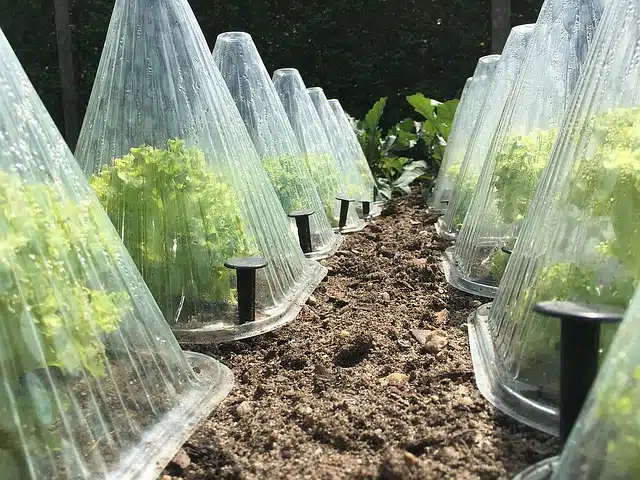
6. Try Cloches for Individual Plant Protection
A cloche is a small, portable cover that protects individual plants from cold temperatures. You can buy them or make your own from recycled materials.
Best DIY Cloche Materials:
- Cut-off plastic bottles (2-liter soda bottles work great!)
- Glass jars
- Milk jugs with the bottom removed
Best Crops for Cloches:
- Young tomato plants
- Peppers
- Herbs (thyme, oregano)
- Seedlings
Pro Tip:
Remove the cloche during the day if the weather is warm to prevent overheating.
7. Utilize Mulch to Insulate the Soil
Mulch is one of the simplest ways to keep the soil warm and extend your growing season. It helps retain heat, prevent frost from penetrating the ground, and protect plant roots.
Best Mulching Materials:
- Straw
- Shredded leaves
- Grass clippings
- Wood chips
Best Crops for Mulching:
- Root vegetables (carrots, radishes, beets)
- Garlic
- Onions
- Perennial herbs (sage, thyme, oregano)
Pro Tip:
Apply mulch 2-4 inches deep around plants to provide maximum insulation.
8. Use Heat-Absorbing Materials Like Rocks and Water Jugs
Placing rocks, bricks, or water-filled jugs around your plants can absorb heat during the day and release it at night, keeping plants warm.
How It Works:
- Dark-colored materials retain heat better, making them perfect for cooler climates.
- Water jugs slowly release warmth, preventing temperature drops that can damage crops.
Best Plants to Protect with Heat-Absorbing Materials:
- Tomatoes
- Peppers
- Eggplants
- Squash
Pro Tip:
Paint water jugs black to absorb even more heat!
9. Use Hoop Houses for Large-Scale Frost Protection
A hoop house is a semi-permanent tunnel-like structure covered with plastic that provides a greenhouse-like effect over garden beds.
Why Hoop Houses Work:
- Can extend your growing season by months.
- Protects plants from cold, wind, and snow.
- Allows you to start spring crops earlier.
Best Crops for Hoop Houses:
- Lettuces
- Root vegetables
- Brassicas (broccoli, cabbage, kale)
Pro Tip:
Use double layers of plastic for even better insulation.
10. Start Seeds Indoors for a Head Start on Spring
Starting seeds indoors allows you to plant earlier and extend your harvest season.
What You Need:
- Seed trays
- Grow lights or a sunny windowsill
- Warm soil temperature (70°F+ for most seeds)
Best Vegetables to Start Indoors:
- Tomatoes
- Peppers
- Cucumbers
- Eggplants
Pro Tip:
Use a heat mat to speed up germination!
11. Choose Fast-Maturing Crops for a Quicker Harvest
Some vegetables grow quickly enough that they can be planted multiple times in a season.
Best Fast-Growing Crops:
- Radishes – Ready in 20-30 days.
- Leafy greens – Baby spinach and lettuce mature in 30-40 days.
- Green onions – Ready in 20-30 days.
Pro Tip:
Plant crops in succession every 2-3 weeks for a continuous harvest.
By beating nature with these smart gardening techniques, you can extend your growing season and enjoy fresh vegetables longer than ever before.
Whether you use cold frames, greenhouses, mulch, or row covers, there’s always a way to keep your garden thriving beyond the usual timeframe.