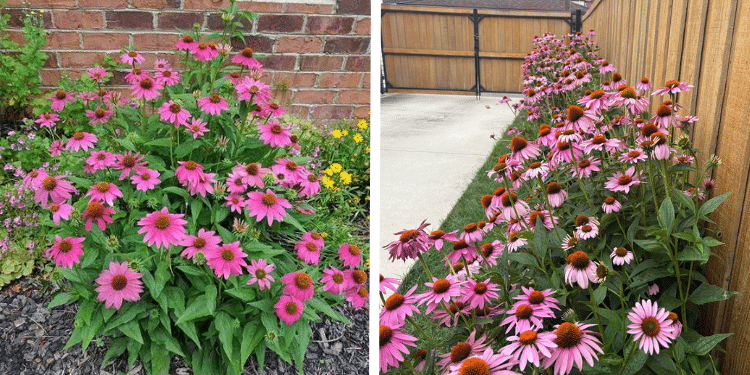
In the world of professional landscape design, certain plants are trend-dependent, fading in and out of fashion like interior paint colors.
However, the Purple Coneflower (Echinacea purpurea) remains a permanent fixture in the “Hall of Fame” for gardeners and ecologists alike.
Native to the central and eastern United States, coneflowers are the rugged, reliable backbone of the North American prairie. But to see them merely as “pretty purple daisies” is to miss their true purpose.
A single stand of coneflowers acts as a high-functioning biological hub, providing essential services to the soil, the insects, and the birds.
Whether you are a master gardener or a first-time homeowner with a patch of dirt, here is the hidden science behind why coneflowers are a non-negotiable addition to your yard and the seven long-term benefits they provide to your local ecosystem.
The Anatomy of an Ecological Powerhouse
To understand why coneflowers are so beneficial, we must first look at their physical architecture.
The “cone” at the center of the flower isn’t just a decorative feature; it is a dense cluster of hundreds of tiny, individual tubular flowers (florets).
When you plant a coneflower, you aren’t just planting one bloom; you are planting a high-density “nectar café” that stays open for business for months at a time.
1. Sustaining the “High-Energy” Pollinator Highway
Bees, butterflies, and hoverflies are the primary drivers of our food systems. However, many modern garden flowers have been bred for “double petals,” which often hides or eliminates the nectar source.
The Accessibility Advantage
Coneflowers provide “unfiltered” access to high-quality nectar and pollen. The wide, flat petals serve as a perfect landing pad for larger butterflies like the Monarch and the Eastern Tiger Swallowtail.
By planting coneflowers, you are providing a critical refueling station on the “pollinator highway,” ensuring these essential insects have the energy to migrate and reproduce.
2. A Year-Round Natural “Bird Feeder”
Many gardeners make the mistake of “deadheading” (cutting off) spent blooms in the autumn to keep the garden looking tidy. With coneflowers, this is the worst thing you can do for your local ecosystem.
The Goldfinch Magnet
As the petals fall and the cone dries, it becomes packed with oil-rich seeds. These seeds are a primary food source for songbirds, particularly American Goldfinches and Chickadees, during the lean winter months.
By leaving your coneflower stalks standing through the winter, you provide a natural, free bird feeder that helps local bird populations survive the frost without the need for plastic, store-bought feeders.
3. Deep-Tissue Soil Restoration
While we focus on the flowers, the real magic happens underground. Coneflowers possess a robust, fibrous root system that can reach depths of up to 5 feet.
Breaking Up Compaction
Most suburban yards suffer from compacted soil due to construction and heavy lawn use. The deep roots of the coneflower act like a biological drill, breaking through heavy clay and “opening” the soil.
This allows oxygen and water to reach deeper levels, improving the overall drainage of your yard. Over several years, a stand of coneflowers will literally “breathe” life back into dead, packed earth.
4. Drought Resilience and Water Conservation
As climate patterns become more unpredictable, the “thirsty” lawn is becoming an ecological liability. Coneflowers are the masters of the “low-water” landscape.
The Survival Strategy
Once established, coneflowers are incredibly drought-tolerant. Their deep roots pull moisture from deep within the earth, and their fuzzy stems help reduce water loss through evaporation.
By replacing even 10% of your water-hungry lawn with a coneflower border, you significantly reduce your yard’s water footprint while maintaining a lush, vibrant aesthetic.
5. Supporting “Generalist” Beneficial Predators
A healthy yard needs a balance of “good bugs” to eat the “bad bugs.” Coneflowers are a favorite haunt for lacewings, ladybugs, and parasitic wasps.
Natural Pest Control
These “beneficials” are attracted to the nectar of the coneflower. While they are there for a drink, they also patrol your nearby roses, tomatoes, and shrubs for aphids, mites, and cabbage worms.
Planting coneflowers creates a permanent home for the “security guards” of your garden, reducing or even eliminating the need for chemical pesticides.
6. Prolific Self-Seeding and Cost-Effectiveness
From a homeowner’s perspective, coneflowers are one of the best financial investments you can make in your landscape.
The Gift That Keeps Giving
Unlike many perennials that stay in a tight clump, coneflowers are “gentle spreaders.” They self-seed easily in open soil.
What starts as a small $15 investment in three plants will, within five years, naturally evolve into a massive, sweeping meadow of color. They provide a high “return on investment” by filling in gaps in your landscape for free, year after year.
7. Bio-Indicator of Garden Health
Coneflowers are remarkably resilient, but they are also “honest” plants. Because they are native, their performance tells you a lot about the health of your local environment.
The “Canary in the Coal Mine”
If your coneflowers are thriving, it is a sign that your soil biology is healthy and your local pollinator population is active.
If they are struggling, it may indicate a deeper issue with soil pH or chemical runoff. Using them as a “bio-indicator” helps you become a more tuned-in steward of your specific piece of the Earth.
How to Get the Most Out of Your Coneflowers
To ensure these seven benefits take hold in your yard, follow these three professional planting tips:
-
Full Sun is Non-Negotiable: Coneflowers need at least 6 to 8 hours of direct sunlight. In the shade, they become “floppy” and produce significantly less nectar for the bees.
-
Avoid Excessive Fertilizer: Because they are native to lean prairie soils, coneflowers actually dislike “rich” fertilizers. Too much nitrogen will lead to lots of leaves but very few of those iconic cones.
-
Leave the “Winter Interest”: As mentioned, wait until late March to cut back the old stalks. This protects the crown of the plant from winter wetness and ensures the birds get every last seed.
Every yard is a small piece of a much larger ecological puzzle. By choosing to plant coneflowers, you are moving away from the “decorative” mindset and toward a “functional” landscape.