Nature has a way of surprising us with its remarkable diversity and creativity—and sometimes, even its sense of humor.
Among the thousands of breathtaking flower species in the world, few are as captivating, quirky, and downright bizarre as the Dracula simia, commonly known as the Monkey Orchid or Monkey Face Orchid.
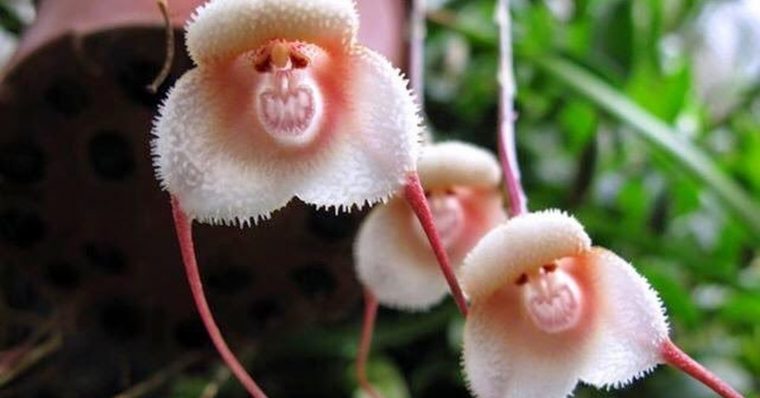
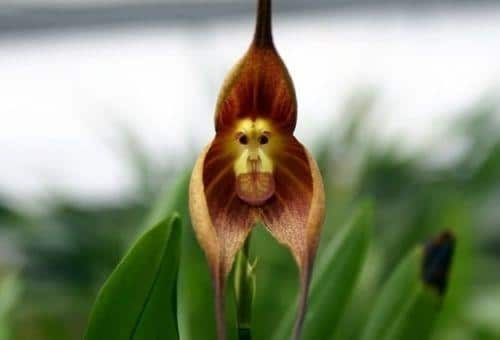
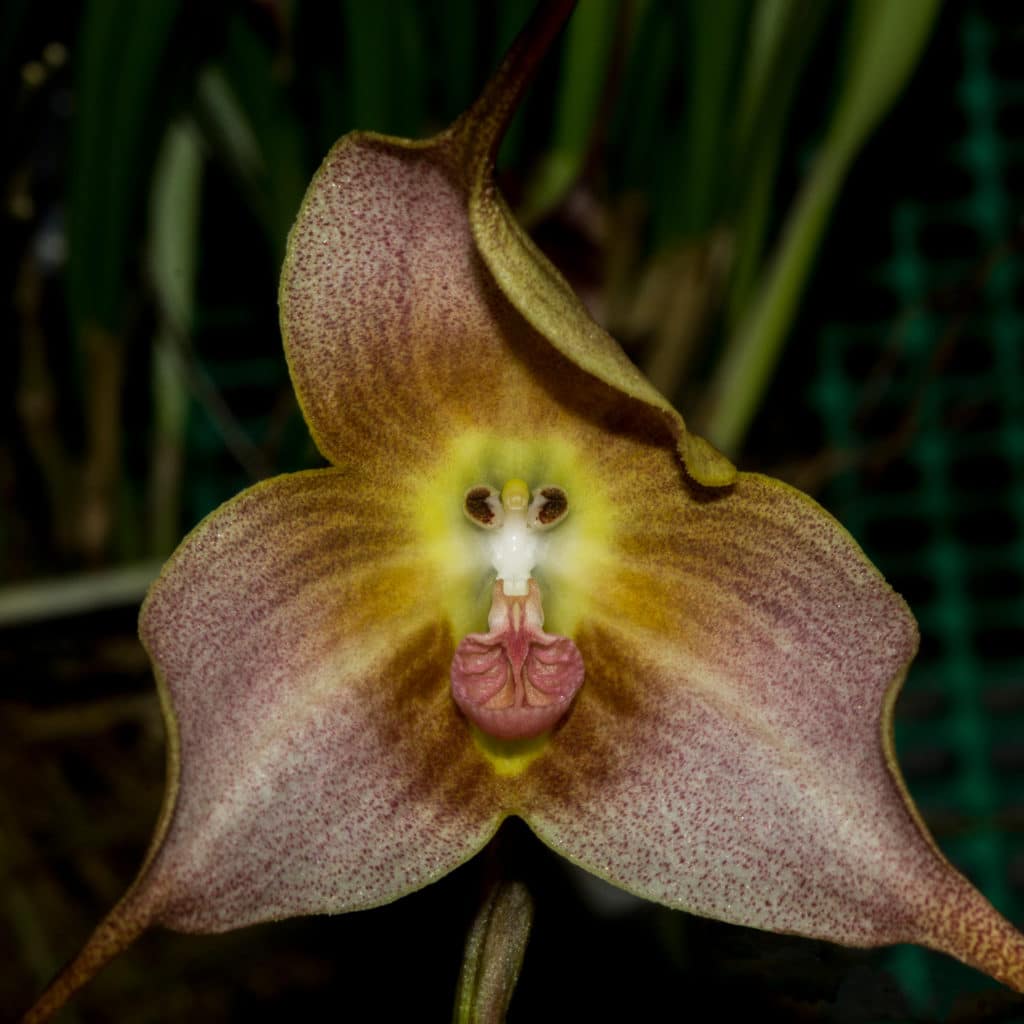
At first glance, you might think this flower is a clever Photoshop creation. But rest assured, the Monkey Orchid is a very real—and very rare—species of orchid that truly resembles the face of a monkey, complete with a long nose, deep-set eyes, and a tiny mouth.
It’s one of the most fascinating examples of pareidolia in nature, where natural forms mimic recognizable shapes—in this case, primate faces.
If you’re intrigued, read on to discover more about this peculiar plant, where it grows, and why it has enchanted botanists and nature lovers around the globe.
What Is the Dracula Simia (Monkey Orchid)?
The Dracula simia is a rare species of orchid that belongs to the Dracula genus—a group of about 110 known orchid species characterized by their unusual and often eerie appearance.
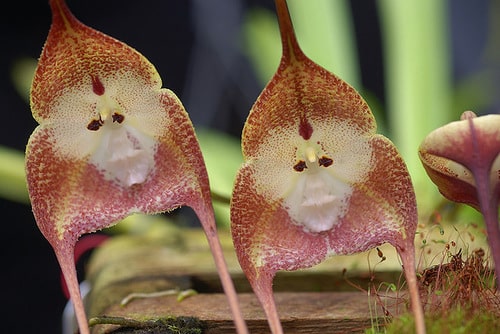
The genus name Dracula doesn’t refer to the famous vampire for nothing: it’s a nod to the flower’s long, fang-like sepals that give it a gothic or “dragon-like” look.
Combine that with the uncanny resemblance of a monkey’s face at the center of the flower, and you’ve got a truly unforgettable plant.
Botanical Profile:
- Scientific Name: Dracula simia
- Common Name: Monkey Orchid, Monkey Face Orchid
- Family: Orchidaceae
- Genus: Dracula
- Discovered by: American botanist Carlyle A. Lueren in 1978
- Name Meaning: “Dracula” refers to “little dragon”; “simia” is Latin for “monkey”
Where Does the Monkey Orchid Grow?
You won’t find the Monkey Orchid growing in typical garden beds or greenhouses. These elusive flowers are native to the cloud forests of southeastern Ecuador and parts of Peru, thriving at high elevations between 1,000 and 2,000 meters (3,200 to 6,500 feet) above sea level.
The Monkey Orchid flourishes in:
- Cool, humid climates
- Shady, misty environments
- Dense, mossy, high-altitude forests
Because of their sensitivity to temperature and humidity changes, Dracula simia orchids are extremely rare in cultivation, making them a true treasure for orchid collectors and botanical enthusiasts.
Why Does It Look Like a Monkey?
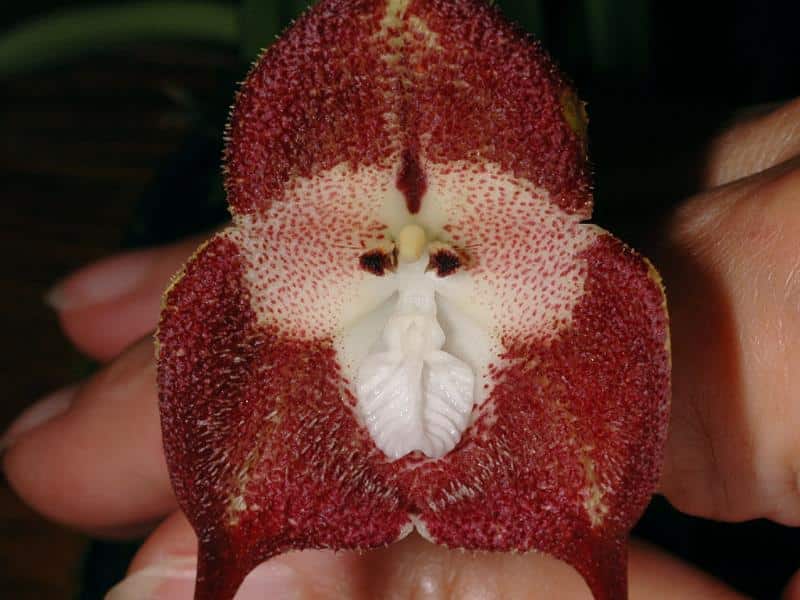
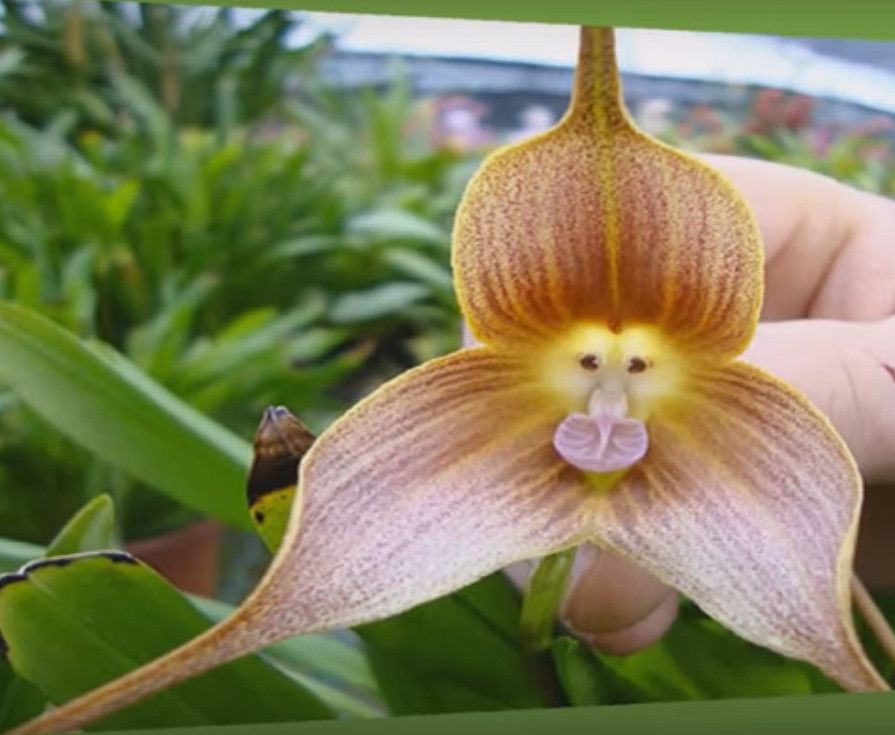
What makes Dracula simia so special is the incredible resemblance to a monkey’s face embedded within the flower’s structure.
The illusion is formed by a combination of petals, sepals, and the central column of the flower.
Together, they create what looks like:
- A pair of wide, brown “eyes”
- A furry, rounded “nose”
- A little “mouth”
- Framing “ears” from the elongated sepals
The resemblance is so strong that it’s not uncommon for people to do a double-take when they first see a picture of this orchid.
The effect is purely visual—there’s no genetic connection between the plant and primates, of course—but it’s a wonderful example of how floral morphology can mirror forms familiar to us.
The Dracula Genus: More Than Just One Odd Orchid
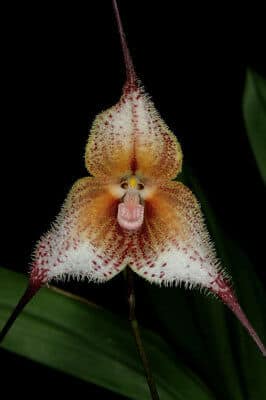
While the Dracula simia is the most famous of the monkey-like orchids, it’s just one species in a much larger genus.
The Dracula genus includes over 110 species, many of which feature:
- Dramatic shapes
- Unusual coloration
- Strange textures
- Fragrant or even musty scents (some Dracula orchids smell like mushrooms!)
This genus was originally grouped under Masdevallia, another group of small, cool-growing orchids, but was reclassified due to its distinct floral structures.
Can You Grow a Monkey Orchid at Home?
Yes—but it’s not easy.
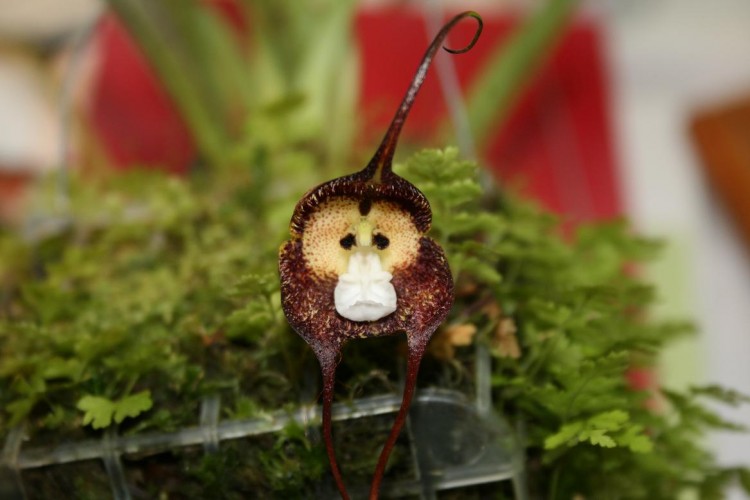
Dracula simia is notoriously difficult to grow outside of its native environment due to its strict growing requirements.
Unlike more adaptable houseplants or even common orchid varieties like Phalaenopsis or Cattleya, the Monkey Orchid needs:
- Cool temperatures (ideally between 50–70°F or 10–21°C)
- High humidity (80% or higher)
- Filtered or low light
- Excellent airflow
- Well-draining orchid mix or sphagnum moss
- Consistent moisture without soggy roots
Most growers who attempt to cultivate Dracula orchids do so in controlled environments like greenhouses, terrariums, or orchidariums that can maintain these specific conditions year-round.
Because they’re so rare and require such a specific setup, Monkey Orchids are better suited to experienced orchid growers or botanic gardens with the means to mimic cloud forest environments.
Fun Facts About the Monkey Orchid
- The flower has a slight citrus scent, which can be surprising given its mysterious look.
- It can bloom year-round if grown in the right environment, but the blooms are fleeting.
- Some species of Dracula orchids mimic the smell of fungi to attract mushroom-loving insects for pollination.
- Due to its high-altitude habitat, Dracula simia is extremely sensitive to temperature swings.
Why Is It So Rare?
Aside from its specific growing requirements, the Monkey Orchid is rare due to:
- Habitat loss in the Andes region
- Illegal poaching for plant collectors
- Slow propagation and limited seed availability
- Strict export regulations on endangered orchid species
Because of this, the Monkey Orchid remains one of the most coveted and protected exotic plants in the world.
Conservation efforts are underway in its native countries to protect the biodiversity of cloud forests where these and other rare orchids thrive.
The Dracula simia—Monkey Orchid—is a striking reminder of how playful and artistic Mother Nature can be.
With its expressive “face,” mysterious blooms, and rare occurrence, it blurs the line between botany and visual art.
While growing one may not be practical for everyone, even admiring photos of this flower can ignite a sense of wonder.
Whether you’re a seasoned orchid collector, a plant enthusiast, or someone who simply appreciates the quirky side of nature, the Monkey Orchid is a flower that captures attention and inspires awe.