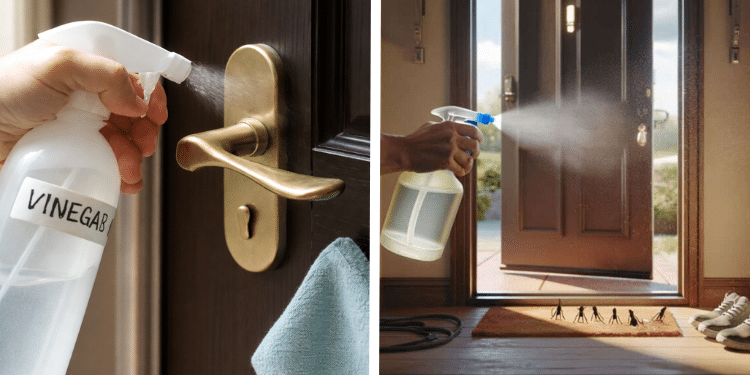
Household traditions often develop from simple practices that combine practicality with cultural beliefs. One such habit that many people still follow today is spraying vinegar on the front door.
While some view it as a symbolic ritual believed to cleanse the home of negative energy, others appreciate its very real cleaning benefits.
Vinegar has been used for centuries as a natural cleaner due to its acidity and antimicrobial properties. The type commonly used for household cleaning is Acetic acid, a mild organic acid that helps break down grime, mineral deposits, and certain bacteria.
The front door is one of the most frequently touched surfaces in a home. Because it serves as the main entry point, it can collect dust, fingerprints, germs, and outdoor pollutants. Cleaning it regularly is important for both hygiene and appearance.
The Cultural Tradition Behind Spraying Vinegar
In many cultures, household cleaning practices are closely tied to symbolism and rituals.
The front door is often considered the gateway between the outside world and the home’s interior. Because of this symbolic role, many traditions focus on keeping the entrance clean and energetically balanced.
Spraying vinegar on the front door has sometimes been interpreted as a way to “cleanse” the home environment.
In traditional beliefs, vinegar represents purification. Just as it removes stains and grime from surfaces, it is thought to remove unwanted influences from the home.
These ideas are particularly common in Mediterranean, Eastern European, and Middle Eastern household traditions.
While these beliefs are cultural rather than scientific, they reflect the universal human desire to create a welcoming and harmonious living space.
Why the Front Door Matters in Home Maintenance
Regardless of tradition, the front door plays an important role in household cleanliness.
Because it is constantly touched by hands, it becomes a hotspot for germs and dirt.
Outdoor dust, pollen, and pollution often settle on the door surface, especially around handles and frames.
Over time, these contaminants can accumulate and create an environment where bacteria and odors develop.
Regular cleaning helps maintain a healthier home and improves the overall appearance of the entrance.
This is where vinegar becomes useful as a natural cleaning solution.
How Vinegar Works as a Cleaner
Vinegar’s cleaning power comes from its acetic acid content.
Acetic acid has several properties that make it effective for household cleaning.
First, it breaks down grease and grime. Oils and residues that accumulate on surfaces dissolve more easily when exposed to mild acids.
Second, vinegar helps dissolve mineral deposits. Hard water stains and calcium buildup can often be removed with vinegar.
Third, vinegar has mild antimicrobial properties. Although it is not a disinfectant as strong as bleach, it can reduce certain bacteria and fungi on surfaces.
Because of these qualities, vinegar has become one of the most widely used natural cleaners.
The Real Benefits of Spraying Vinegar on the Front Door
Although the tradition may be symbolic, there are genuine reasons why vinegar works well for cleaning entrance doors.
Here are several practical benefits.
1. Removing Fingerprints and Hand Oils
Front doors accumulate fingerprints quickly, especially around handles and locks.
These fingerprints are caused by oils naturally present on human skin.
Vinegar helps dissolve these oils and remove the smudges they leave behind.
Spraying vinegar and wiping the surface with a cloth restores the door’s clean appearance.
2. Eliminating Outdoor Dirt and Dust
Wind and outdoor activity constantly bring dust into contact with entryways.
Dust particles settle on door surfaces and frames, especially in dry or windy climates.
Vinegar solutions help loosen dirt particles so they can be wiped away easily.
This keeps the entrance area looking fresh and well-maintained.
3. Reducing Mild Odors
Doors and entryways sometimes develop odors from humidity, pets, or outdoor pollutants.
Vinegar is known for its ability to neutralize certain odors.
Although vinegar itself has a strong smell initially, the scent usually dissipates quickly as it dries.
Once dry, the cleaned surface often smells fresher.
4. Cleaning Door Handles and High-Touch Areas
Door handles are among the most frequently touched objects in a home.
Because of constant contact, they can harbor germs and bacteria.
Wiping handles with vinegar helps remove grime and reduce microbial buildup.
Although vinegar should not replace medical-grade disinfectants in high-risk environments, it can contribute to routine household hygiene.
5. Preventing Mold and Mildew
In humid climates, doors and door frames may develop mold or mildew.
Vinegar has antifungal properties that can help prevent mild mold growth on certain surfaces.
Regular cleaning with vinegar may help discourage mold spores from developing in damp areas.
However, severe mold problems require stronger treatments.
6. Removing Hard Water Stains Near Entryways
If your front door is near an outdoor faucet or exposed to rainwater runoff, mineral stains may develop.
Vinegar dissolves calcium and mineral deposits that cause these stains.
Spraying the affected area and wiping it clean can restore the original appearance of the door.
7. Maintaining Wooden Doors Naturally
Wooden doors require gentle cleaning to preserve their finish.
Harsh chemicals may damage wood surfaces over time.
A diluted vinegar solution can clean wooden doors without leaving harmful residues.
Always test a small area first to ensure compatibility with the finish.
How to Clean Your Front Door with Vinegar
Cleaning a door with vinegar is simple and requires only a few household items.
Ingredients:
• 1 cup white vinegar
• 1 cup water
• Spray bottle
• Soft cloth or microfiber towel
Instructions:
- Mix equal parts vinegar and water in the spray bottle.
- Spray lightly onto the door surface.
- Wipe with a clean cloth using gentle circular motions.
- Pay special attention to handles, edges, and frames.
For stubborn dirt, allow the vinegar solution to sit for a few minutes before wiping.
Enhancing Vinegar with Natural Fragrance
Some people dislike the sharp smell of vinegar.
Adding natural ingredients can make the cleaning solution more pleasant.
You can enhance vinegar spray with:
• Lemon peel
• Rosemary sprigs
• Lavender essential oil
These additions create a fresh scent while maintaining vinegar’s cleaning properties.
When Vinegar Should Not Be Used
Although vinegar is a versatile cleaner, it is not suitable for every surface.
Avoid using vinegar on:
• Natural stone such as marble or granite
• Waxed or untreated wood
• Certain metal finishes
The acidity may damage these materials.
Always test a small area before applying vinegar to a large surface.
The Psychological Effect of Cleaning the Entrance
Beyond hygiene and tradition, cleaning the front door may also influence how a home feels psychologically.
The entrance is the first thing people see when arriving.
A clean and well-maintained door creates a welcoming atmosphere and sets a positive tone for the rest of the home.
Many people find that maintaining a tidy entrance makes the entire living space feel more organized and comfortable.
Combining Tradition and Practicality
Many household practices begin as traditions but remain popular because they offer real benefits.
Spraying vinegar on the front door is a good example of this combination.
While the symbolic idea of cleansing negative energy may not have scientific support, the practical cleaning advantages of vinegar are well established.
This blend of tradition and functionality helps explain why the practice continues in many homes.
Spraying vinegar on the front door is a simple practice rooted in both cultural tradition and practical cleaning science.
While some people follow the ritual for symbolic reasons, the real benefit lies in vinegar’s ability to remove dirt, dissolve grease, reduce odors, and maintain hygiene on one of the most frequently touched surfaces in a home.