Nature never fails to surprise us with its incredible creations, and one of the most captivating among them is the Skeleton Flower, a unique plant with blossoms that magically turn translucent when touched by rain or moisture.
Scientifically known as Diphylleia grayi, this rare and enchanting perennial is as mesmerizing as it is mysterious.
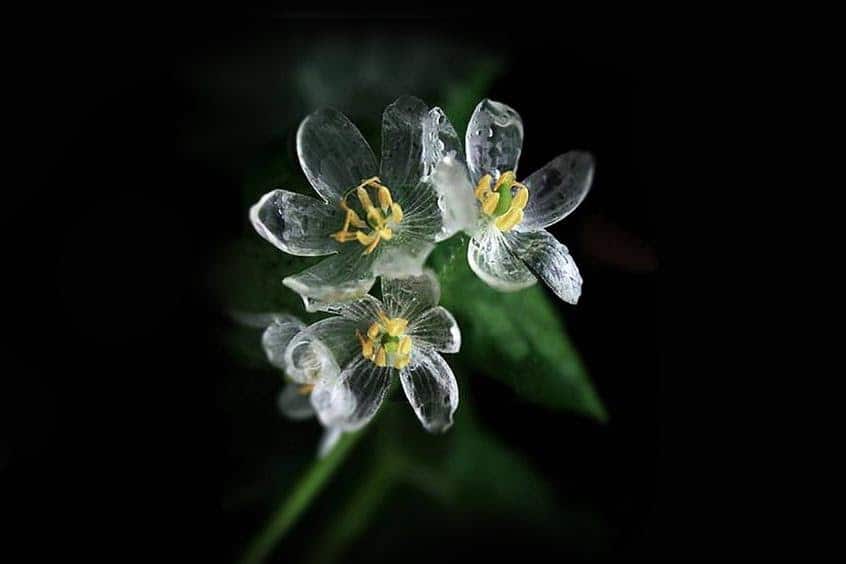
The Skeleton Flower gets its nickname from the ghostly, skeletal appearance its petals take on when they become wet.
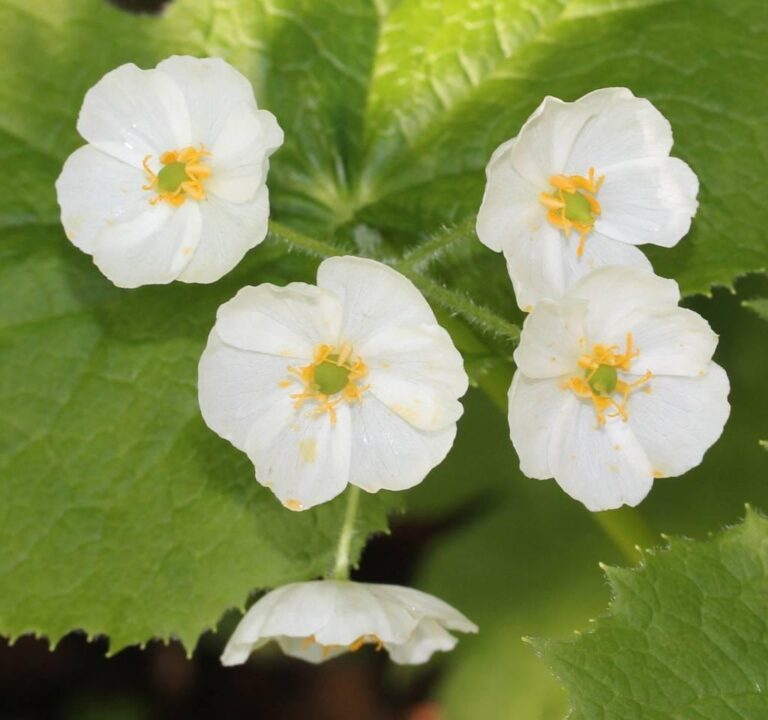
What starts as a delicate, milky-white bloom transforms into crystal-clear petals, revealing the intricate veining beneath—almost like nature’s own stained glass.
Where Does the Skeleton Flower Grow?
Diphylleia grayi is not a common plant. It’s considered rare and grows only in very specific conditions. Native to moist, wooded mountainous regions, it thrives in cool, shaded environments with high humidity. Its natural habitat includes:
-
The mountainous forests of northern Japan
-
Parts of China
-
The Appalachian Mountains in the United States, particularly in eastern North America
In these areas, the forest floors are rich in organic material, and the canopy overhead keeps the light indirect and moisture levels consistently high—ideal conditions for this unusual plant.
Why Do the Petals Turn Translucent?
The Skeleton Flower’s most amazing trait is its ability to turn completely translucent when wet, giving it an otherworldly, glass-like appearance. This phenomenon is a result of the flower’s unique cellular structure.
Here’s how it works:
-
The petals of Diphylleia grayi are composed of loosely packed, thin-walled cells.
-
When the flower comes into contact with water—whether from rain, mist, or a gentle touch—the water fills the spaces between the cells.
-
This changes the way light passes through the petals. Instead of being reflected off the opaque white surface, the light travels through the water-filled tissues, making the petals appear transparent.
-
As the flower dries, the water evaporates, and the petals return to their original white color.
This temporary transformation happens every time the flower is exposed to moisture, making it a living display of natural magic.
Appearance and Blooming Season
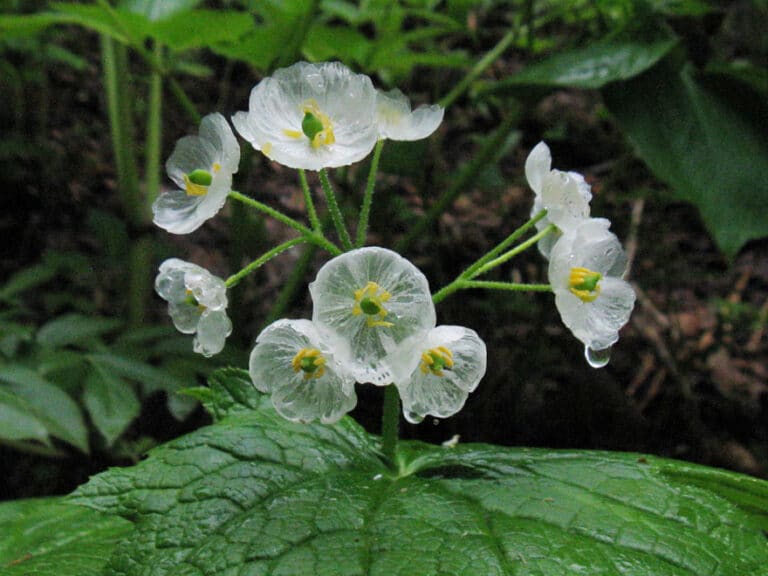
The Skeleton Flower is a spring-blooming perennial, typically flowering from May to early June. While the blooms themselves are the plant’s main claim to fame, Diphylleia grayi is also prized for its overall structure and foliage.
Plant features include:
-
Delicate, umbrella-like white blooms with 5–6 petals each
-
Flowers growing in small clusters
-
Large, umbrella-shaped green leaves that resemble Mayapple foliage
-
When mature, the plant reaches up to 16–20 inches in height
-
After blooming, the plant produces dark blue berries in late summer
Despite their ethereal look, the flowers are small and modest—only about an inch across—but their behavior in the rain makes them unforgettable.
Growing Skeleton Flower in a Home Garden
Though rare, Skeleton Flowers can be grown in shaded gardens under the right conditions. Gardeners interested in cultivating this elusive plant should mimic its natural habitat as closely as possible.
Ideal growing conditions:
-
Shade to partial shade (avoid direct sunlight)
-
Cool temperatures, especially in summer
-
Moist, well-draining soil rich in organic matter
-
Consistent humidity
They are hardy in USDA Zones 4 to 8, making them suitable for cooler climates. They can be planted in woodland gardens, shaded borders, or near water features where humidity is higher.
Propagation is typically done through root division in early spring or late fall. However, due to the plant’s rarity, it may be difficult to find seeds or nursery specimens, and some patience may be required to get your hands on one.
Botanical Background: A Closer Look at Diphylleia grayi
-
Family: Berberidaceae (the barberry family)
-
Genus: Diphylleia
-
Species: grayi
-
Common names: Skeleton Flower, Glass Flower
The name Diphylleia comes from the Greek words “di” (two) and “phyllon” (leaf), referring to the plant’s distinctive leaf structure. Each flowering stem typically arises between a pair of large leaves that look like wings, creating a graceful and balanced appearance.
Cultural and Artistic Fascination
Due to its surreal transformation, the Skeleton Flower has captured the imagination of artists, photographers, and nature lovers around the world. It has inspired jewelry, tattoos, and botanical illustrations, and is often featured in photography projects focusing on the hidden wonders of the natural world.
Its symbolism is often associated with transparency, transformation, and resilience, making it a favorite in metaphorical and spiritual artwork.
This is such an interesting phenomenon to observe, and thanks to modern technology someone managed to film the entire process and made a video presenting it.
The Skeleton Flower is a rare botanical gem that reminds us how little we may truly understand the intricate beauty of the natural world.
With its ghostly transformation from soft white to glass-like transparency, Diphylleia grayi offers a visual spectacle unlike any other plant.
Whether you’re a gardener in search of a unique woodland perennial or simply someone who marvels at nature’s artistry, the Skeleton Flower is a living example of how extraordinary even the most unassuming bloom can be.
If you’re ever lucky enough to find one growing wild on a misty mountain trail—or in a carefully tended shaded garden—pause and wait for a few raindrops. You’ll witness a magical transformation that’s as fleeting as it is unforgettable.