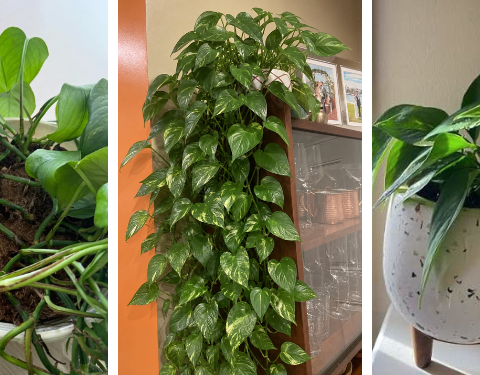
Pothos (Epipremnum aureum), often called “Devil’s Ivy,” is one of the most beloved houseplants worldwide.
Its stunning heart-shaped leaves, trailing vines, and ability to thrive in less-than-ideal conditions make it a perfect choice for beginners and seasoned plant lovers alike.
But while pothos are famous for being almost impossible to kill, there’s a difference between a plant that merely survives and one that thrives in lush, vibrant splendor.
Want your pothos to grow like a jungle vine, spilling luxurious green (or variegated) leaves from shelves, hanging baskets, or trellises?
1. Understand Your Pothos Variety
Before you can help your pothos thrive, you need to know which kind you’re growing.
There are several varieties:
- Golden Pothos: Classic green leaves with gold variegation.
- Marble Queen Pothos: Creamy-white marbled leaves.
- Neon Pothos: Bright chartreuse foliage.
- Jade Pothos: Deep green leaves, less variegation.
- Manjula Pothos: Stunning white-silver variegation with large leaves.
Each type has slightly different light and care preferences. For example, Marble Queen needs more light to keep its variegation, while Jade Pothos can tolerate lower light.
Secret tip: If your variegated pothos is losing its unique coloring and reverting to green, it’s a sign it needs more light!
2. Provide the Right Light (But Not Too Much!)
Pothos can survive in low light but will become leggy and sparse.
To grow thick, lush vines:
- Bright, indirect light is best.
- Avoid harsh direct sun, which can scorch leaves.
- Variegated types require more light to maintain color patterns.
Place your pothos near an east-facing window or a few feet back from a bright south- or west-facing window.
Secret tip: Rotate your pothos every few weeks so all sides receive equal light, encouraging even growth.
3. Master Watering (The Biggest Secret!)
One of the biggest reasons pothos underperform is improper watering.
- Let the top 1–2 inches of soil dry out before watering again.
- Stick your finger in the soil or use a moisture meter.
- Empty the saucer after watering to avoid root rot.
Pothos leaves droop when thirsty, but they bounce back quickly after watering.
Secret tip: Water deeply until water flows out the bottom of the pot. This encourages deep root growth for a stronger, fuller plant.
4. Feed for Lush Growth
Pothos aren’t heavy feeders, but a bit of fertilizer boosts growth and vibrancy.
- During spring and summer, fertilize once a month.
- Use a balanced liquid houseplant fertilizer (e.g., 10-10-10 or 20-20-20).
- In fall and winter, reduce feeding or stop altogether.
Secret tip: Don’t over-fertilize. Too much fertilizer can cause brown leaf tips and salt build-up in the soil.
5. Repot Every 1–2 Years
Pothos like slightly snug pots, but eventually, roots become cramped, leading to slower growth.
- Repot when you see roots emerging from drainage holes.
- Choose a new pot 1–2 inches wider than the current one.
- Use fresh, well-draining potting mix.
A good mix for pothos:
- 2 parts high-quality potting soil
- 1 part perlite
- Optional: 1 part orchid bark for extra drainage
Secret tip: Gently tease apart roots while repotting to encourage them to grow into the fresh soil.
6. Prune to Encourage Bushiness
Want a fuller pothos instead of long, sparse vines?
- Prune stems just above a leaf node (where leaves join the stem).
- The plant will send out new growth from that point.
- Use clean scissors or pruning shears.
Regular pruning prevents leggy vines and keeps the plant dense.
Secret tip: Don’t throw away the cuttings – pothos propagate easily in water!
7. Propagate Your Pothos for More Plants (and Fullness!)
Pothos propagation is simple:
- Cut a stem below a node, leaving 2–4 leaves on the cutting.
- Remove lower leaves so at least one node is submerged in water.
- Place in a jar of water in bright, indirect light.
- Change water every few days.
Roots usually appear in 2–4 weeks. Once roots are a few inches long, transplant to soil.
Secret tip: Plant propagated cuttings back into the mother pot to create a bushier, thicker plant!
8. Maintain Humidity for Happy Leaves
Pothos tolerate normal household humidity, but higher humidity promotes glossier, healthier leaves.
- Mist the leaves occasionally.
- Use a pebble tray with water beneath the pot.
- Group plants together to create a micro-climate.
- Consider a humidifier in winter.
Secret tip: Watch for crispy leaf edges, a sign of low humidity.
9. Check for Pests and Problems
Pothos are tough, but pests like spider mites, mealybugs, and scale can still appear.
Signs of pests:
- Sticky residue on leaves.
- Fine webbing (spider mites).
- Cotton-like fluff (mealybugs).
- Yellow spots or distorted leaves.
Treatment:
- Wipe leaves with a damp cloth.
- Spray with insecticidal soap.
- For severe infestations, isolate and treat multiple times.
Also watch for:
- Brown tips: often caused by inconsistent watering or low humidity.
- Yellow leaves: usually overwatering or poor drainage.
Secret tip: Clean leaves monthly with a damp cloth to remove dust and discourage pests.
10. Give Your Pothos Something to Climb
In nature, pothos climb trees and rocks, producing large leaves as they grow upward. Indoors, trailing vines look lovely, but training them to climb can transform their appearance.
- Use a moss pole, trellis, or a stake in the pot.
- Tie vines gently to supports.
- As the plant climbs, leaves often grow larger and more dramatic.
Secret tip: Climbing pothos can develop fenestrations (natural splits) similar to monsteras when mature!
Bonus Tips for Truly Lush Pothos
- Keep your pothos away from cold drafts and heating vents.
- Rotate your plant to keep growth balanced.
- Watch for root-bound signs, like frequent wilting even after watering.
- Clean leaves to help with photosynthesis and keep the plant dust-free.
- Talk to your plant – many growers swear it helps!
Troubleshooting Common Pothos Issues
Even with the best care, pothos sometimes struggle. Here’s how to diagnose common problems:
Yellow Leaves
- Overwatering (most common cause)
- Poor drainage
- Sudden temperature changes
Wilting
- Underwatering
- Root rot from overwatering
- Severely root-bound plant
Leggy Growth
- Insufficient light
- Not pruning enough
Brown Leaf Tips
- Low humidity
- Salt buildup from over-fertilizing
The Beauty of Pothos
Whether you’re a novice gardener or a plant pro, pothos are among the most forgiving houseplants you’ll ever own.
Their versatility is endless:
- Trail them from shelves for a cascading waterfall of green.
- Let them climb a moss pole for tropical vibes.
- Grow different varieties together for a mixed display of color and texture.
With the secrets in this guide, your pothos won’t just survive – it will thrive in lush, jungle-like glory.