A thoughtfully designed garden path or stepping stone walkway can completely transform the look and feel of your outdoor space.
Not only do stepping stones provide a practical solution for walking across your yard—they also serve as a stunning design feature, giving your garden a polished, professional touch.
Whether your landscape is large or small, a beautiful path helps guide the eye and adds structure to the garden.
It can also make even the simplest plantings feel intentional and elevated. Best of all, garden walkways are functional all year long, providing dry, safe routes even during rainy or muddy seasons.
From modern minimalist designs to rustic and nature-inspired paths, here are 12 unique ideas for creating a stepping stone walkway that turns your yard into a picturesque retreat.
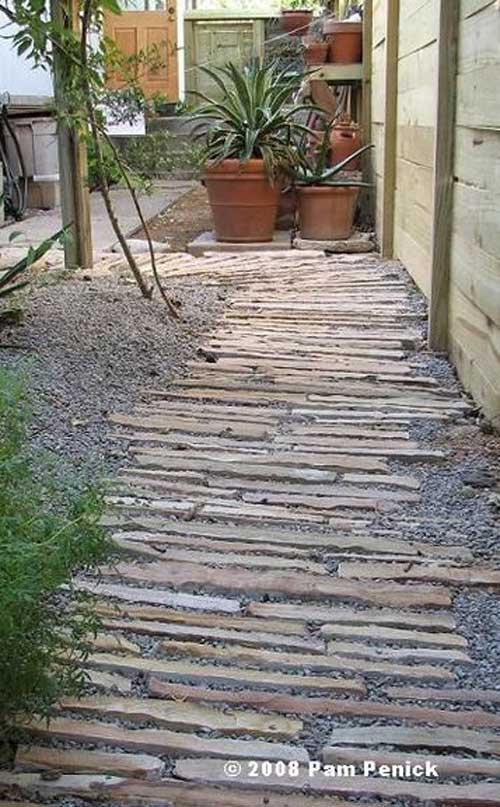
1. Set Horizontal Stone Strips in a Gravel Pathway
For a clean, linear look, try embedding horizontal strips of natural stone (like slate or limestone) into a gravel path.
This design balances texture and structure beautifully, creating a path that’s both modern and timeless. The gravel acts as a drainage solution and fills the gaps between stones for a seamless finish.
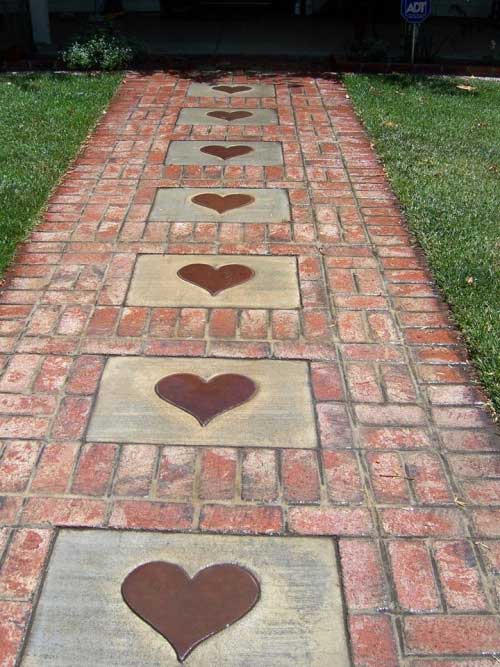
2. Heart-Printed Stepping Stones Over Brick
Want to add a whimsical or romantic flair? Try placing concrete stepping stones with heart-shaped imprints over a rustic red brick path.
The blend of bold shapes and traditional textures is perfect for cottage-style or family-friendly gardens. You can even DIY the stamped stones using molds.
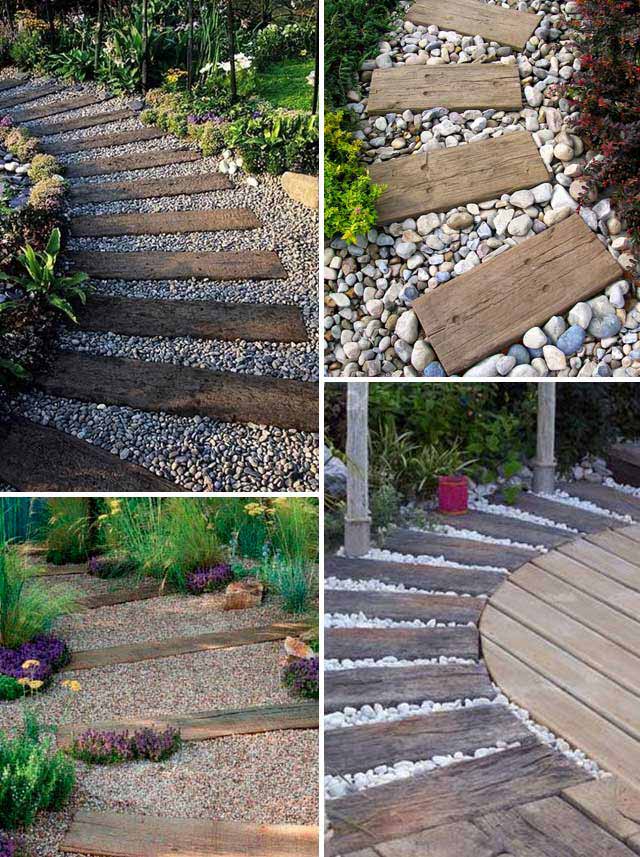
3. Combine Log Sleepers with River Rocks
Lay log sleepers (timber beams) atop a river rock or gravel base to create a rustic, woodland-style path.
The logs act as both a walking surface and an edge for the path, offering stability while enhancing the natural, organic feel of your landscape.
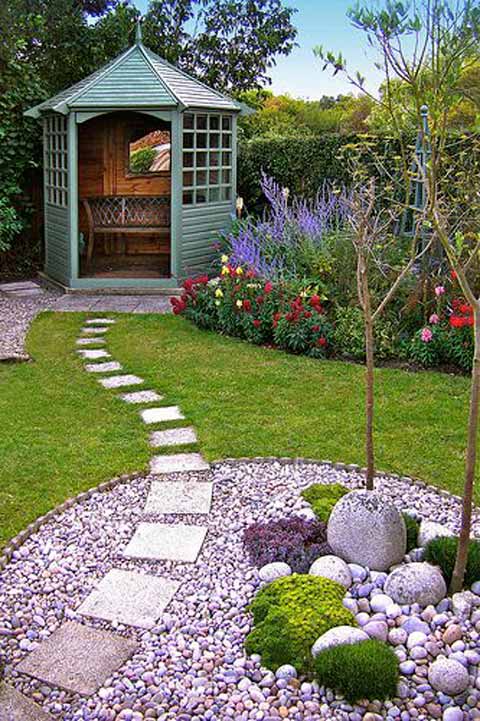
4. Mix Square Stepping Stones with Grass and River Rocks
One of the most popular combinations in modern garden design includes clean, square pavers surrounded by grass and small river stones.
The contrast of soft greenery with smooth rocks and crisp edges creates a calming, zen-inspired walkway that invites barefoot strolls.
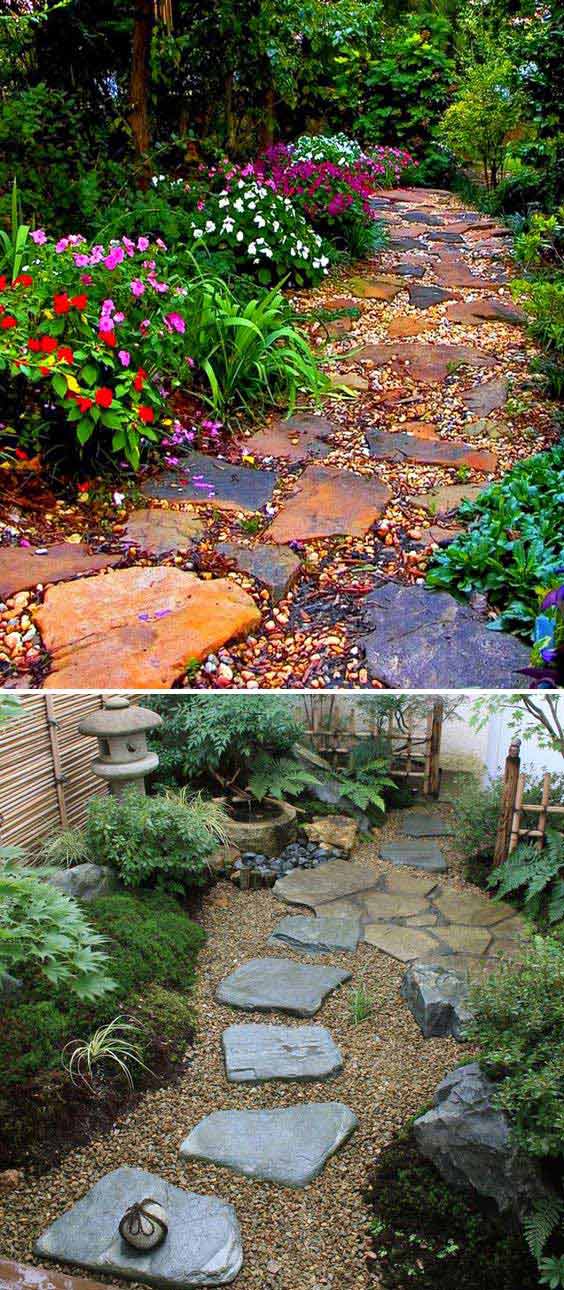
5. Flagstone Path Through a Rock Garden
Using large flagstones surrounded by decorative rocks is a great way to add color, texture, and visual interest to any outdoor space.
Choose irregularly shaped flagstones for a more natural appearance, or symmetrical cuts for a formal look. This combo works especially well in xeriscaped or drought-tolerant gardens.
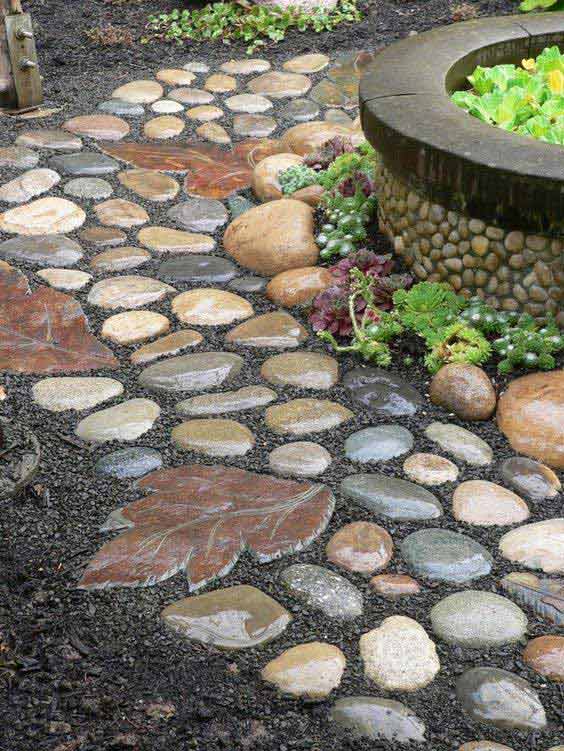
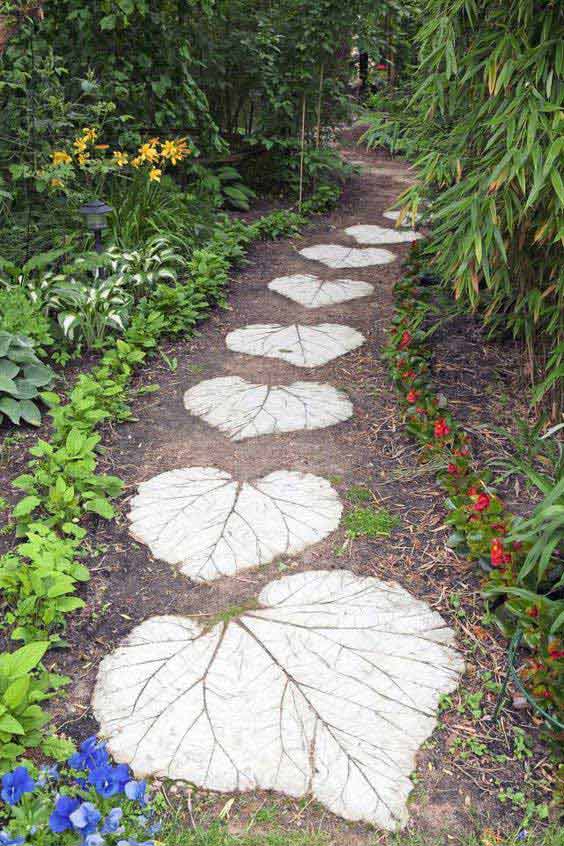
6. Leaf-Patterned Concrete Stepping Stones
For a nature-inspired path, try concrete stepping stones made from leaf molds. Set these custom stones into gravel or soft pebbles, and you’ll get a one-of-a-kind path that feels earthy and artistic.
Choose large leaves like rhubarb or hosta to make your own molds from real foliage.
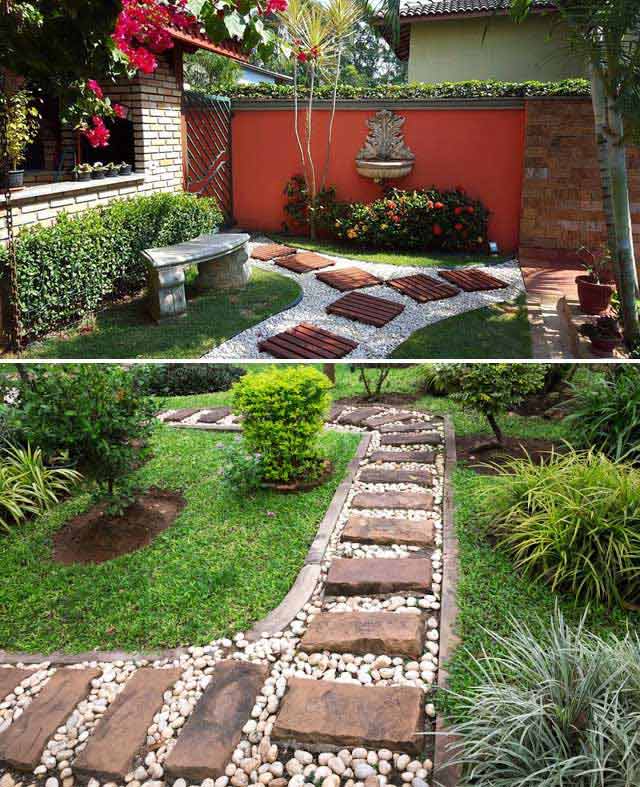
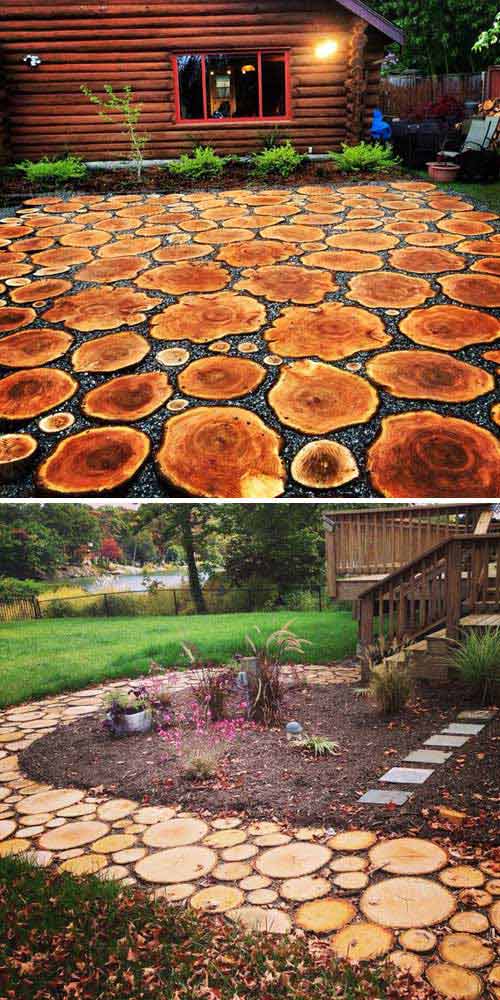
7. Wooden Pallet Slabs or Square Stone Layers on Gravel
Upcycle wooden pallets by repurposing the slats into stepping stones laid over gravel.
Alternatively, use square-cut natural stones in consistent patterns for a clean and symmetrical finish. This approach is both budget-friendly and stylish, especially for outdoor seating areas.
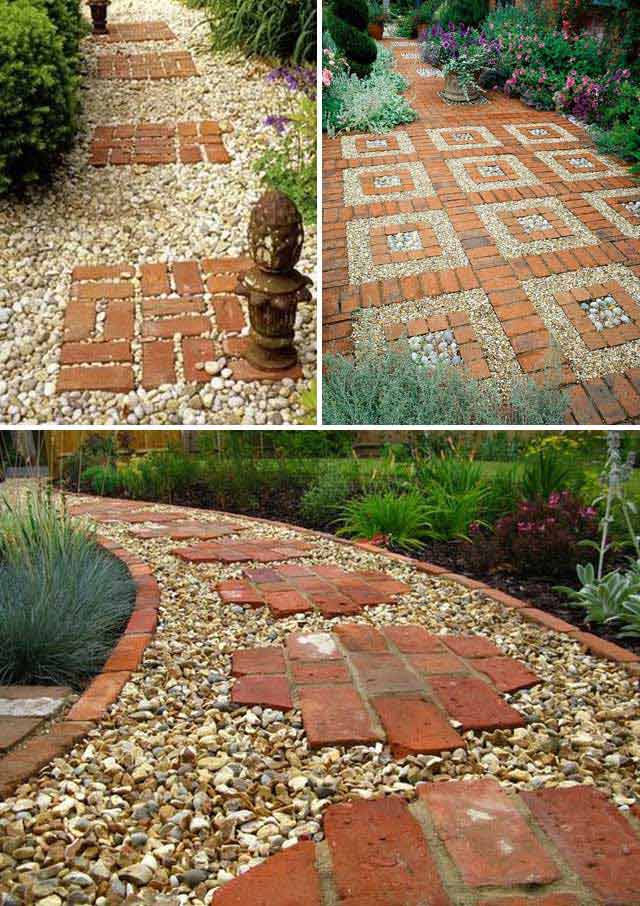
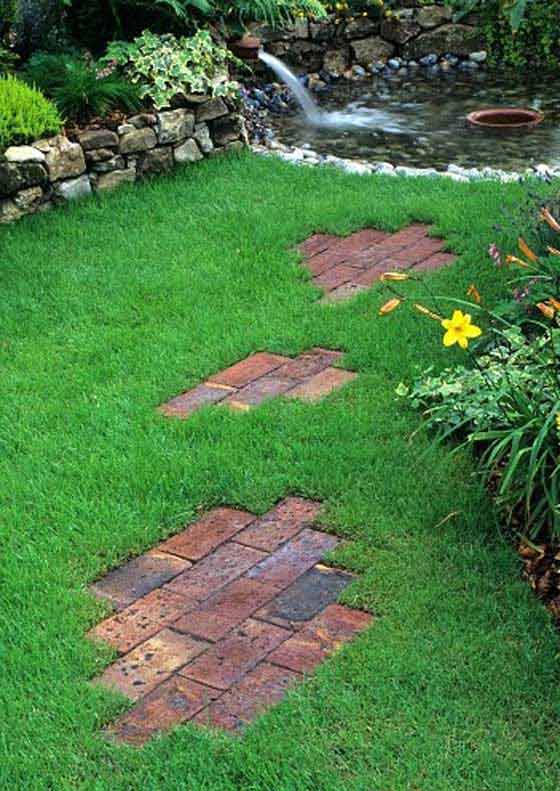
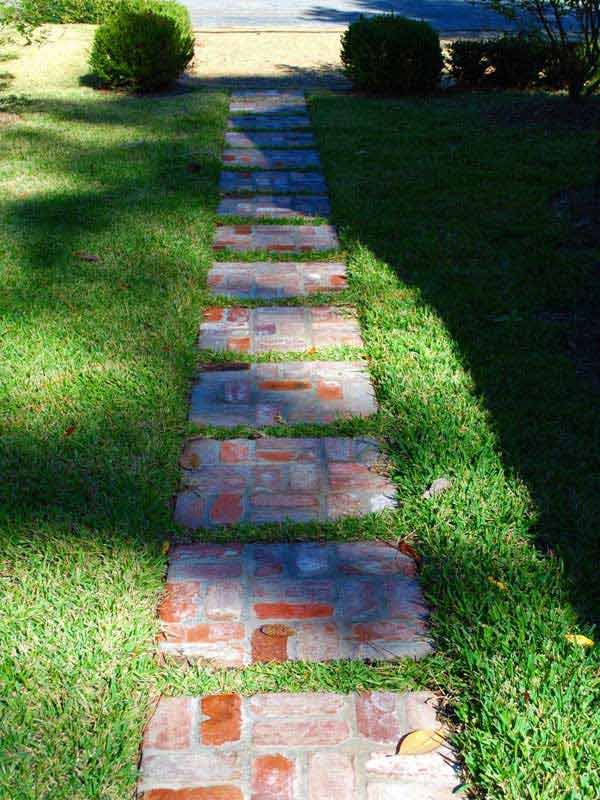
8. Red Brick Over Gravel for a Classic Garden Touch
Red bricks bring warmth, charm, and a vintage aesthetic to any garden. Laying them over a compact gravel base ensures durability and allows for drainage.
Whether arranged in herringbone, basketweave, or straight-line patterns, this classic material instantly adds character to your walkway.
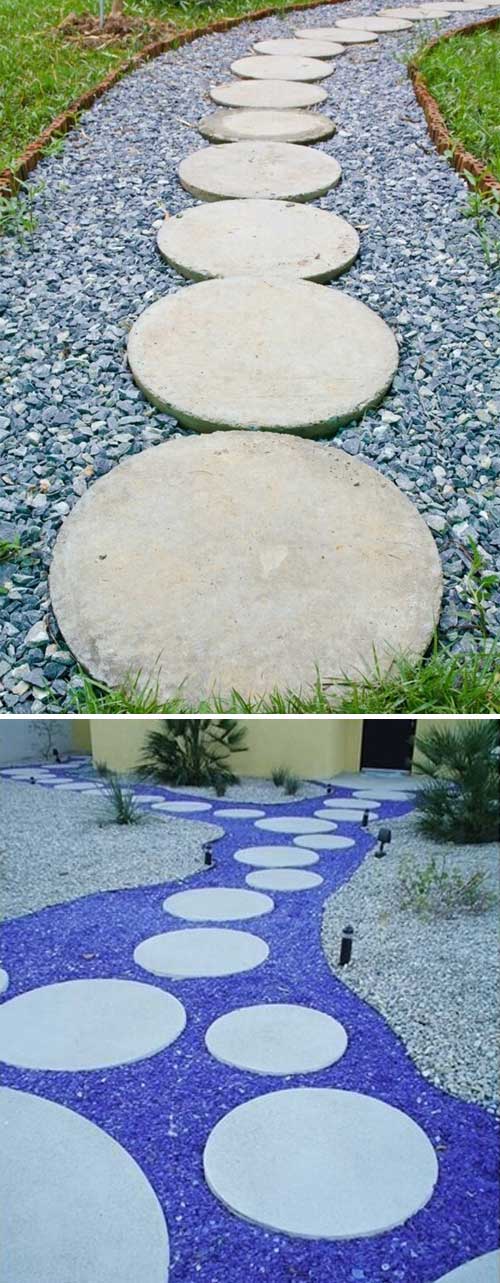
9. Recycled Blue Glass or Crushed Concrete Filler
For a bold, colorful twist, use recycled blue glass pieces or crushed concrete as filler between round stepping stones.
The vibrant contrast draws attention and adds an artistic flair to your path. This eco-friendly option is perfect for gardens with a modern or eclectic feel.
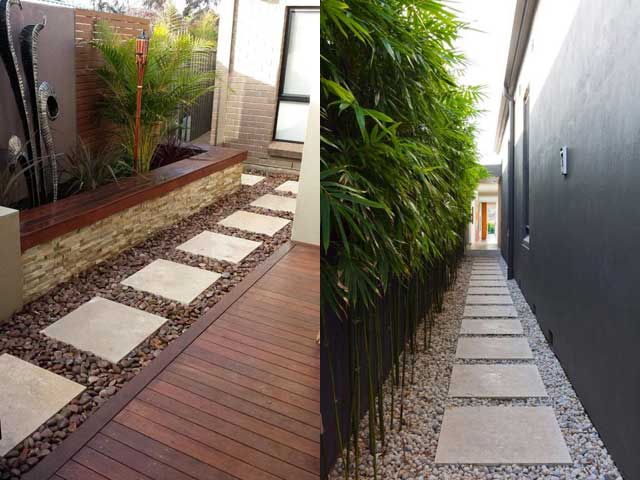
10. Contrast Dark Gravel with White Pavers
Create a high-impact visual by combining dark slate or black gravel with crisp white stepping stones.
The strong contrast makes the path pop and enhances the architectural elements of your garden. This design pairs beautifully with minimalist landscapes or contemporary garden layouts.
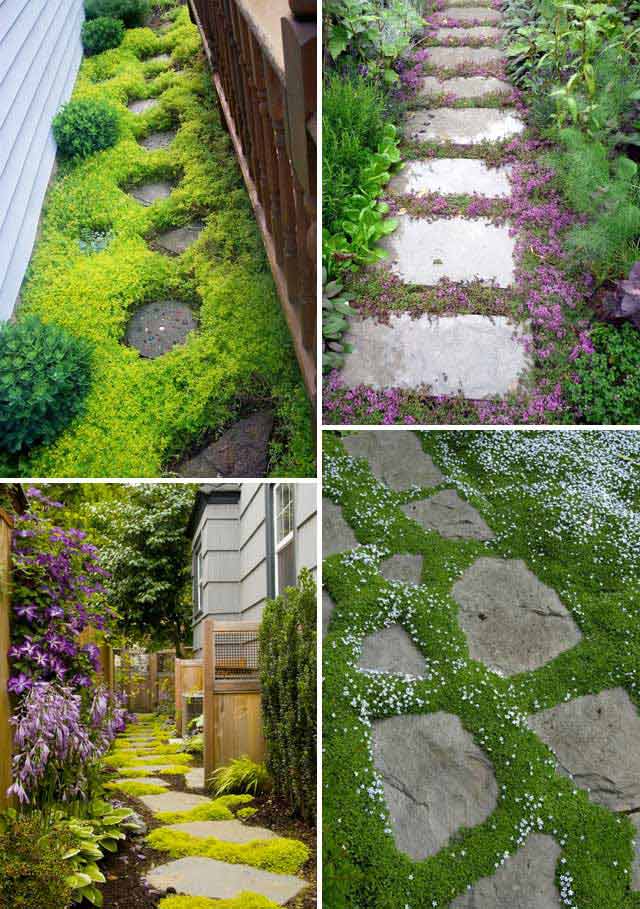
11. Blend Grass and Stepping Stones with Creeping Ground Covers
Turn your garden walkway into a lush, living path by planting low-growing greenery like Creeping Sedums, Blue Star Creeper, or Irish Moss between stepping stones.
These plants soften the hardscape and fill gaps naturally, giving your path a charming and organic appearance.
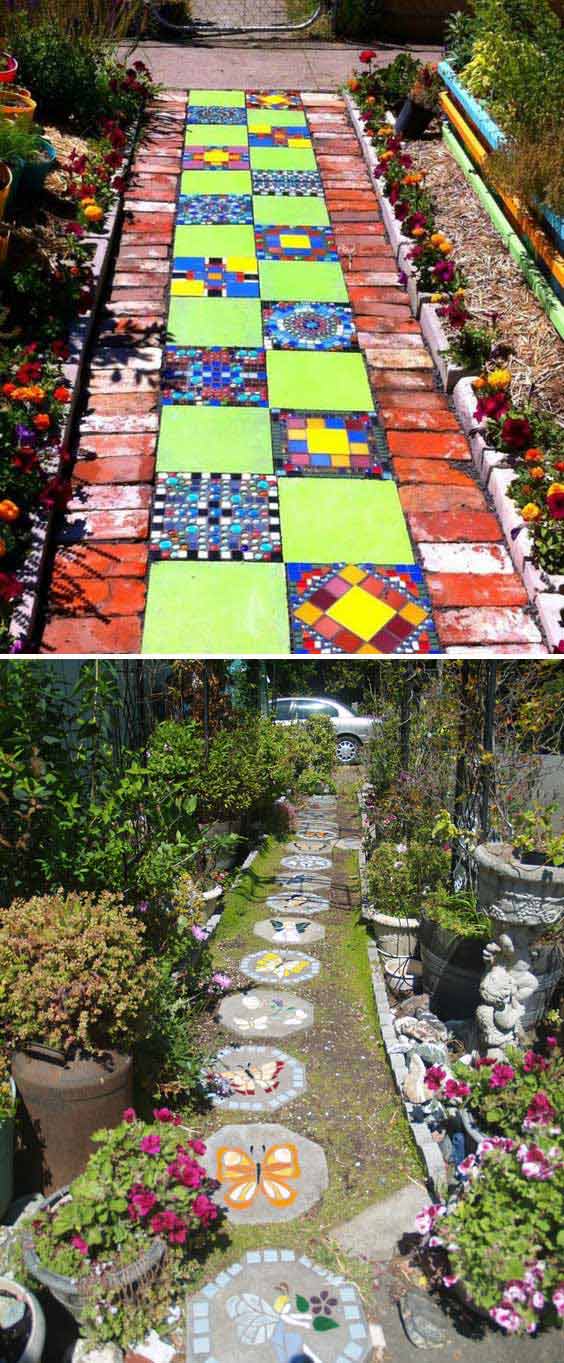
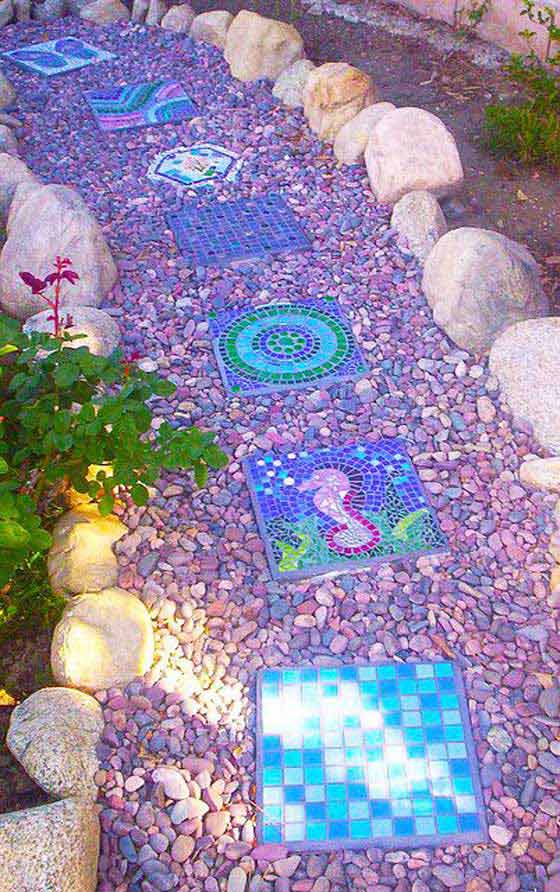
12. Add Mosaic Stepping Stones for a Pop of Personality
Handmade or store-bought mosaic stepping stones are a great way to add personality, color, and artistic detail to your pathway.
Embed them in a base of red brick or allow grass to grow around them for a cozy, storybook effect. You can even DIY your own mosaics using old tiles, pottery shards, or glass beads.
Tips for Designing a Garden Path That Stands Out
-
Function first: Plan where the path needs to go and how it will be used—frequently traveled paths should be wider and more stable.
-
Use complementary materials: Match your pathway to your home’s exterior or garden style for a cohesive look.
-
Mind the spacing: Keep stepping stones about a comfortable stride apart (typically 18–24 inches).
-
Frame the path: Use borders like metal edging, bricks, or flower beds to give the walkway structure.
-
Think about lighting: Adding soft solar path lights or lanterns boosts ambiance and improves nighttime safety.
A well-designed stepping stone garden path is more than just a way to move through your landscape—it’s a design feature that adds charm, functionality, and personality to your outdoor space.
With countless materials, shapes, and combinations to choose from, you can create a custom path that complements your style and transforms your yard into a welcoming oasis.
Whether you’re working with modern concrete pavers, rustic wood slabs, or vibrant mosaics, there’s a stepping stone design perfect for your garden. Use these ideas to inspire your next DIY project and craft a walkway that’s both eye-catching and purposeful.