Imagine walking out into your backyard and harvesting over 100 pounds of delicious, homegrown potatoes from a space no bigger than the footprint of a small coffee table.
It sounds like a gardener’s dream – but it’s entirely achievable with a clever, space-saving technique known as vertical potato gardening.
Potatoes are one of the most productive crops you can grow. But even gardeners with limited space can enjoy bountiful harvests by growing them upward instead of outward.
This guide will show you how to transform just 4 square feet into a powerhouse potato plot, yielding up to 100 pounds of food for your table.
Why Grow Potatoes Vertically?
Traditional potato gardening requires rows and plenty of ground space. But not everyone has a large backyard or garden plot. That’s where vertical growing comes in.
Benefits of vertical potato gardening:
- Space Efficiency: Great for small gardens, patios, balconies, or urban environments.
- Higher Yields: Encourages more tuber formation up the stem.
- Pest Control: Elevating potatoes reduces risks of soil-borne pests and diseases.
- Easy Harvesting: Simply empty your container to reveal clean, easy-to-reach potatoes.
- Better Drainage: Reduces risk of waterlogged soil and rot.
Vertical potato growing is perfect for anyone – from beginner gardeners to experienced growers looking for a high-yield, low-footprint crop.
Understanding How Potatoes Grow
To succeed with vertical growing, you need to understand how potatoes form:
- Tubers grow along the underground stem of the potato plant.
- As you hill up soil or mulch around the stems, more tubers form along the buried sections.
- More stem = more potatoes.
That’s why vertical gardening works so well – it allows you to grow a longer stem in layers of soil or compost, dramatically increasing the number of tubers in a small space.
Materials You’ll Need
Here’s what you’ll need to build a vertical potato tower for growing 100 pounds in 4 square feet:
- Seed potatoes (certified disease-free)
- A potato tower structure:
-
Wooden potato box
-
Wire cage lined with straw
-
Sturdy plastic potato bag
-
Stackable planters
-
- High-quality soil or compost
- Organic fertilizer
- Mulch (straw, shredded leaves, or compost)
- Watering can or hose
Let’s explore how to build the perfect potato tower.
How to Build a Potato Tower
Several designs work well for vertical potato growing. Let’s cover the most popular:
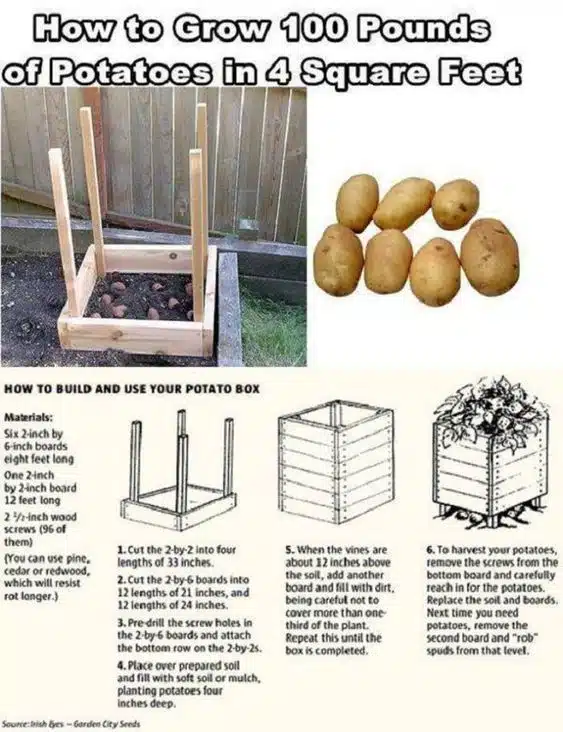
1. Wooden Potato Box
A potato box is essentially a wooden frame that you build upward as the plants grow.
- Start with a square frame: 2 feet by 2 feet.
- Add four vertical corner posts.
- As plants grow, screw additional boards higher on the frame, creating a box you fill with soil in stages.
2. Wire Cage
- Form a cylinder 2 feet across and about 3-4 feet high using wire fencing.
- Line the inside with straw to keep soil from spilling out.
- Fill gradually with soil as plants grow.
3. Potato Grow Bags
Commercial potato bags are made of breathable fabric and have flaps for harvesting. Perfect for beginners.
- Start with a few inches of soil.
- Add more soil as the plants grow.
4. Stackable Planters
Stackable planters allow you to build height while planting potatoes in each layer.
- Plant potatoes in the base layer.
- Stack and fill each additional tier as the plant grows taller.
Regardless of the design, all towers should:
- Be at least 2 feet wide.
- Allow for good drainage.
- Be sturdy enough to hold several cubic feet of soil.
Step-By-Step Guide: How to Grow 100 Pounds of Potatoes
Let’s walk through the entire process from planting to harvest.
Step 1: Choose the Right Potato Variety
Not all potatoes are equally productive in vertical towers. Best varieties for towers include:
- Yukon Gold
- Kennebec
- Red Pontiac
- Russet Burbank
- Fingerlings (for smaller harvests)
Early-season varieties mature faster but may yield slightly less than mid-to-late season types.
Step 2: Prepare Seed Potatoes
- Buy certified seed potatoes from reputable suppliers to avoid disease.
- A few days before planting, cut large potatoes into chunks, each with at least one or two eyes.
- Let cut pieces cure for 2-3 days to form a protective callus.
Note: Small seed potatoes can be planted whole.
Step 3: Start Planting
- Place 4-6 inches of soil in the bottom of your tower.
- Space seed potatoes evenly, 6-8 inches apart.
- Cover with 4 inches of soil.
For a 2×2-foot tower, you’ll plant about 4-6 seed potatoes per layer.
Step 4: Water Consistently
Moisture is critical for forming tubers.
Keep soil:
- Evenly moist but not waterlogged.
- Mulched to conserve moisture and keep roots cool.
Vertical towers dry out faster than garden beds, so check moisture daily.
Step 5: Fertilize Gently
Potatoes are hungry feeders but don’t overdo it:
- Mix in organic compost before planting.
- Top-dress with a balanced fertilizer every few weeks.
- Avoid excess nitrogen, which causes leafy growth at the expense of tubers.
Step 6: Hill Up as Plants Grow
The secret to growing more potatoes is hilling.
- When plants reach 6-8 inches tall, add 4-6 inches of soil or mulch around stems.
- Repeat every time plants grow another 6-8 inches.
- Continue until the tower is full.
This creates longer underground stems where tubers develop.
Step 7: Monitor for Pests and Disease
Vertical gardening helps reduce soil-borne diseases, but you should still:
- Inspect leaves for potato beetles or aphids.
- Avoid waterlogging to prevent blight or rot.
- Rotate crops yearly to reduce disease risk.
Step 8: Harvest Time!
Potatoes are ready to harvest about 90-120 days after planting, depending on the variety.
Signs it’s time to harvest:
- Plants turn yellow and begin to die back.
- Flowers fade or drop off.
To harvest:
- Simply remove the boards, open the tower, or tip over a grow bag.
- Dig through layers to find clean, easy-to-access potatoes.
In a well-managed tower, you can harvest up to 100 pounds of potatoes from just 4 square feet.
Tips to Maximize Your Harvest
To hit the magic 100-pound goal, keep these tips in mind:
- Use deep towers (3-4 feet tall) for maximum tuber growth.
- Choose mid-to-late season varieties for bigger yields.
- Maintain consistent moisture. Towers dry quickly.
- Fertilize wisely. Balanced feeding boosts growth.
- Keep the plants cool. Heat stress reduces yields.
- Start early in spring. The longer the growing season, the higher the yield.
The Economics of Vertical Potato Growing
Beyond the thrill of growing your own food, vertical potato gardening is cost-effective:
- A 10-lb bag of potatoes costs ~$10-15 in stores.
- Growing 100 pounds can save $100 or more per season.
- Homegrown potatoes taste fresher and are free from commercial pesticides.
Plus, towers look neat and tidy – perfect for small urban gardens or patios.
Common Mistakes to Avoid
Even experienced gardeners make these errors:
- Overcrowding seed potatoes. This limits tuber size.
- Underwatering. Towers dry out faster than garden beds.
- Skipping hilling. No hilling = fewer potatoes.
- Growing only one variety. Mix early and late-season types for extended harvests.
- Neglecting pests. Check leaves weekly for pests like beetles or aphids.
Avoid these mistakes and your vertical potato crop will thrive.
Can You Really Grow 100 Pounds in 4 Square Feet?
Yes, it’s possible – but yield depends on:
- Potato variety.
- Soil quality.
- Tower height.
- Weather conditions.
Average yields from a well-managed potato tower range from 40-100 pounds.
Hitting the 100-pound mark requires optimal conditions and consistent care – but even lower yields make the method worthwhile.
Vertical Potato Growing: A Sustainable Choice
Growing potatoes vertically is also eco-friendly:
- Less water use than traditional rows.
- Reduces soil erosion.
- Small footprint = sustainable urban gardening.
- Less soil compaction and weed pressure.
It’s the perfect blend of high yield and sustainability.
Few gardening projects are as rewarding – or space-efficient – as growing 100 pounds of potatoes in just 4 square feet.
With proper planting, regular hilling, consistent watering, and a touch of patience, your vertical potato tower can produce enough spuds to feed your family for months.