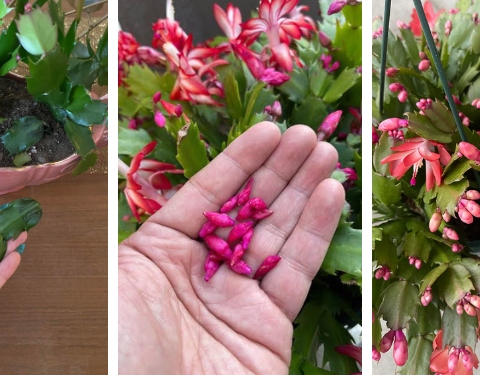
There’s something magical about a Christmas cactus (Schlumbergera bridgessii) bursting into vibrant blooms in the middle of winter.
Most people know it as a December delight, often gifted during the holidays and treasured for its seasonal color. But my grandmother’s Christmas cactus? It didn’t just bloom once a year – it bloomed twice.
One round of flowers would arrive right on cue in December, and then, just when most people’s plants were settling into leaf-only mode, hers would explode again with blossoms in early spring.
Growing up, I thought it was just luck – maybe she had a special plant or “magic hands” for gardening. But one day, she shared her secret with me. It wasn’t luck at all. It was a precise routine, a small trick, and a little homemade booster that made the difference.
Understanding the Christmas Cactus Bloom Cycle
Before we dive into Grandma’s trick, you need to know how these plants decide when to flower.
Christmas cacti are short-day bloomers, meaning they need:
- Cooler night temperatures (50–60°F / 10–15°C)
- Extended darkness (12–14 hours of complete darkness each night)
- Even moisture without waterlogging
- High humidity similar to their native rainforest habitat
These conditions signal to the plant that it’s time to produce flower buds. In nature, this happens once a year in late fall.
But by replicating these cues twice in one calendar year, you can trick the plant into blooming twice.
Grandma’s Month-by-Month Blooming Plan
January – February: Post-Holiday Recovery
- Remove spent flowers and trim back any leggy growth.
- Water sparingly – just enough to keep the soil slightly moist.
- Keep the plant in bright but indirect light.
- No fertilizer – allow a short rest.
March – April: Growth Stage
- Increase watering slightly.
- Feed monthly with a balanced fertilizer (20-20-20 or 10-10-10).
- Rotate the pot every week so the plant grows evenly.
- Prune by pinching off one or two segments from each stem to encourage branching.
May – June: Summer Energy Building
- Move outdoors to a shady patio or under a tree where it gets bright, indirect light.
- Water consistently, keeping soil lightly moist.
- Feed every two weeks with balanced fertilizer.
July – August: Pre-Bloom Conditioning
- Switch to a bloom booster fertilizer (10-30-10) every two weeks.
- Keep humidity high – group with other plants or use a pebble tray.
September – October: First Bloom Induction
- Begin the dark treatment – 12–14 hours of total darkness each night for 6–8 weeks.
- Maintain cool nighttime temperatures (55–60°F).
- Water only when the top inch of soil is dry.
November – December: First Bloom
- Bring the plant back into bright, indirect light.
- Keep evenly moist while buds open.
- Avoid moving the plant – bud drop can occur if the environment changes suddenly.
January: Rest Phase
- Light watering, no fertilizer.
- Keep in cool, bright conditions.
February – March: Grandma’s Second Bloom Trick
This is where the magic happens.
Instead of letting the plant rest for months, my grandma would start the bloom induction process again in February.
- Return to the dark treatment for another 6–8 weeks.
- Keep nights cool, days bright.
- Use her homemade bloom booster tea every two weeks (recipe below).
- By April, buds would form again for a second round of flowers.
Grandma’s Homemade Bloom Booster
This was her “secret ingredient” that seemed to make buds form faster and more abundantly.
Ingredients:
- 1 banana peel (potassium & phosphorus for flowers)
- 2 cups water
- ½ teaspoon Epsom salt (magnesium for bud production)
- 1 teaspoon used coffee grounds (micronutrients)
Directions:
- Blend all ingredients until smooth.
- Let it sit for 24 hours.
- Strain and use as a watering solution every 14 days during bloom induction.
Pruning for More Blooms
Bud formation happens at stem tips. The more tips you have, the more flowers you get.
- Timing: Prune right after a bloom cycle ends.
- How: Pinch off 1–2 segments from each stem.
- Why: Each pruned stem produces two or more new shoots, doubling future bud sites.
Water & Humidity Management
Christmas cacti love evenly moist soil but hate soggy roots.
Watering Rules:
- Use room-temperature water.
- Water when the top 1–2 inches feel dry.
- Reduce water during rest phases.
- Use a humidity tray to mimic their rainforest home.
Light & Temperature Requirements
- Bloom induction: 12–14 hours darkness + 10–12 hours bright, indirect light.
- Temperature: Cool nights (55–60°F) encourage bud formation.
- Avoid: Direct, harsh sunlight which can scorch leaves.
Common Mistakes That Stop Blooms
- Light leaks during dark treatment – even a TV glow can disrupt the cycle.
- Overfertilizing during rest – too much nitrogen encourages leaves, not flowers.
- Sudden moves during bud stage – changes in light, temp, or moisture can cause buds to drop.
- Low humidity – dry air slows bud development.
🌿 Extra Tips for Bigger, More Colorful Blooms
1. Use the Right Pot Size
Christmas cacti prefer to be slightly root-bound. If you place them in a pot that’s too large, they’ll focus on root growth rather than flowers. A pot that’s just 1–2 inches wider than the root ball is ideal.
2. Refresh the Soil Every 2–3 Years
Old potting mix loses nutrients and becomes compacted, which can hinder root health and bloom production. Repot every 2–3 years in a loose, well-draining cactus mix with a bit of organic matter like compost or orchid bark.
3. Maintain Steady Humidity
Dry indoor winter air can delay or reduce blooms. Group plants together, run a small humidifier, or place the pot on a pebble tray filled with water (without letting the base sit directly in water).
4. Watch the Buds Closely
Once buds appear, don’t rotate or move the plant. Even a slight change in light direction can cause buds to drop before opening.
5. Give a Magnesium Boost During Bud Formation
A mix of 1 teaspoon Epsom salt in 1 gallon of water once a month during bud stage can enhance flower color and strength.
Troubleshooting Common Bloom Problems
Problem: Buds form but drop before opening
Causes: Sudden temperature change, inconsistent watering, moving the plant during bud stage, or low humidity.
Solution: Keep the plant in one stable spot, water evenly, and maintain high humidity.
Problem: Plant grows well but never blooms
Causes: Too much light at night, warm nighttime temperatures, or excess nitrogen fertilizer.
Solution: Start dark treatment for 6–8 weeks, keep nights cool, and reduce nitrogen.
Problem: Yellowing or shriveling leaves
Causes: Overwatering, poor drainage, or root rot.
Solution: Check roots, improve drainage, and let soil dry slightly between waterings.
Looking back, the magic of my grandmother’s method was a combination of understanding the plant’s natural triggers and adding a little nutrient magic at the right time.
Her homemade bloom booster wasn’t just feeding the plant – it was feeding it with the exact nutrients needed for bud production.
The potassium from the banana peel and magnesium from the Epsom salt were the key drivers, while the coffee grounds added trace minerals that plants love.