One of the simplest, most effective ways to keep those microbes thriving through the cold months is something you probably throw away every day: used tea bags.
That’s right – instead of tossing them into the trash, you can bury old tea bags in your garden soil to feed beneficial microbes, improve soil texture, and even boost fertility before planting season begins.
It’s an easy, eco-friendly, zero-waste trick that gives your plants a head start long before you sow your first seed.
The Secret Life Beneath the Soil
Even when your garden seems still in winter, the soil beneath is bustling with microscopic life.
Bacteria, fungi, earthworms, and nematodes all play a role in breaking down organic matter and turning it into nutrients your plants can use.
These microorganisms are what make healthy soil truly alive. Without them, your soil becomes sterile, compacted, and nutrient-poor.
But here’s the problem: during cold months, microbial activity slows down due to lack of fresh organic material. When we remove leaves, clean up beds, and stop composting, microbes have less to eat.
That’s where your old tea bags come in – they’re like a winter buffet for these tiny soil workers.
What Happens When You Bury Tea Bags in Soil
When you bury tea bags in your garden – especially during fall or early winter – something fascinating happens beneath the surface.
- Microbes Detect Organic Matter: As the tea bag breaks down, it releases compounds that attract bacteria, fungi, and earthworms.
- Decomposition Begins: Microbes begin digesting the organic material, converting it into humus – the dark, nutrient-rich layer of soil that plants love.
- Soil Structure Improves: The breakdown process increases aeration and water retention.
- Nutrient Cycling Activates: Even in cool conditions, decomposition continues slowly, ensuring the soil is biologically active all winter long.
- Spring Boost: When temperatures rise, microbial populations explode, already fueled and ready to support spring planting.
In essence, burying tea bags “primes” your garden’s soil ecosystem – ensuring that once spring arrives, it’s alive, active, and perfectly balanced.
Which Teas Work Best in the Garden
Not all teas are created equal. The nutrients and benefits vary depending on what kind of tea you drink. Let’s look at the best types for soil health.
1. Green Tea
Green tea is loaded with antioxidants and organic nitrogen compounds. It decomposes quickly and provides a steady source of nitrogen to microbes.
Best for: vegetable beds and compost piles.
2. Black Tea
Black tea is rich in tannins and minerals that support fungal growth and improve soil texture.
Best for: flower beds, perennials, and soil conditioning.
3. Herbal Teas
Chamomile, peppermint, and rooibos teas aren’t made from tea leaves but still add valuable organic matter. Many herbs also have antibacterial or antifungal properties that balance soil flora.
Best for: potted plants, herbs, and seedlings.
4. Used Loose-Leaf Tea
Loose tea without bags decomposes the fastest. It’s completely natural, contains no microplastics, and can be spread like compost.
Best for: mixing directly into garden beds or compost bins.
Teas to Avoid (and Why)
Some modern tea bags contain materials that aren’t garden-friendly. Avoid these types to prevent microplastic contamination or toxicity.
1. Plastic or Nylon Mesh Bags
Some premium or pyramid-shaped tea bags are made from nylon or PET plastic fibers. These do not decompose and can release harmful microplastics into the soil.
Tip: Tear open the bag and only use the tea leaves inside.
2. Tea Bags with Staples
Staples can rust or injure worms and roots. Always remove metal pieces before burying.
3. Flavored or Sweetened Teas
Teas that contain added sugar, artificial flavors, or essential oils can disrupt soil microflora and attract pests. Stick to plain, organic varieties.
4. Bleached Paper Bags
Some tea bags are whitened with chlorine bleach. Look for brands labeled “unbleached” or “compostable.”
How to Use Old Tea Bags in the Garden
Let’s go step-by-step through how to safely and effectively bury tea bags to nourish your soil microbes through the winter.
Step 1: Collect Your Used Tea Bags
Save used tea bags from your daily brew. Allow them to dry slightly so they don’t mold in storage. You can keep them in an airtight container, or freeze them if you won’t be burying them immediately.
Step 2: Check the Material
Tear open one tea bag to see what it’s made of. If the bag looks like fine fabric or doesn’t tear easily, it might contain plastic. In that case, open the bag and use only the leaves inside.
Step 3: Choose the Right Location
The best places to bury tea bags include:
- Around the base of shrubs and perennials
- Between rows in vegetable beds
- In raised beds before winter mulching
- In compost piles or trench composting areas
Avoid placing them right next to seedlings or tender roots.
Step 4: Bury at the Right Depth
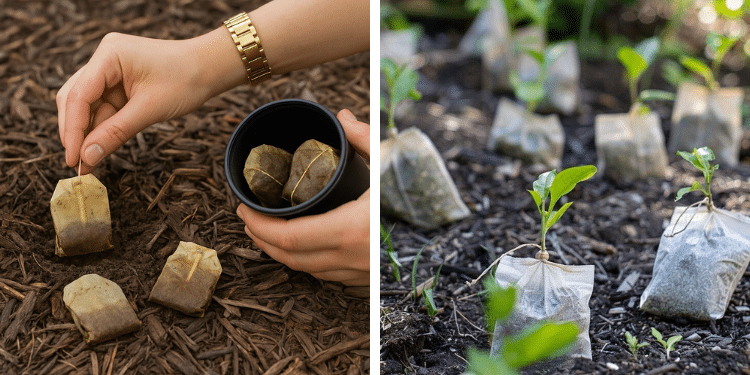
Dig a small hole 6–8 inches deep and place 2–3 tea bags per square foot. This ensures that they’re deep enough to stay moist and insulated through winter but close enough to the surface for microbes to find them.
Cover with soil and gently water to start the decomposition process.
Step 5: Combine with Other Organics
For best results, bury tea bags along with other biodegradable materials, such as:
- Crushed eggshells
- Coffee grounds
- Vegetable peelings
- Shredded leaves
- Grass clippings
This creates a nutrient-diverse “microbe meal” that decomposes at different rates, keeping soil organisms fed all winter.
Step 6: Mulch on Top
After burying tea bags and other materials, add a layer of mulch – straw, leaves, or bark chips. This keeps soil temperatures stable and prevents nutrient leaching during winter rains.
The Science of Microbes and Tea
When you bury tea bags, you’re not just composting – you’re feeding an invisible world beneath your feet.
Let’s look closer at what happens on the microscopic level.
1. Bacteria Go to Work
Tea provides soluble carbon and nitrogen – food for bacteria. These bacteria multiply quickly, breaking down organic matter and excreting nutrients that become plant-available.
2. Fungi Expand Their Networks
Fungal hyphae (thin threads) grow through the tea bag fibers, binding soil particles and improving structure. This helps soil retain water and air, even in compacted areas.
3. Protozoa and Nematodes Feed on Bacteria
These slightly larger microorganisms feed on bacteria, releasing more nutrients in the process. It’s a perfect natural cycle.
4. Earthworms Join In
Attracted by the smell of decomposing tea and moisture, earthworms burrow toward the tea bags, aerating the soil and leaving behind nutrient-rich castings.
In short, a buried tea bag becomes a mini compost reactor, buzzing with life – even in the dead of winter.
Benefits You’ll Notice by Spring
By the time spring rolls around, those buried tea bags will have broken down almost completely.
Here’s what you’ll see in your garden:
- Richer soil texture: Loose, crumbly, dark soil that holds water but drains well.
- More worms: Earthworms love decomposing tea leaves.
- Healthier plant growth: Spring seedlings establish faster in biologically active soil.
- Fewer diseases: A balanced soil ecosystem naturally suppresses harmful fungi and pathogens.
- Less fertilizer needed: Microbes recycle nutrients efficiently, reducing your need for chemical or synthetic inputs.
Your garden will look and smell different – the earthy scent of humus is unmistakable proof of healthy, living soil.
Using Tea Bags in Pots and Indoor Plants
Even if you don’t have a garden bed, you can still use tea bags for your houseplants or container gardens.
Method 1: Soil Conditioner
Mix dried, used tea leaves into the top layer of potting soil. They’ll slowly decompose, adding nutrients and improving moisture retention.
Method 2: Drainage Booster
Place a used tea bag at the bottom of a pot before adding soil. It prevents soil from washing out while keeping the drainage consistent.
Method 3: Compost Starter
Add a handful of used tea bags to your indoor compost bin or worm farm. The tea’s caffeine and organic matter stimulate microbial activity.
Method 4: Moisture Retainer for Seedlings
When starting seeds indoors, bury one tea bag under each cell or small pot to retain moisture and feed emerging roots.
Common Mistakes to Avoid
Even natural garden hacks can go wrong if overdone. Here are the top mistakes to avoid when using tea bags in your garden:
- Using too many at once: Overloading soil with organic matter can lead to oxygen depletion and foul odors.
- Burying near delicate roots: Fresh tea can generate mild acidity; place them a few inches away from root zones.
- Using plastic-based bags: Always remove the bag if unsure.
- Not checking pH: Tea can slightly acidify the soil, which is great for acid-loving plants (roses, blueberries, azaleas) but not for alkaline soil crops.
- Leaving on the surface: Exposed tea bags attract pests and dry out before decomposing. Always bury them.
Complementary Soil-Feeding Tricks for Winter
If you love the idea of feeding microbes naturally, here are a few more things you can combine with tea bags:
- Crushed eggshells: Add calcium and improve soil structure.
- Banana peels: Provide potassium for strong spring growth.
- Coffee grounds: Add nitrogen and repel slugs.
- Oatmeal or rice water: Pour around plants as an occasional microbial stimulant.
- Molasses water: One tablespoon per gallon of water energizes microbes and speeds up decomposition.
Together, these create a nutrient-rich, biologically active winter soil ecosystem.
Modern gardening often focuses on fertilizers and quick fixes, but soil health is the foundation of everything.
Feeding microbes naturally through small, consistent organic inputs like tea bags does more than enrich your soil – it rebuilds an entire ecosystem.