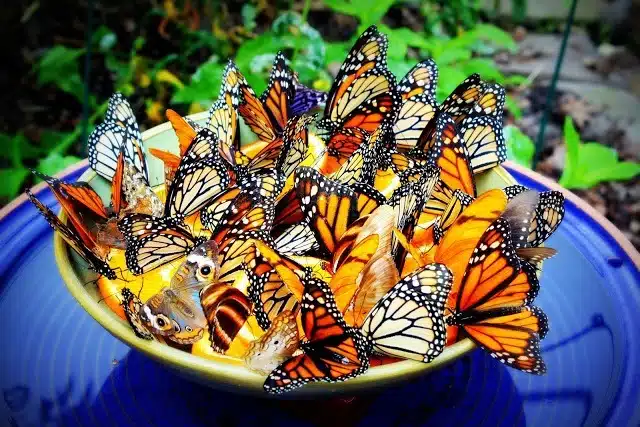
Creating a butterfly-friendly garden isn’t just about aesthetics—it’s about supporting pollinators, enhancing biodiversity, and turning your backyard into a lively, colorful oasis.
While planting native flowering plants is a crucial step, adding a DIY butterfly feeder can make your garden even more inviting to these delicate creatures.
Butterflies are naturally drawn to nectar-rich flowers, overripe fruits, and sugary solutions.
By offering these food sources in creative, homemade feeders, you not only attract more butterflies but also provide essential nutrients for their survival, especially during dry or nectar-scarce periods.
In this guide, we’ll explore 5 easy and effective DIY butterfly feeder ideas you can make at home.
These feeders use simple materials, are budget-friendly, and serve as beautiful additions to any garden space.
Why Attract Butterflies to Your Garden?
Before diving into the DIY projects, let’s explore why it’s beneficial to attract butterflies in the first place:
-
Pollination: Like bees, butterflies play a role in pollinating flowers and crops.
-
Biodiversity: Supporting butterflies encourages a balanced ecosystem.
-
Natural beauty: Butterflies add vibrant color and life to any outdoor space.
-
Educational value: Watching butterflies can be a learning opportunity for children and adults alike.
-
Environmental indicator: A thriving butterfly population is often a sign of a healthy environment.
Now, let’s look at five ways to make butterfly feeders that are both functional and visually appealing.
1. Sponge Butterfly Feeder
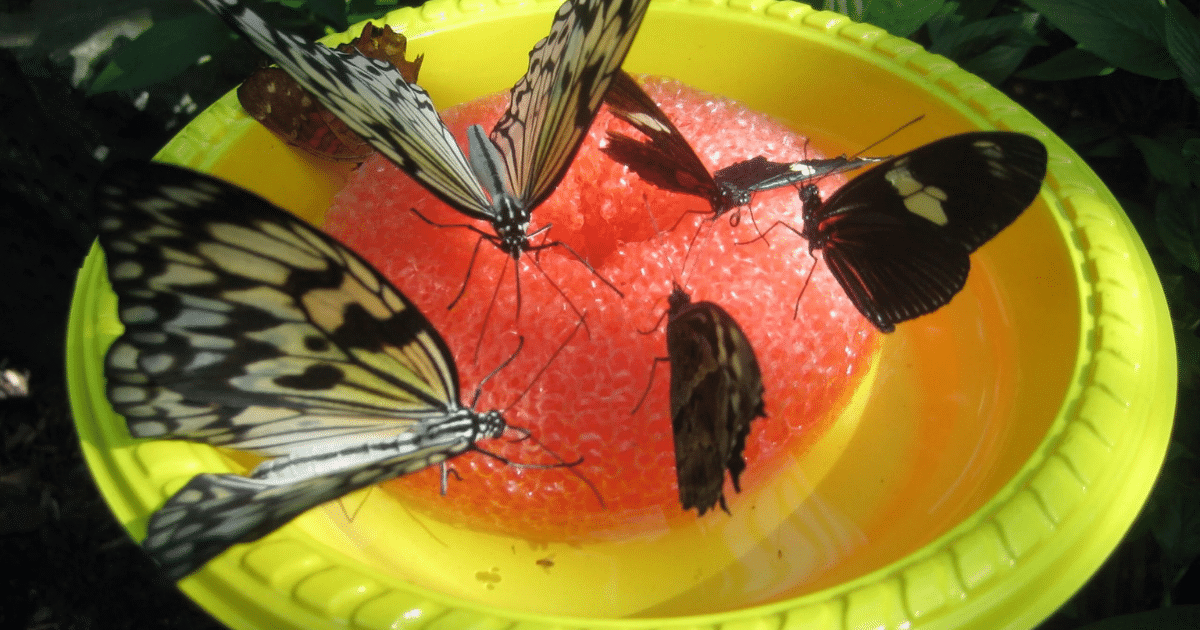
This is one of the simplest and most effective butterfly feeders you can create. Butterflies love to drink nectar using their proboscis, and a sponge mimics the natural way they absorb liquids.
Materials:
-
A clean kitchen sponge (preferably bright-colored)
-
A shallow dish or jar lid
-
String or wire (optional for hanging)
-
Homemade butterfly nectar (see recipe below)
Instructions:
-
Mix a sugar-water solution: 1 part sugar to 10 parts water. Boil and cool the mixture to prevent fermentation.
-
Soak the sponge in the solution and place it in the dish.
-
Set the feeder on a flat surface or hang it from a tree using string or wire.
-
Refill and clean the sponge every few days to avoid mold.
Tip: Use a brightly colored sponge to draw more attention from passing butterflies.
2. Fruit Tray Feeder
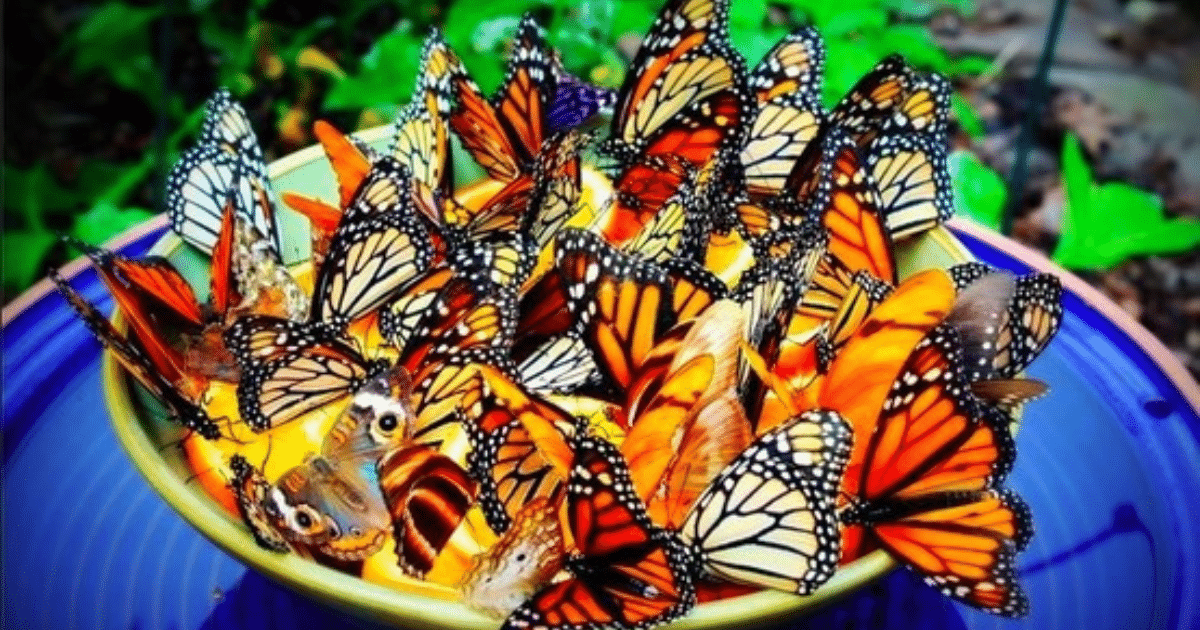
Overripe fruits are a natural butterfly magnet. This type of feeder closely replicates the feeding behavior of butterflies in the wild.
Materials:
-
A shallow plate, tray, or old pie tin
-
Wire or string for hanging (optional)
-
Overripe fruits such as bananas, oranges, mangoes, and peaches
-
A flat surface or hanging location
Instructions:
-
Slice fruits and arrange them in the tray.
-
Place the tray on a tree stump, table, or hang it using wire or twine.
-
Replace the fruit every few days, especially during hot weather.
Tip: Mash the fruit slightly to release more scent, which attracts butterflies from greater distances.
3. Jar Feeder with Wicking Cloth
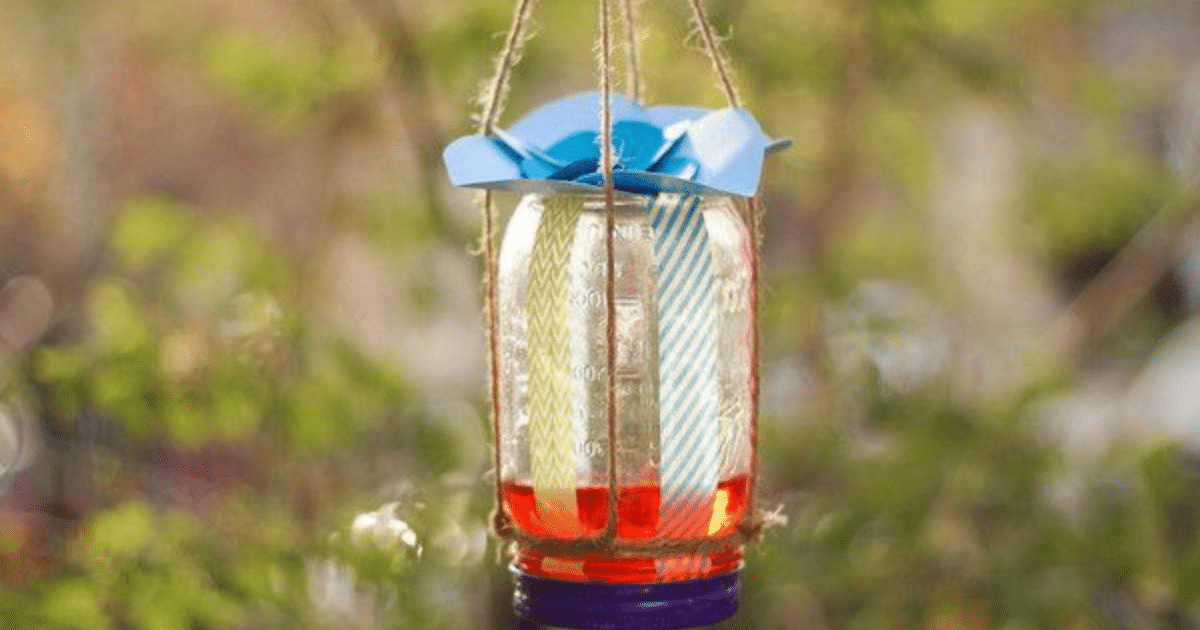
This feeder mimics hummingbird feeders but is adapted for butterflies using a sponge or cotton wick to deliver nectar slowly.
Materials:
-
Small glass or plastic jar with a lid
-
Hammer and nail or drill
-
Piece of sponge or cotton cloth
-
String or hanger
-
Sugar-water nectar
Instructions:
-
Punch a small hole in the jar lid.
-
Insert a rolled-up piece of sponge or cotton through the hole, allowing it to wick the nectar slowly.
-
Fill the jar with cooled sugar-water solution and screw the lid on tightly.
-
Invert the jar and hang it near flowering plants or shrubs.
Tip: Decorate the jar with bright, flower-like shapes to increase visibility.
4. Hanging Plate Feeder
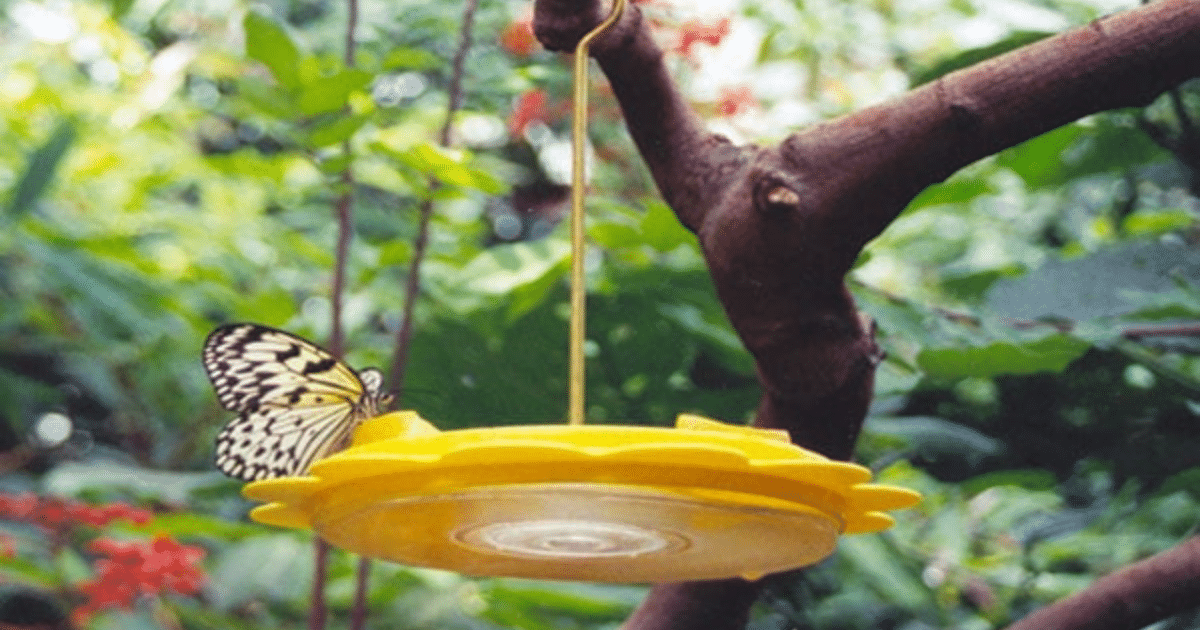
A hanging butterfly feeder adds a decorative element to your garden and is simple to make.
Materials:
-
A plastic or ceramic plate (with raised edges)
-
Three or four lengths of string or twine
-
A hook or branch for hanging
-
Sugar-water solution or cut fruit
Instructions:
-
Tie string to three or four equidistant points on the plate and knot them together at the top.
-
Hang the plate from a tree branch or shepherd’s hook.
-
Place pieces of fruit or soaked sponge on the plate.
-
Monitor the feeder for ants or bees and clean regularly.
Tip: Place a small, flat rock in the middle to give butterflies a resting spot while feeding.
5. Butterfly Feeding Station with Natural Materials
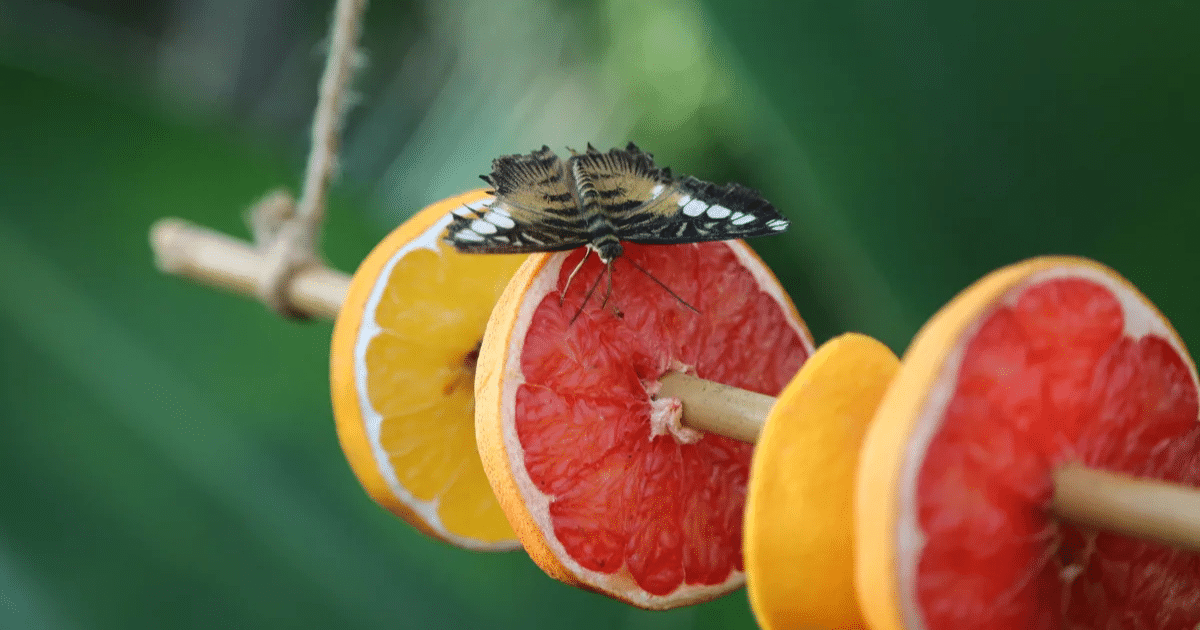
For a rustic and eco-friendly option, use natural elements to create a multi-functional feeding and watering station.
Materials:
-
Shallow clay saucer or old birdbath
-
Small pebbles or sand
-
Water mixed with a bit of salt or nectar solution
-
Fruit slices or soaked cotton balls
Instructions:
-
Fill the saucer with pebbles or sand.
-
Add just enough liquid so the tops of the pebbles remain dry.
-
Place fruit slices or nectar-soaked cotton balls among the stones.
-
Set the station in a sunny, sheltered location.
Tip: The pebbles allow butterflies to perch safely while feeding or “puddling,” a behavior where they absorb minerals and salts from moist surfaces.
Homemade Butterfly Nectar Recipe
Use this simple recipe to make safe and effective nectar for your butterfly feeders:
Ingredients:
-
1 part white granulated sugar
-
10 parts water
Instructions:
-
Boil the water to kill any bacteria.
-
Stir in the sugar until fully dissolved.
-
Let the solution cool completely before using.
-
Store leftovers in the refrigerator for up to one week.
Important: Never use honey, artificial sweeteners, or brown sugar, as they can harm butterflies or encourage mold.
Tips for Attracting More Butterflies
Creating a feeder is just the first step. Combine it with these butterfly-attracting techniques for best results:
-
Plant native nectar-rich flowers like milkweed, coneflower, lantana, and zinnias.
-
Avoid pesticides and herbicides that can harm butterflies and their caterpillars.
-
Provide host plants for caterpillars, such as parsley, dill, and fennel.
-
Include sunny spots and flat stones for basking.
-
Add a shallow water source or a puddling station for hydration and minerals.
Attracting butterflies to your garden is not only beautiful—it’s essential for supporting local ecosystems and promoting pollination.
These 5 DIY butterfly feeder ideas are easy to make, cost-effective, and customizable to your garden style.
Whether you choose a sponge feeder, a fruit tray, or a hanging nectar jar, your efforts will be rewarded with fluttering wings, vibrant colors, and a more biodiverse backyard.
So gather your materials, get creative, and start feeding your local butterflies today. Your garden—and the pollinators—will thank you.