Thyme is one of the oldest culinary and medicinal herbs in human history. Used by ancient Mediterranean cultures, traditional European herbalists, and folk healers across centuries, thyme has long been valued for its powerful aromatic oils and antimicrobial properties.
When soaked in vinegar, thyme becomes part of a classic herbal preparation that extracts its active compounds into a stable, easy-to-use form.
Herbal vinegars have been used for generations as digestive tonics, household remedies, and even topical preparations.
Soaking thyme in vinegar allows acetic acid to draw out plant compounds like thymol and carvacrol, creating a potent infusion that can be used in small amounts for culinary, digestive, and traditional wellness support.
Why Thyme Has Been Used Traditionally
Thyme (Thymus vulgaris) contains a unique combination of essential oils and plant compounds that give it both its fragrance and its medicinal reputation.
Key active compounds include:
- Thymol – antimicrobial and antifungal properties
- Carvacrol – antibacterial and antioxidant effects
- Rosmarinic acid – anti-inflammatory support
- Flavonoids – antioxidant compounds
- Volatile oils – respiratory and digestive support
Traditionally, thyme has been used to support:
- Respiratory comfort
- Digestive balance
- Immune resilience
- Oral health
- Skin cleansing
When infused into vinegar, many of these compounds are partially extracted and preserved.
Why Vinegar Is Used for Herbal Extraction
Vinegar has been used for herbal infusions for thousands of years. Unlike alcohol-based tinctures, vinegar extracts both mineral content and certain plant acids while remaining kitchen-friendly and alcohol-free.
Apple cider vinegar and wine vinegar are most commonly used because they:
- Contain acetic acid, which extracts plant compounds
- Have mild antimicrobial properties
- Support digestive enzyme activity
- Preserve infused herbs naturally
The acidity of vinegar helps draw out water-soluble compounds and some essential oil components from thyme.
What Happens When Thyme Is Soaked in Vinegar
When fresh or dried thyme is submerged in vinegar, several processes occur:
- Acetic acid begins extracting rosmarinic acid and flavonoids.
- Some essential oils diffuse into the liquid.
- The mixture becomes infused with aromatic compounds.
- Vinegar stabilizes the preparation and prevents spoilage.
The infusion typically takes 2–4 weeks for maximum extraction, although flavor and some benefits are noticeable within days.
Potential Benefits of Thyme-Infused Vinegar
While this preparation is not a medical treatment, it has traditional uses that align with thyme’s natural properties.
1. Digestive Support
Thyme has long been used as a digestive herb. It may stimulate digestive secretions and support gut balance. Vinegar itself may help regulate stomach acidity and improve digestion when diluted.
Traditional use: A small amount of thyme vinegar diluted in water before meals to “wake up” digestion.
Possible support for:
- Occasional bloating
- Sluggish digestion
- Heavy meals
2. Antimicrobial Kitchen Support
Thyme’s thymol content has demonstrated antimicrobial activity in laboratory studies. When infused into vinegar, this preparation may enhance vinegar’s natural ability to inhibit surface microbes.
Uses include:
- Adding to salad dressings
- Light vegetable rinses
- Marinades
- Flavoring roasted vegetables
This makes thyme vinegar both functional and flavorful.
3. Respiratory Comfort (Traditional Use)
Thyme has historically been used for coughs and chest congestion. Thymol and carvacrol are known for their expectorant properties.
Though vinegar infusion is milder than essential oil preparations, diluted thyme vinegar has been traditionally used during seasonal transitions to support respiratory comfort.
It is important to note this is supportive use – not a substitute for medical treatment.
4. Immune Support
Thyme contains antioxidant compounds that help neutralize oxidative stress. Regular inclusion of antioxidant-rich herbs in food may support immune resilience.
Vinegar extraction preserves some of these compounds, allowing small daily culinary use.
5. Oral and Throat Support (Diluted Only)
In traditional practice, diluted herbal vinegars were occasionally used as gargles.
When diluted properly:
- May freshen breath
- May support oral microbial balance
Never use undiluted vinegar directly on teeth – acidity can damage enamel.
6. Skin Cleansing (Topical Dilution Only)
Historically, diluted thyme vinegar was used externally for skin cleansing due to its antimicrobial properties.
Always dilute heavily and patch-test before skin use.
How to Prepare Thyme Vinegar Properly
Ingredients:
- Fresh thyme sprigs (or dried thyme)
- Raw apple cider vinegar or wine vinegar
- Clean glass jar
Method:
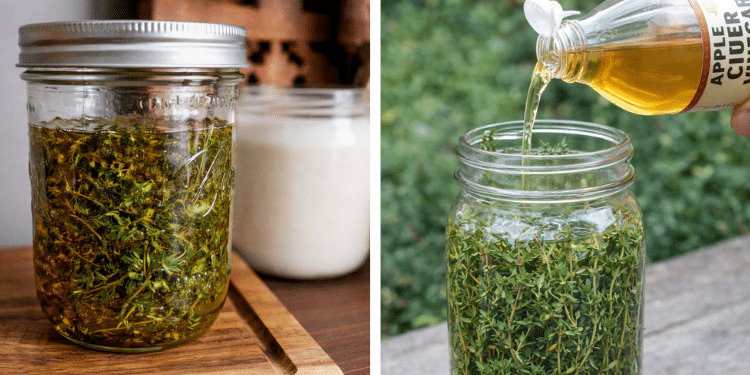
- Rinse thyme if fresh and allow to dry completely.
- Lightly bruise the thyme to release oils.
- Fill jar loosely with thyme.
- Pour vinegar until fully submerged.
- Seal jar tightly.
- Store in cool, dark place for 2–4 weeks.
- Shake gently every few days.
- Strain and transfer to clean bottle.
Refrigeration is optional but extends freshness.
How to Use Thyme Vinegar
Common culinary uses:
- Salad dressings
- Marinades
- Soups
- Sauces
- Roasted vegetables
- Grain bowls
Traditional wellness use:
- 1 teaspoon diluted in water
- Added to herbal teas
- Used in cooking regularly
Always dilute before drinking.
Best Timing for Preparation
Thyme vinegar can be prepared year-round, but it is especially potent when:
- Made from fresh thyme in late spring or summer
- Harvested before flowering for strongest oil content
Who Should Use Caution
Avoid or consult a professional if:
- You have severe acid reflux
- You have ulcers
- You are sensitive to acidic foods
- You are pregnant and unsure about herbal use
- You take blood-thinning medications
Vinegar is acidic and can irritate sensitive digestive systems.
Why Herbal Vinegars Remain Popular
Herbal vinegars are:
- Alcohol-free
- Easy to prepare
- Shelf-stable
- Culinary-friendly
- Accessible
- Mild compared to essential oils
They represent a traditional way to incorporate medicinal herbs into daily food rather than using concentrated extracts.
Common Myths to Avoid
Thyme vinegar is not:
- A cure for infections
- A replacement for antibiotics
- A detox miracle
- A treatment for serious illness
It is best viewed as a supportive herbal preparation.
Soaking thyme in vinegar creates a classic herbal infusion that combines the digestive-supporting properties of vinegar with the antimicrobial and antioxidant compounds of thyme.
While not a cure-all, this traditional preparation remains useful as a flavorful, functional addition to daily meals.