Gardeners are constantly searching for ways to boost plant health, fight pests, and achieve bigger, better harvests – all without resorting to harsh chemicals.
Enter baking soda: the humble kitchen staple that’s been quietly working its magic in gardens for generations.
Also known as sodium bicarbonate, baking soda is non-toxic, inexpensive, and incredibly versatile. While it’s often associated with baking or cleaning, its benefits extend far into the vegetable patch.
From disease prevention to improving soil health, baking soda offers brilliant solutions for growing strong, productive vegetables.
If you’re eager to garden more naturally while still achieving stellar results, discover these nine brilliant baking soda uses for growing vegetables. You’ll wonder how you ever gardened without it!
1. Combat Fungal Diseases
Fungal diseases like powdery mildew, black spot, and leaf spot are common frustrations for vegetable growers. Baking soda is a powerful ally in the fight against these issues.
How it works: Baking soda creates an alkaline environment on leaf surfaces, making it harder for fungal spores to establish and spread.
While it won’t cure existing infections entirely, it can help slow disease progression and prevent new outbreaks.
DIY Baking Soda Fungicide:
- 1 tablespoon baking soda
- 1 tablespoon vegetable oil (optional for sticking power)
- 1 teaspoon liquid dish soap
- 1 gallon of water
Mix thoroughly and spray onto affected plants, covering both the tops and undersides of leaves. Repeat every 7–10 days, especially after rainfall.
Great for:
- Tomatoes
- Squash
- Cucumbers
- Peppers
Using baking soda as a preventative treatment can help keep your vegetable plants healthy and productive throughout the season.
2. Sweeten Tomato Flavor
Have you ever bitten into a homegrown tomato only to find it disappointingly acidic? Baking soda can help balance your tomato crop’s natural acidity, subtly enhancing their sweetness.
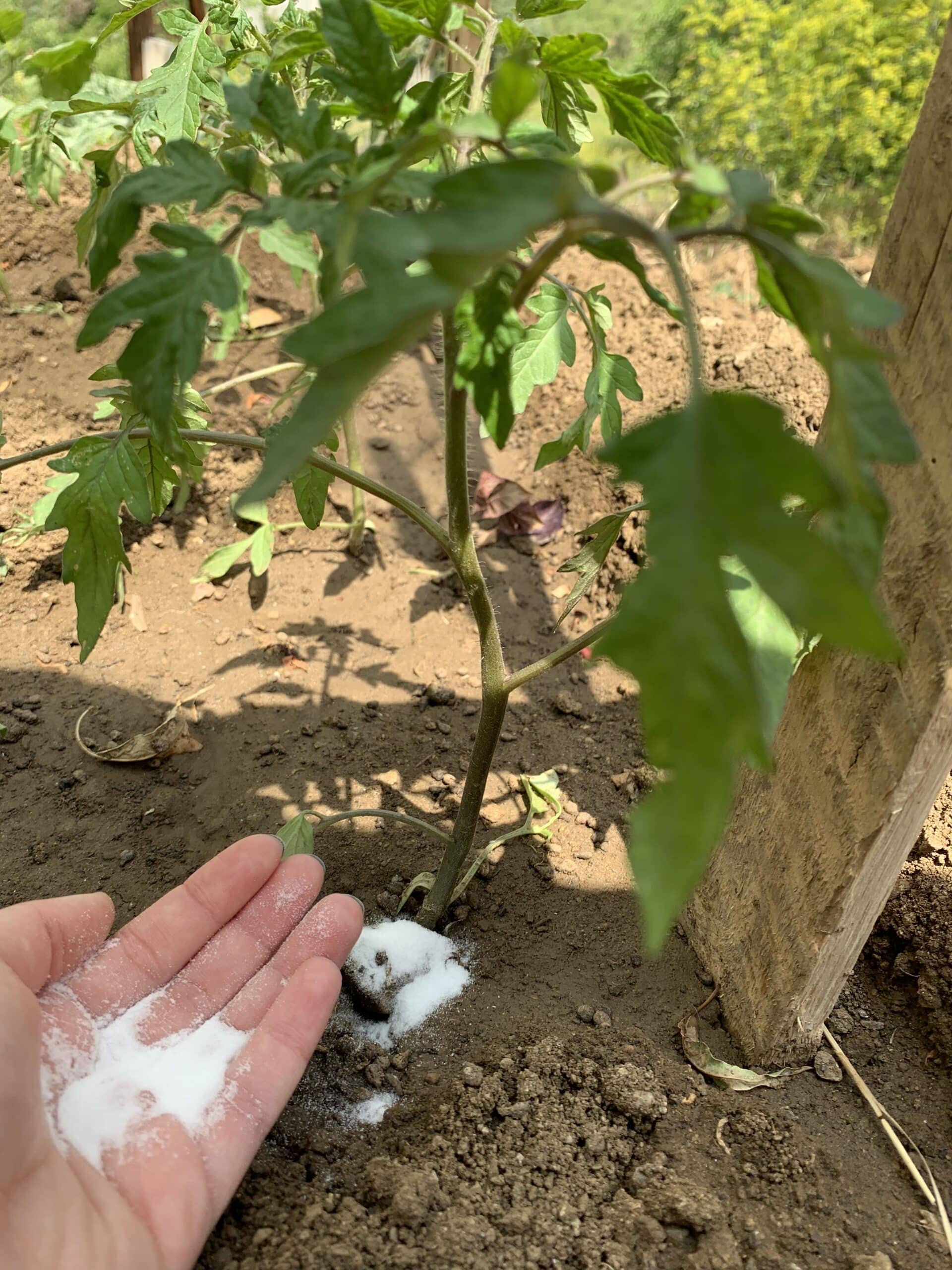
How it works: Sprinkling a small amount of baking soda around the base of tomato plants reduces soil acidity. Less acidic soil can yield sweeter-tasting tomatoes.
How to apply:
- Lightly sprinkle 1–2 tablespoons of baking soda around the base of each plant.
- Gently work it into the top layer of soil.
- Water as usual.
Important caution: Don’t overdo it. Excessive alkalinity can harm plants or interfere with nutrient absorption. Always test your soil’s pH if you plan to adjust it significantly.
3. Test Soil pH
Before planting vegetables, knowing your soil’s pH is crucial for healthy growth. While professional soil tests are best for precision, baking soda offers a quick DIY method to estimate your soil’s acidity.
How to test soil pH with baking soda:
- Gather a soil sample in a small container.
- Moisten it with distilled water.
- Sprinkle a tablespoon of baking soda on the damp soil.
- Watch for fizzing or bubbling.
Results:
- If it fizzes, your soil is likely acidic (pH under 7).
- No reaction indicates neutral or alkaline soil.
Knowing your soil pH helps determine which vegetables will thrive and whether you need amendments for optimal growth.
4. Keep Pests at Bay
Baking soda can help repel certain pests, providing a natural alternative to harsh insecticides. It’s particularly useful for combating pests like cabbage worms, ants, and some beetles.
Cabbage Worm Repellent:
- Mix 1 part baking soda with 1 part flour.
- Dust the mixture over cabbage, broccoli, or kale leaves.
The combination irritates soft-bodied pests like cabbage worms, deterring them from feeding.
Ant Repellent:
- Sprinkle baking soda in garden beds or around vegetable plots where ants are a problem.
- Mix equal parts baking soda and powdered sugar to attract ants, then disrupt their digestive systems.
While not a cure-all, baking soda can help keep pest populations in check, protecting your precious crops.
5. Clean Garden Tools and Pots
Garden hygiene is critical for preventing the spread of diseases between plants. Baking soda is a gentle yet effective cleaner for tools, pots, and even greenhouse surfaces.
How to clean with baking soda:
- Mix 3 tablespoons of baking soda into 1 quart of warm water.
- Use a sponge or brush to scrub dirt, sap, and residue from tools and pots.
- Rinse thoroughly and dry.
Baking soda’s mild abrasiveness removes grime without damaging surfaces or leaving harmful chemical residues.
6. Freshen Compost Piles
Compost is gold for vegetable gardeners – but sometimes it comes with a not-so-pleasant odor, especially when it becomes too acidic or anaerobic.
How baking soda helps: Sprinkling small amounts of baking soda into your compost can help neutralize acidic smells and keep the pile fresher.
However, moderation is key – too much baking soda can slow down the composting process by making the environment too alkaline for beneficial microbes.
How to use:
- Sprinkle lightly over foul-smelling compost.
- Mix well into the pile.
This simple trick keeps your compost pile balanced and your garden area more pleasant.
7. Boost Plant Health with a Foliar Spray
Besides controlling fungi, baking soda can sometimes serve as a mild foliar spray to refresh plant leaves and reduce dust buildup.
DIY Plant Spray:
- 1 teaspoon baking soda
- 1 quart water
- Optional: a drop of mild dish soap for better adhesion
Spray lightly onto vegetable foliage to help cleanse leaves, discourage some pests, and provide a mild antifungal effect. Avoid using this spray during the hottest part of the day to prevent leaf burn.
8. Control Weeds in Walkways
Though baking soda shouldn’t be used directly in vegetable beds because it can affect soil health, it’s an effective weed deterrent in garden pathways, patios, and cracks in walkways.
How to apply:
- Sweep baking soda directly into cracks where weeds emerge.
- Lightly moisten the area with water to help the powder stick.
Baking soda raises the salt concentration in the soil surface, making it less hospitable for weeds to germinate.
Caution: Use baking soda only in non-planting areas. Overuse in garden beds can harm vegetable plants due to soil imbalances.
9. Remove Garden Residue from Produce
After months of tending vegetables, the last step is harvesting and preparing them for the table. Baking soda is a safe, gentle way to clean dirt, pesticides, and bacteria from your homegrown produce.
Vegetable Wash Solution:
- Fill a basin with cool water.
- Add 1–2 tablespoons of baking soda.
- Soak vegetables for 2–5 minutes.
- Scrub gently with a soft brush if needed, then rinse thoroughly.
This simple wash removes lingering residues from leafy greens, root vegetables, and fruiting crops, ensuring your harvest is as clean and safe as possible.
Why Baking Soda Works for Gardeners
Baking soda’s magic in the vegetable garden comes down to its chemical properties:
- Alkalinity: Helps neutralize acids, preventing fungal growth and balancing soil pH.
- Mild abrasiveness: Useful for cleaning tools, surfaces, and produce.
- Natural repellent effects: Deters certain pests without harmful chemicals.
- Non-toxicity: Safe for use around vegetables, kids, and pets (when used in moderation).
It’s crucial, however, to remember that baking soda isn’t a miracle cure for every garden problem.
Overuse can raise soil pH too high, disrupt soil microbes, or cause leaf burn. Always apply baking soda treatments carefully and sparingly.
Additional Tips for Using Baking Soda Safely
- Test on a small area first when applying sprays to plants.
- Avoid spraying in direct sunlight to prevent leaf damage.
- Do not use baking soda solutions on plants with delicate leaves like spinach or lettuce unless highly diluted.
- Never apply large amounts directly to vegetable beds.
- Store baking soda in a dry place to keep it effective.
Baking soda proves that some of the most powerful gardening tools are already hiding in our kitchen cabinets.
Whether you’re fighting fungal diseases, keeping pests away, testing your soil, or even washing your fresh-picked veggies, baking soda is a versatile, eco-friendly secret weapon for every vegetable gardener.