If you peek inside the laundry rooms of budget-conscious homemakers, eco-friendly cleaners, and savvy appliance technicians, you might spot an unexpected metallic sphere resting right among the freshly folded towels: a tightly compressed ball of standard household aluminum foil.
At first glance, tossing a wad of kitchen foil into a clothes dryer seems completely counterintuitive – even risky. Most people associate metal in appliances with sparks in a microwave or damaged washing machine drums.
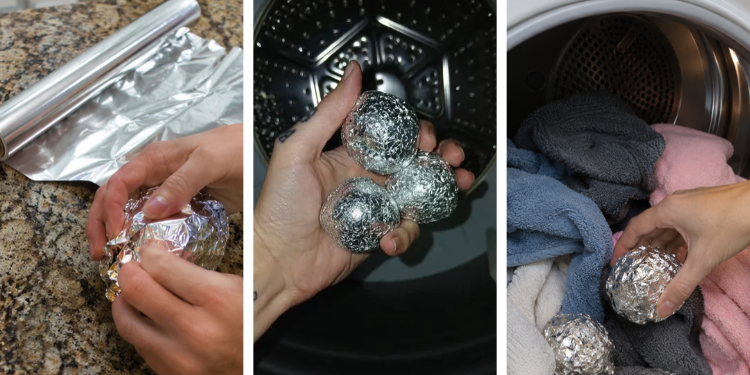
Yet inside a standard tumble dryer, a smooth, densely packed ball of aluminum foil operates safely and effectively as a reusable static eliminator, natural fabric softener alternative, and drying-time accelerator.
By taking advantage of the electrical conductivity and physical tumbling dynamics of aluminum alloy, this simple household trick replaces disposable chemical dryer sheets while keeping laundry soft, static-free, and wrinkle-reduced.
Here is an evidence-based look at the physics behind putting an aluminum foil ball in your dryer, the practical benefits it delivers, and essential safety rules to follow so you never damage delicate fabrics or your appliance.
The Physics: How an Aluminum Foil Ball Eliminates Static Cling
To understand why a simple ball of kitchen foil transforms your laundry cycle, it helps to examine what happens physically inside a hot, tumbling dryer drum.
1. Triboelectric Charging During Tumble Drying
Inside a clothes dryer, dozens of garments made from different polymers and natural fibers – such as polyester, nylon, cotton, and wool – repeatedly rub, collide, and separate in hot, dry air.
This constant friction strips electrons from certain fabrics (which become positively charged) and transfers them to others (which become negatively charged).
Because dry air is a poor electrical conductor, these separated charges become trapped on the surface of your clothes—a phenomenon known as the triboelectric effect.
When you open the dryer door, oppositely charged garments cling together stubbornly, crackle with static electricity, and act like magnets for pet hair and lint.
2. Electrical Conductivity and Charge Equalization
Commercial dryer sheets solve static cling by coating your clothes in a thin film of waxy, positively charged chemical surfactants (such as quaternary ammonium compounds).
While effective, these coatings build up on lint screens, reduce towel absorbency, and irritate sensitive skin.
An aluminum foil ball solves the exact same problem using pure physics rather than chemicals:
-
Conductive Electron Bridge: Aluminum is a highly conductive metal. As the foil ball bounces randomly through the tumbling laundry, it acts as a mobile conductive bridge, continuously touching positively and negatively charged fabrics and allowing excess electrons to equalize across the load.
-
Grounding to the Metal Drum: Each time the conductive foil ball strikes the grounded stainless steel or painted metal interior of the dryer drum, accumulated static voltage safely discharges away from your clothing.
3. Mechanical Separation and Airflow Enhancement
Beyond neutralizing static electricity, a dense 2.5 to 3 inch foil ball provides physical agitation. As it tumbles between heavy wet garments—like bedsheets, jeans, and bath towels—it separates clumped fabrics, opening up air pockets so hot air circulates more evenly through the load.
4 Main Reasons People Put Aluminum Foil Balls in the Dryer
1. Eliminating Static Cling Without Chemical Coatings
Synthetics like fleece, athletic wear, and microfiber blankets are notorious for generating severe static shocks in winter.
Tossing two or three aluminum foil balls into the dryer discharges static buildup naturally, leaving synthetic fabrics free of static cling without leaving behind artificial perfumes or waxy residues.
2. Preserving Towel Absorbency and Activewear Performance
Commercial liquid fabric softeners and disposable dryer sheets coat textile fibers in hydrophobic (water-repelling) lipids.
Over time, this chemical film ruins the water-absorbing power of cotton bath towels and clogs the moisture-wicking micro-pores of athletic apparel.
Because aluminum foil relies purely on electrical conductivity and mechanical agitation, your towels stay fluffy and absorbent while technical fabrics maintain full breathability.
3. Reducing Wrinkles and Shortening Drying Times
When wet laundry tangles into a tight ball inside the dryer, moisture gets trapped in the center, forcing you to run extended heat cycles that wear down fabrics and waste electricity.
Foil balls bounce between garments to keep them separated, promoting faster moisture evaporation, reducing deep creases, and trimming drying times by 10 to 15% on heavy loads.
4. Massive Cost Savings and Zero Disposable Waste
A single box of commercial dryer sheets contains toxic fragrances, endocrine-disrupting phthalates, and single-use polyester sheets that end up in landfills after one cycle.
Two or three homemade aluminum foil balls cost pennies to make and can be reused for 6 to 12 months (hundreds of laundry loads) before needing replacement.
Dryer Static & Softening Methods Compared
| Method | Static Elimination | Chemical Residue on Clothes | Impact on Towel Absorbency | Lifespan |
| Aluminum Foil Balls (2–3) | High (Conductive discharge) | Zero (100% chemical-free) | Preserves full absorbency | 6 – 12 Months |
| Commercial Dryer Sheets | High (Cationic surfactant coat) | High (Waxy film & synthetic scents) | Reduces water absorption | Single-use |
| 100% Wool Dryer Balls (4–6) | Moderate (Maintains micro-humidity) | Zero (Natural lanolin/wool fiber) | Preserves full absorbency | 1,000+ Loads |
| Liquid Fabric Softener | High | High (Coatings build up in machine) | Severely reduces absorbency | Ongoing bottle refills |
Step-by-Step: How to Make and Use Dryer Foil Balls Safely
Creating an effective, snag-free aluminum foil ball takes less than two minutes. Follow these exact steps to ensure smooth performance:
Crucial Safety Guidelines and Precautions
While aluminum foil is completely safe inside a standard electric or gas clothes dryer (unlike a microwave, a dryer uses thermal heating elements rather than electromagnetic microwave radiation), following a few common-sense precautions protects both your clothing and your appliance:
-
Never Use in the Washing Machine: Only put aluminum foil balls in the dryer, never in the washing machine. Wet agitation combined with detergents will shred foil into tiny metallic fragments that can clog drain pumps.
-
Avoid Ultra-Delicate Fabrics: Skip foil balls when drying delicate lace, sheer hosiery, fine silk, or loose-knit sweaters, as even minor surface texture on crumpled foil could snag fragile threads. Use mesh laundry bags for delicates instead.
-
Check Moisture Sensor Bars: Most modern dryers feature two metallic moisture sensor bars inside the drum (usually near the lint filter) that detect damp clothes to automatically shut off the cycle. While occasional contact with a foil ball is harmless, if your dryer relies heavily on sensitive auto-dry sensors, check that clothes are fully dry—or use timed dry cycles for mixed synthetic loads.
-
Keep Tightly Packed: Never toss loose, flat sheets of foil into the dryer. Only use tightly compressed, smooth spheres so the foil cannot tear or get caught in the lint trap housing.
Putting two or three tightly rolled balls of aluminum foil in your dryer is a clever, zero-waste habit that harnesses simple electrical physics to banish static cling, soften laundry naturally, and save money on every single load.