Cardiovascular disease remains the leading cause of mortality worldwide, with atherosclerosis – the gradual buildup of fatty, cholesterol-laden plaques inside the arterial walls – at the root of most heart attacks and strokes.
In the search for accessible, non-prescription ways to improve vascular health, garlic (Allium sativum) frequently tops the list.
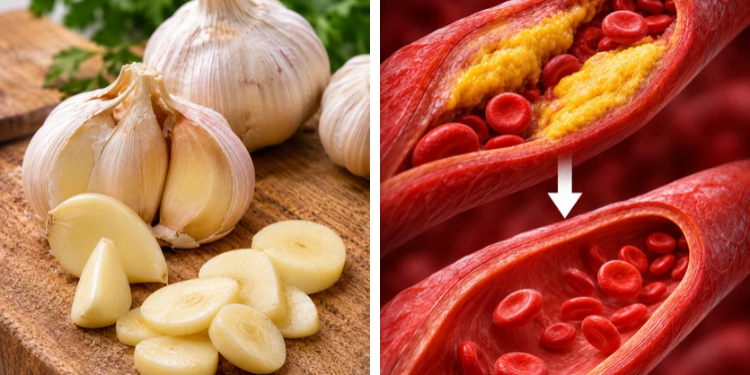
Popular health blogs, social media posts, and traditional herbal remedies often claim that eating raw garlic or taking concentrated garlic extract can “dissolve,” “clean out,” or completely “clear” arterial plaque.
While garlic has been prized since antiquity for its medicinal properties, evaluating whether a humble kitchen bulb can actively reverse arterial clogging requires looking past sensational claims and examining the clinical cardiology literature.
Here is an evidence-based analysis of what happens to your blood vessels when you consume garlic, the biochemical mechanisms at play, what human clinical trials demonstrate, and what garlic can – and cannot – do for your arteries.
The Root Problem: How Arterial Plaque Forms
To understand how garlic interacts with blood vessels, it helps to review how atherosclerosis develops:
-
Endothelial Damage: Chronic high blood pressure, elevated blood sugar, smoking, or low-grade systemic inflammation damages the delicate inner lining of the arteries (the endothelium).
-
Lipid Accumulation & Oxidation: Circulating low-density lipoprotein (LDL) cholesterol particles penetrate the damaged arterial wall. When these LDL particles become oxidized by free radicals, they trigger an immune response.
-
Foam Cell & Plaque Formation: White blood cells (macrophages) engulf the oxidized LDL, transforming into fat-laden foam cells. Over time, these cells accumulate alongside calcium deposits and fibrous tissue, forming hardened, narrowed plaques that restrict blood flow.
The Chemistry: How Garlic Interacts with Cardiovascular Biology
When garlic cloves are crushed or chopped, an enzyme called alliinase converts the amino acid alliin into allicin—the primary organosulfur compound responsible for garlic’s distinct pungency and medicinal activity.
In the body, allicin rapidly breaks down into secondary sulfur compounds, such as S-allylcysteine (SAC) and diallyl disulfide, which exert targeted physiological effects on the cardiovascular system:
1. Inhibition of Cholesterol Synthesis
Secondary garlic compounds inhibit HMG-CoA reductase, the key liver enzyme responsible for synthesizing cholesterol (the same enzyme targeted by prescription statin medications). By reducing liver cholesterol production, garlic helps lower circulating levels of total cholesterol and LDL.
2. Powerful Antioxidant Action
Garlic’s organosulfur compounds scavenge reactive oxygen species (ROS) and boost endogenous antioxidant enzymes like glutathione peroxidase. By neutralizing free radicals, garlic prevents LDL cholesterol from oxidizing—a vital step in stopping foam cell formation.
3. Vasodilation and Blood Pressure Reduction
Garlic compounds stimulate red blood cells to produce hydrogen sulfide gas and prompt endothelial cells to release nitric oxide. Both gaseous signaling molecules relax smooth muscle tissue surrounding blood vessels, causing arteries to dilate and lowering systemic blood pressure.
4. Anti-Platelet Aggregation (Blood Thinning)
Garlic inhibits thromboxane, a compound that causes blood platelets to clump together. By reducing platelet stickiness, garlic improves blood viscosity and reduces the risk of dangerous intra-arterial blood clots (thrombosis).
What Clinical Research Shows: Can Garlic Actually “Clear” Plaque?
When evaluated in human clinical trials, the claim that garlic “clears” arteries requires careful medical nuance.
Garlic does not act like a mechanical drain cleaner or a liquid chemical that instantly dissolves pre-existing, calcified plaques.
However, high-quality clinical studies—particularly those evaluating Aged Garlic Extract (AGE)—show remarkable results in slowing down, halting, and mildly regressing soft, uncalcified arterial plaque buildup.
1. The UCLA Clinical Trials on Aged Garlic Extract
Dr. Matthew Budoff, a renowned cardiologist at the Lundquist Institute at Harbor-UCLA Medical Center, led a series of double-blind, placebo-controlled clinical trials using Coronary Artery Calcium (CAC) scans and Cardiac Computed Tomography Angiography (CCTA) to track actual plaque progression in human patients over time.
-
Slowing Soft Plaque Accumulation: In a landmark study published in the Journal of Nutrition (2016), patients with metabolic syndrome were given either 2,400mg of Aged Garlic Extract daily or a placebo for 1 year. The results demonstrated that AGE significantly reduced the rate of low-attenuation (soft) plaque progression by up to 80% compared to the placebo group.
-
Plaque Regression: Crucially, the researchers observed a mild regression (reduction in volume) of unstable soft plaque in patients taking Aged Garlic Extract alongside standard cardiac care.
2. Stabilization of Vulnerable Plaques
Hard, calcified plaques are generally stable and rarely rupture, whereas soft, lipid-rich plaques are volatile and prone to bursting—which triggers acute heart attacks.
Research indicates that garlic compounds help stabilize these soft fatty deposits by reducing systemic vascular inflammation (lowering markers like C-reactive protein and interleukin-6).
Cardiovascular Benefits Comparison Matrix
| Parameter | Fresh Raw Garlic | Aged Garlic Extract (AGE) | Prescription Statins |
| Primary Active Component | Allicin (Unstable) | S-Allylcysteine (Stable) | Synthetic HMG-CoA inhibitors |
| LDL Cholesterol Lowering | Mild (5-10%) | Moderate (7-10%) | High (30-50%) |
| Blood Pressure Impact | Mild reduction | Moderate reduction (7-10 mmHg) | Varies by drug class |
| Soft Plaque Stabilization | Unproven in clinical trials | Clinically documented | Clinically documented |
| Gastrointestinal Side Effects | High (Heartburn, odor, stomach upset) | Very Low (Odorless and gentle) | Low to Moderate (Muscle soreness) |
How to Incorporate Garlic for Cardiovascular Health
If you want to support your vascular health naturally, both culinary fresh garlic and standardized extracts offer distinct benefits:
Crucial Safety Guidelines and Precautions
-
Bleeding Risks Before Surgery: Because garlic reduces platelet aggregation (acting as a mild natural blood thinner), stop taking high-dose garlic supplements at least 7-14 days prior to scheduled surgical or dental procedures.
-
Interactions with Anticoagulants: If you are currently prescribed blood-thinning medications (such as warfarin, aspirin, or clopidogrel), consult your cardiologist before adding high-dose garlic extracts, as the combination can increase bruising or bleeding risks.
-
Never Discontinue Prescription Medications: Garlic is a complementary dietary tool, not a substitute for emergency medical care, anti-hypertensives, or statin therapies prescribed by your physician.
While garlic cannot magically erase years of calcified arterial buildup overnight, clinical science confirms that standardized garlic extract is a powerful ally that helps slow down plaque progression, lower blood pressure, reduce vascular inflammation, and support long-term arterial flexibility.