Step into any space that has been closed up for a while—a damp basement, a recently rented apartment, a kitchen after cooking fish, or a room where someone has been smoking—and you are instantly hit with a wall of stagnant, heavy air.
Standard commercial air fresheners rarely solve the problem; they simply flood the room with synthetic fragrances, masking the unpleasant odors under a heavy chemical layer that can irritate sensitive respiratory tracts.
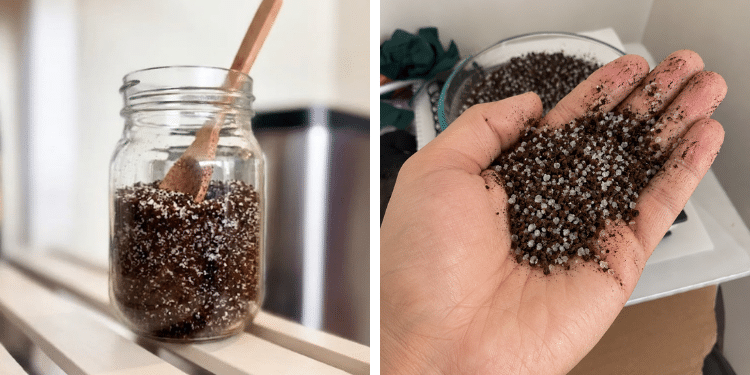
In response, an old-world housekeeping practice has seen a massive resurgence across modern minimalist homes: leaving bowls of coarse salt and dry coffee grounds out in a room for 24 hours.
Far from being a superstitious ritual, this simple combinations relies on basic principles of organic chemistry and material physics. Together, these two everyday kitchen staples work as a passive, dual-action environmental filter.
When left out overnight, they interact directly with the ambient air, completely transforming the room’s atmosphere.
Here is a scientifically grounded look at exactly what happens during those 24 hours and what people notice when they walk back into the room.
The Molecular Science: A Dual-Action Passive Filter
To understand why this combination is so effective, you have to look at the unique cellular structures of both salt and coffee grounds.
They do not emit a perfume to cover up smells; instead, they function through two completely distinct physical mechanisms: hygroscopy and adsorption.
-
The Dehumidifying Power of Salt: Sodium chloride is highly hygroscopic, meaning it possesses a natural chemical affinity for water molecules, pulling them straight out of the surrounding air. In a stagnant room, airborne moisture carries microscopic mold spores, musty mildew scents, and allergens. By pulling in this excess vapor, salt physically lowers the room’s humidity, stripping away the literal weight of the air.
-
The Charcoal-Like Trapping of Coffee: Coffee grounds contain a dense network of microscopic pores and pockets, giving them an incredibly high surface area. Furthermore, coffee contains nitrogen. When air flows over the grounds, the nitrogen increases the material’s ability to pull carbon-based volatile organic compounds and sulfur-rich odor molecules out of the air, trapping them tightly within the carbon pores—a process known as adsorption.
Atmospheric Clearing Performance Matrix
When left exposed to an enclosed space for 24 hours, the salt and coffee grounds alter several key indoor air metrics:
| Environmental Marker | Physical Action | Noticed Real-World Shift |
| Relative Ambient Humidity | Salt pulls in floating water molecules | The air feels noticeably crisper, lighter, and less sticky |
| Volatile Organic Compounds | Coffee pores adsorb carbon-based gases | Strong chemical, paint, or smoke odors disappear completely |
| Airborne Micro-Allergens | Condense onto the moist salt crystal matrix | A reduction in sudden morning sneezing or throat tickles |
| Olfactory Nerve Reset | Caffeine volatiles clear nose receptors | A clean, comforting, neutral scent profile replaces mustiness |
What People Notice After 24 Hours
1. The Musty “Heavy” Feeling in the Air Disappears
When you walk into a room that has been locked up or lacks proper ventilation, your skin and lungs instantly register a thick, heavy sensation. This is caused by high relative humidity trapping old air in place.
Over the course of 24 hours, the exposed salt crystals continuously pull water vapor out of the atmosphere. As the moisture drops, the air becomes physically lighter.
People returning to the room immediately notice that the space feels crisper, cooler, and significantly easier to breathe in, as if a window had been left open.
2. Stubborn Food, Pet, and Smoke Odors are Completely Erased
Certain odors—like fried bacon, burnt toast, pet accidents, or stale cigarette smoke—are notoriously difficult to remove because they are made of oily, airborne molecules that cling to walls and fabrics.
The carbon structure of the coffee grounds goes to work on these persistent molecules. The nitrogen in the coffee acts as a chemical magnet for sulfur gases (the source of most foul odors), pulling them out of suspension and locking them inside the grounds.
Rather than covering up the smell, the coffee grounds neutralize it at a molecular level, leaving the air completely clean.
3. A Subtle, Deeply Calming Neutral Scent Profile
Unlike synthetic plugins that blast your senses with overwhelming faux-lavender or artificial vanilla, this natural method leaves a completely different sensory footprint.
After 24 hours, the heavy volatile odors are trapped, and the coffee grounds leave behind a faint, warm, and earthy base note.
The natural aroma of coffee contains trace compounds that stimulate the production of endorphins and clear the olfactory receptors in your nose.
This creates an immediate feeling of comfort, cleanliness, and safety when you cross the threshold.
The Step-by-Step Room Reset Protocol
To maximize the hygroscopic and adsorptive properties of this kitchen hack without creating a messy cleanup, follow this precise setup sequence:
Essential Supplies
-
2 small, wide-rimmed glass or ceramic bowls (avoid plastic, as it can static-charge the coffee grounds).
-
1/2 cup of coarse sea salt or rock salt (larger crystals provide a better surface-to-moisture matrix).
-
1/2 cup of completely dry, freshly ground coffee (used grounds work perfectly, but they must be dried completely in the sun or oven first to prevent mold growth).
2 Critical Maintenance Rules for Success
Never Use Wet or Freshly Brewed Grounds
If you take wet coffee grounds straight from your morning drip machine and leave them in a closed room, you will achieve the opposite of your goal.
The wet grounds will dump a massive amount of extra moisture into the air, driving up the humidity and creating a perfect breeding ground for fuzzy green mold spores within 24 hours. Always ensure your grounds are bone-dry.
Scale the Amounts for Larger Living Spaces
The 1/2 cup ratio is perfectly calculated for a standard bedroom, home office, or enclosed walk-in closet. If you are trying to clear a massive, open-concept living room or a double-car basement garage, you will need to scale up.
Place 3 or 4 separate sets of bowls in opposite corners of the space to ensure the entire air volume is properly filtered.
Clearing out a stale, smelly room doesn’t require expensive electronic equipment or synthetic chemical sprays.
True environmental freshness is built on the elegant principles of natural physics and chemistry.