The Snake Plant (Dracaena trifasciata, formerly Sansevieria) is often labeled the “ultimate beginner plant” due to its legendary resilience.
However, there is a significant difference between a snake plant that is merely “surviving” and one that is “thriving.”
As we enter May, the environmental conditions – increasing day length, rising ambient temperatures, and higher light intensity – signal the plant to exit its winter dormancy and enter its primary vegetative growth phase.
May is the most critical month for snake plant enthusiasts. It is the window of opportunity to reset the plant’s biological clock and provide the metabolic fuel required for it to produce new “pups” and tall, structural leaves.
Here are the 6 essential things to do in May to boost your snake plant’s growth and maximize its air-purifying potential.
1. Execute a “Light Gradient” Transition
Snake plants can survive in low-light corners, but they will not grow there. To trigger new leaf production in May, you must increase their light exposure.
-
The Mechanism: Photosynthesis is the engine of growth. During the winter, your plant likely maintained its existing leaves on minimal light. In May, moving the plant closer to a south-facing window provides the photons necessary to fuel the production of new tissue.
-
The Action: Move your plant closer to a window over the course of a week. Avoid “light shock” by introducing it to 2 hours of brighter light, then 4, then a full day.
-
The Goal: Aim for “bright indirect light.” If the leaves feel warm to the touch, the light is too intense; if the variegation (the yellow/white patterns) is fading, it needs more light.
2. Implement the “Deep Drench & Dry” Watering Cycle
The most common cause of snake plant failure is “sip watering.” In May, as temperatures rise, the plant’s evapotranspiration rate increases, requiring a shift in how you hydrate the soil.
-
The Mechanism: Snake plants are succulents that store water in their thick, waxy leaves. To encourage deep root growth, the water must reach the bottom of the pot.
-
The Action: Instead of giving the plant a small cup of water once a week, take it to the sink. Water it thoroughly until it runs out of the drainage holes. Then – and this is crucial – do not water it again until the soil is bone dry all the way to the bottom (test this with a wooden chopstick or a moisture meter).
-
The Result: This “feast and famine” cycle mimics the natural dry-land environment of the plant, forcing the roots to expand in search of moisture, which leads to a sturdier, faster-growing plant.
3. Apply a Balanced, Diluted Fertilizer
During the winter, fertilizing a snake plant can cause “salt burn” because the plant isn’t active enough to use the nutrients. In May, the plant is “hungry” for nitrogen, phosphorus, and potassium.
-
The Mechanism: Nitrogen supports leaf color and size, while phosphorus encourages the development of “pups” (rhizome offsets).
-
The Action: Use a balanced, water-soluble fertilizer (such as a 10-10-10 or 20-20-20 NPK ratio). Crucially: Dilute it to half-strength. Snake plants are slow feeders; a full dose of fertilizer can overwhelm their delicate root hairs.
-
The Frequency: Fertilize once in May, and then every 4-6 weeks throughout the summer. Stop entirely by late September.
4. Dust and “Pore” Management
The snake plant is one of the top plants for Crassulacean Acid Metabolism (CAM), meaning it opens its stomata (pores) at night to exchange gases. If these pores are clogged with dust, the plant’s “respiration” is compromised.
-
The Mechanism: Dust acts as a physical barrier to light and gas exchange. A dusty leaf can lose up to 30% of its photosynthetic efficiency.
-
The Action: Use a soft, damp microfiber cloth to gently wipe down both sides of every leaf. Avoid using “leaf shine” products, which contain oils that can permanently clog the plant’s pores.
-
The Benefit: Not only does this boost growth, but it also allows you to inspect the plant for “hitchhikers” like mealybugs or spider mites that often emerge in the warmth of May.
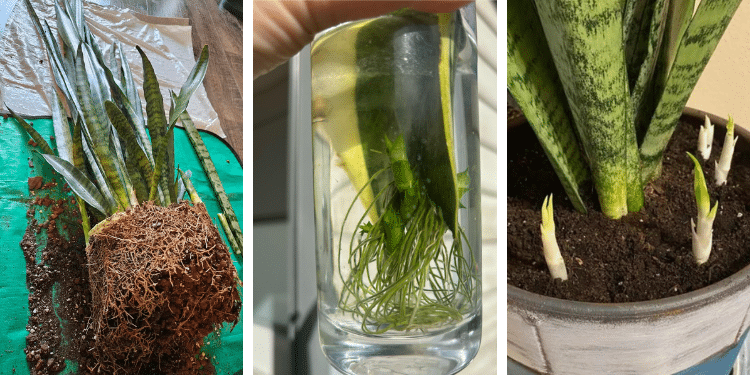
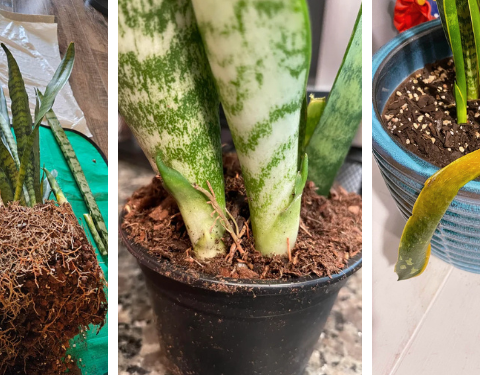
5. Check for “Rhizome Crowding” and Repot
May is the optimal month for repotting because the plant’s high metabolic rate allows it to recover from “root shock” quickly.
-
The Mechanism: Snake plants produce growth from thick, underground stems called rhizomes. If the rhizome is pressed against the side of a plastic pot, it can actually crack the container.
-
The Action: If you see roots peeping out of the drainage holes or if the pot feels “heavy” and solid, it’s time to move up. Only go one size larger (e.g., from a 6-inch pot to an 8-inch pot).
-
The Soil: Use a succulent or cactus mix. As we’ve discussed with lavender and other plants, drainage is the priority. A mix of 50% potting soil and 50% perlite or pumice is ideal.
6. Prune for Energy Redirection
While we usually want our plants to be as large as possible, sometimes “less is more” when it comes to growth speed.
-
The Mechanism: A plant has a finite amount of energy. If it is struggling to maintain a damaged, yellowed, or “floppy” leaf, it has less energy to put into the production of new pups.
-
The Action: Using sterilized shears, cut away any leaves that are more than 50% damaged or yellowed at the base. You can also “tip prune” any brown, crunchy ends—just be sure to follow the natural V-shape of the leaf.
-
The Bonus: If you cut off a healthy but leaning leaf, don’t throw it away! You can propagate it in water to create entirely new plants – though keep in mind that variegated plants (with yellow edges) will often revert to solid green when grown from leaf cuttings.
May is the month to be an active gardener for your snake plant.
By transitioning its light, perfecting the watering cycle, and providing a gentle nutrient boost, you align the plant’s environment with its internal biological clock.
These six steps ensure that your snake plant doesn’t just sit in the corner – it becomes a vibrant, growing, and air-purifying center-piece of your home.