Houseplant propagation often involves cutting, prepping, and carefully maintaining specific conditions.
While some plants require rooting hormones, humidifiers, and soil mixtures to thrive, there’s a special group of plants that can begin growing with just a single cut and a simple glass of water.
If you love keeping houseplants but want a fuss-free way to multiply them or start a collection, you’re in luck. These nine beautiful houseplants are perfect for water propagation.
With the right lighting and a bit of patience, you can grow lush, healthy greenery straight from a glass of water – no soil required.
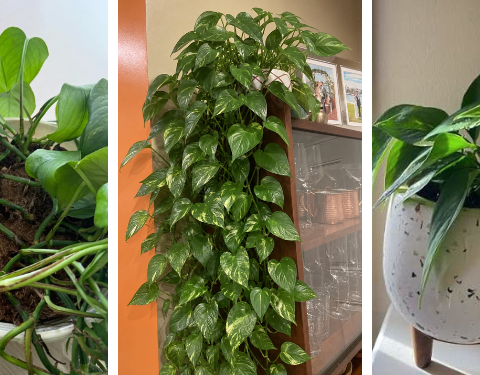
1. Pothos (Epipremnum aureum)
Pothos, also known as devil’s ivy, is one of the easiest plants to propagate. Just snip a healthy vine about 5–6 inches long with at least 2–3 nodes (where leaves and roots grow).
Place it in a glass of clean water, ensuring the nodes are submerged.
Keep it in a warm location with bright, indirect sunlight. Change the water every 3–5 days to prevent bacterial buildup. In just 1–2 weeks, you’ll notice new roots forming. Within a month, your cutting will be ready to transfer to soil or continue thriving in water.
Bonus Tip: Pothos also helps purify indoor air by absorbing toxins like formaldehyde and benzene.
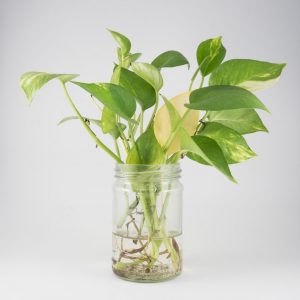
Botanical Name: Epipremnum aureum
2. Croton (Codiaeum variegatum)
Known for its vibrant, variegated foliage, croton is surprisingly simple to propagate in water. Take a 3–6 inch cutting that includes a few healthy leaves and at least one node.
Place the cutting in a glass or vase filled with water, making sure the node is below the surface. Position it in a warm spot with bright but filtered light. Replace the water every few days, and within 4–6 weeks, you should see strong root development.
Once roots are a few inches long, you can pot your croton cutting into soil. With regular care, it will grow into a colorful, bushy indoor plant.
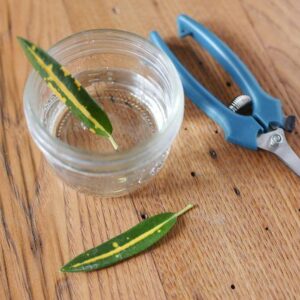
Botanical Name: Codiaeum variegated
3. African Violet (Saintpaulia)
African violets are prized for their charming blooms and velvety leaves. Propagating them in water is as easy as placing a single leaf with its stalk in a shallow glass.
Use a small glass or container to keep the leaf upright and the stalk immersed in water. Place it in a well-lit location out of direct sunlight.
Roots typically begin to form within 3–4 weeks, and new leaves will emerge in about 6–8 weeks.
You can then transplant it into a pot filled with light, well-draining soil.
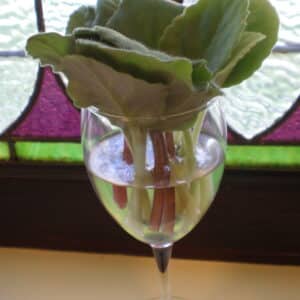
Botanical Name: Saintpaulia
4. Inch Plant (Tradescantia zebrina / Tradescantia sabrina)
The inch plant is an eye-catching trailing houseplant with vibrant purple, silver, and green striped leaves. Take a 5–6 inch cutting and submerge at least one or two nodes in a glass of water.
Place the container near a bright window, avoiding direct sunlight. Change the water regularly.
Within a few weeks, you’ll see roots beginning to form, and your cutting will grow quickly with cascading vines.
This plant is not only beautiful but easy to maintain and perfect for hanging baskets.

Botanical Name: Tradescantia Sabrina
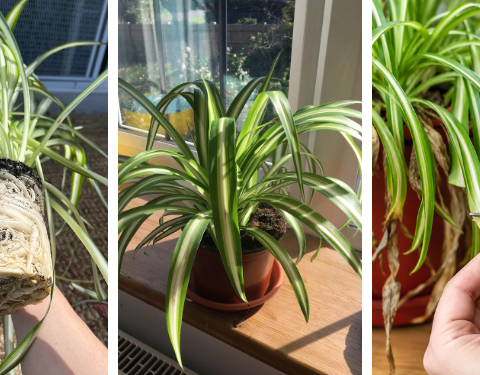
5. Spider Plant (Chlorophytum comosum)
Spider plants are among the best beginner-friendly houseplants. They naturally produce ‘babies’ or offshoots that dangle from the parent plant.
Gently remove one of these offshoots and place it in a glass of water, ensuring the root node touches the water surface.
New roots usually form within a week or two. Once the roots are an inch or longer, transplant to soil or keep it in water.
Spider plants also clean indoor air and thrive in various lighting conditions.
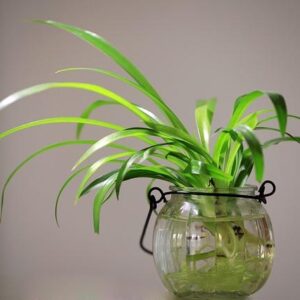
Botanical Name: Chlorophytum comosum
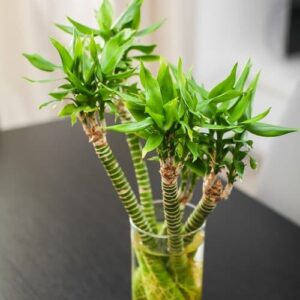
6. Dracaena Marginata (Dragon Tree)
Dracaena marginata is a striking plant with long, narrow leaves atop tall, woody stems. To propagate in water, cut a 6–8 inch section from the top of the plant, making sure it has at least one node.
Place the cutting in a tall glass with the node submerged and set it in a warm room with bright, indirect sunlight. Replace the water every 3–4 days.
In 3–5 weeks, roots will begin to form. Once rooted, you can transplant the cutting into a pot or hydroponic setup.
7. English Ivy (Hedera helix)
English ivy is a fast-growing vine ideal for training along trellises or letting it cascade from hanging pots. It’s very easy to propagate – just snip a 5–6 inch section with several nodes and remove the lower leaves.
Place the cutting in a glass of water with the nodes submerged and leave it in a well-lit area away from direct sun.
Change the water weekly. In about 2–3 weeks, you’ll see a strong network of roots, and the ivy will continue to flourish.

Botanical Name: Hedera helix
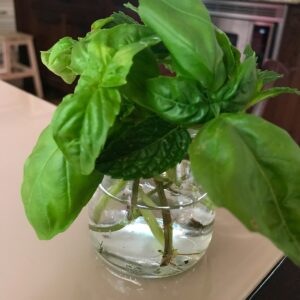
8. Basil (Ocimum basilicum)
If you enjoy growing herbs indoors, basil is one of the easiest to propagate in water. Snip a 4–6 inch stem just below a leaf node and remove the lower leaves.
Place the stem in a glass of water on a sunny windowsill. Replace the water every 2–3 days.
You’ll see roots appear in 7–10 days, and the cutting can be planted in soil within 2 weeks – or you can keep it in water and harvest leaves as needed.
Fresh basil on your windowsill makes cooking a fragrant joy!
Botanical Name: Ocimum basilicum
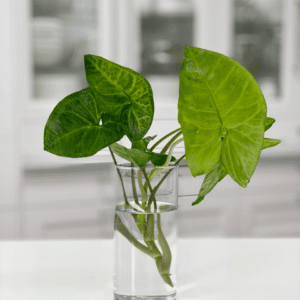
9. Arrowhead Vine (Syngonium podophyllum)
Arrowhead vines are loved for their arrow-shaped leaves and easy-care nature. To propagate, cut a healthy stem with at least one or two leaf nodes and remove any lower leaves.
Place the cutting in a vase or jar with the node submerged. Position it in a location with bright, indirect light. Change the water regularly. New roots will begin forming in 1–2 weeks.
Arrowhead vines grow well in water for extended periods, making them a great choice for minimalist plant displays.
Final Tips for Water Propagation Success:
- Always use clean, room-temperature water – preferably filtered or dechlorinated.
- Change the water every 3–5 days to prevent stagnation and bacterial growth.
- Use clear containers so you can monitor root development.
- Keep leaves above the waterline to prevent rot.
- Once roots are 2–4 inches long, you can transplant the cuttings into soil if desired.
Water propagation is not only easy – it’s incredibly satisfying. Watching your plants root and thrive in a simple jar brings joy and a sense of accomplishment.
Whether you’re expanding your plant collection or gifting rooted cuttings to friends, these nine houseplants offer a fun, soil-free way to enjoy the beauty of greenery indoors.