The snake plant (Sansevieria, now Dracaena trifasciata), also known as mother-in-law’s tongue, is one of the easiest houseplants to grow – it’s practically indestructible.
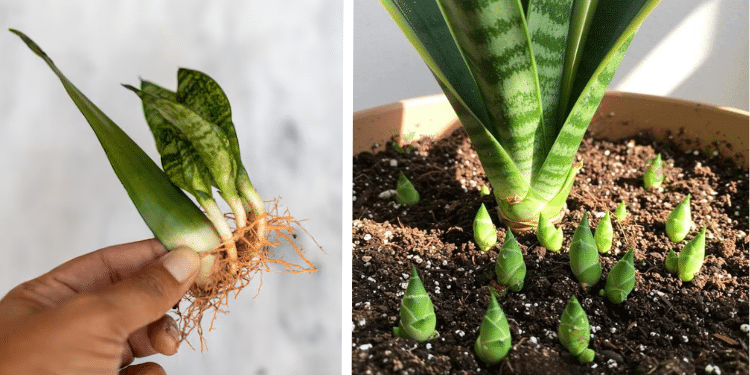
Yet one of the most common frustrations gardeners face is that their snake plant refuses to produce pups, those little baby shoots that emerge from the soil and eventually become new plants.
Understanding How Snake Plants Reproduce
Before diving into the problems, it’s important to understand how snake plants produce pups in the first place.
Snake plants grow from a network of rhizomes – underground stems that spread horizontally beneath the soil.
These rhizomes store nutrients and, when conditions are right, send up new shoots (pups) from the base of the plant. Over time, a single plant can develop a dense cluster of leaves and expand to fill the pot.
This means two things are essential for pup production:
- The plant must have enough energy and resources to create new growth.
- The growing conditions must signal to the plant that it’s safe to expand.
When either of these factors is missing, the plant focuses solely on survival – and pups never appear.
1. Your Snake Plant Isn’t Getting Enough Light
Why Light Matters
One of the most common reasons snake plants fail to produce pups is insufficient light. While they are known for tolerating low light, “tolerating” doesn’t mean “thriving.”
In dim conditions, a snake plant goes into energy-saving mode, focusing on maintaining existing leaves rather than producing new ones.
Photosynthesis – the process by which plants create energy – is directly tied to light levels. Without enough light, the plant can’t store the extra energy needed to push out new rhizomes and pups.
Signs of Light Deficiency
- Leaves grow tall, thin, or floppy.
- New growth is pale or nonexistent.
- Growth slows dramatically or stops.
How I Fix It
- Move the plant to a brighter location. A few hours of indirect sunlight near an east- or west-facing window is ideal.
- Supplement with grow lights if natural light is limited, especially in winter. Aim for 10–12 hours of light daily.
- Rotate the pot every few weeks to ensure all sides receive even light.
With increased light, many snake plants begin producing pups within 8–12 weeks.
2. The Pot Is Too Large (or Too Small)
Why Pot Size Matters
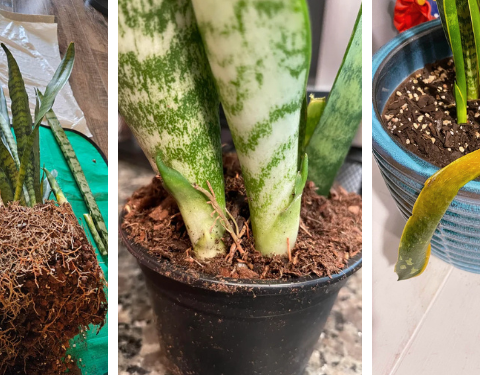
Snake plants are one of the few houseplants that thrive on being slightly root-bound. When there’s too much empty soil around the roots, the plant focuses on root expansion instead of producing pups.
Conversely, if the pot is too cramped, the rhizomes can’t physically spread to create new shoots.
Signs of Incorrect Pot Size
- In a large pot: slow or no new growth, soil stays wet for too long.
- In a small pot: roots circling the container, soil drying out rapidly, stunted growth.
How I Fix It
- Choose a pot that’s only 2–3 inches wider than the current root ball. This gives the rhizomes just enough room to spread without overwhelming them.
- If your plant is root-bound, divide and repot it into multiple smaller containers. This often stimulates each section to produce new pups.
- Always use a well-draining potting mix – a blend of cactus soil and perlite is perfect.
3. You’re Overwatering (or Underwatering)
Why Watering Affects Pup Production
Watering is one of the most misunderstood aspects of snake plant care. Because these plants are succulents, they store water in their thick leaves and rhizomes.
Too much water suffocates the roots, causes rot, and halts growth. Too little water, and the plant goes into drought survival mode, conserving energy instead of producing pups.
Signs of Watering Problems
- Overwatering: Mushy leaves, root rot, foul smell from soil.
- Underwatering: Dry, curling, or wrinkled leaves.
How I Fix It
- Water only when the soil is completely dry. Stick your finger 2 inches deep – if it’s dry, it’s time to water.
- Use a pot with drainage holes to prevent standing water.
- In winter, reduce watering by half since growth slows down.
Balanced watering encourages healthy root growth, which directly supports rhizome development and pup formation.
4. The Plant Is Lacking Nutrients
Why Nutrition Is Key
Snake plants don’t need heavy feeding, but they do require basic nutrients to build new tissue. If the soil is depleted – common if you haven’t repotted or fertilized in over a year – the plant may not have the resources to grow pups.
Key nutrients for pup production:
- Nitrogen (N): Encourages leaf and rhizome growth.
- Phosphorus (P): Supports root development.
- Potassium (K): Improves overall vigor and energy storage.
Signs of Nutrient Deficiency
- Very slow growth or none at all.
- Pale or yellowing leaves.
- Small or misshapen new leaves.
How I Fix It
- Fertilize 2–3 times during the growing season (spring to early fall) with a balanced liquid fertilizer diluted to half strength.
- Add organic amendments like worm castings or compost to improve long-term soil fertility.
- Refresh the potting mix every 2–3 years to replace depleted nutrients.
With proper feeding, snake plants often start producing pups within one growing season.
5. The Plant Is Too Young or Recently Divided
Why Age and Stress Matter
Snake plants don’t produce pups immediately. Young plants – especially those started from leaf cuttings – need time to build a strong rhizome network before sending up new shoots.
Similarly, recently divided plants may go into “recovery mode” and pause pup production for several months.
Signs This Is the Issue
- Your plant is less than 1–2 years old.
- It was recently repotted or divided.
- It’s producing healthy leaves but no pups.
How I Fix It
- Be patient. Once a plant reaches maturity (usually after 12–18 months), it will naturally begin producing pups.
- Avoid frequent repotting or disturbance. Each time the plant is divided, it needs time to reestablish its root system.
- Focus on optimal care (light, watering, and nutrition) to support recovery and growth.
6. Seasonal Dormancy Is Slowing Growth
Why Timing Matters
Snake plants are slow growers by nature, and they enter a dormant phase in fall and winter when daylight hours decrease.
During this time, growth – including pup production – slows dramatically or stops altogether.
This is completely normal and nothing to worry about.
Signs of Dormancy
- No new leaves or pups in fall or winter.
- Slower water absorption and nutrient uptake.
How I Fix It
- Adjust expectations. Don’t expect pup production in winter – it will resume naturally in spring.
- Avoid fertilizing during dormancy, as the plant can’t use the nutrients efficiently.
- Maintain consistent light and moderate watering so the plant remains healthy and ready to grow when spring arrives.
7. Rhizomes Are Too Deep or Buried
Why Depth Affects Pups
Snake plants produce pups from their rhizomes, and if those rhizomes are buried too deeply under dense or compacted soil, they may not have enough energy to push new shoots to the surface.
Additionally, if rhizomes are damaged during repotting, pup production can stall for months.
How I Fix It
- When repotting, position the root ball so the rhizomes sit just below the soil surface (about 1 inch deep).
- Loosen compacted soil gently to give pups an easier path upward.
- Avoid cutting or damaging rhizomes during division – always use a sharp, clean knife and handle them carefully.
Bonus Tips: How I Encourage Snake Plants to Produce More Pups
Once you’ve addressed the main issues, there are a few pro-tips I use to boost pup production even more:
1. Controlled Stress
Allowing the plant to become slightly root-bound can trigger a survival response – pushing out pups to spread. But don’t let it go too far; severe crowding can slow growth.
2. Warmth and Humidity
Snake plants love warmth. Temperatures around 70–85°F (21–29°C) encourage faster rhizome growth. Moderate humidity (40–50%) is ideal.
3. Pruning Older Leaves
Removing a few of the oldest, tallest leaves can redirect energy into rhizome development and pup production.
4. Propagation as a Reset
If a mature snake plant hasn’t produced pups for years, dividing it and repotting sections separately can “reset” its growth pattern – often resulting in new pups within a season.
Common Myths About Snake Plant Pups
There’s a lot of misinformation about why snake plants don’t produce pups.
Here are a few myths I’ve seen – and the truth:
- “If it’s not producing pups, it’s a bad plant.” – False. Most plants will eventually produce pups if conditions are right.
- “You need to fertilize heavily for pups.” – False. Overfertilizing can actually damage roots. Light feeding is enough.
- “Snake plants won’t pup indoors.” – False. With proper care, they’ll multiply even on a windowsill.
If your snake plant hasn’t produced pups, don’t give up – it’s not a lost cause. These plants are resilient, and with the right care, almost all of them will eventually multiply.