Most gardens are designed with daylight in mind — bursting with color, teeming with life, and alive with pollinators under the golden sun.
But for many people, especially those who work during the day, the opportunity to enjoy that beauty is limited to weekends or early mornings.
That’s where the charm of the moon garden comes in.
A moon garden is specially designed to come alive after dark, offering nighttime beauty through glowing white flowers, fragrant blooms, reflective foliage, and plants that blossom under the stars.
Whether you’re hosting dinner outdoors, taking a twilight stroll, or simply relaxing in the evening breeze, a moonlit garden transforms your space into a serene sanctuary after sunset.
Here’s how to design your own moon garden — plus 15 stunning plants that bloom at night, glow in the moonlight, and fill the air with heavenly fragrance.
What Is a Moon Garden?
A moon garden, sometimes called a night garden, is a garden space that is curated for visual interest and fragrance in the evening and nighttime hours.
It features:
- Night-blooming flowers
- Highly fragrant plants
- White or pale-colored blooms that reflect moonlight
- Silvery or variegated foliage for visual contrast in low light
- Soothing textures and low lighting to enhance ambiance
Rather than building a separate space, moon garden plants can be blended with daytime perennials and shrubs to create a 24-hour garden experience.
How to Design a Moon Garden
To create a successful moon garden, focus on these four key design principles:
1. Choose Pale or Reflective Blooms and Foliage
White and soft pastel blooms glow beautifully under moonlight. Silvery foliage catches light and adds dimension even in the shadows.
2. Include Night-Blooming and Fragrant Flowers
Select plants that open after dusk or release scent at night, creating a multisensory experience.
3. Create Contrast and Layers
Mix heights, leaf textures, and flower shapes to keep the garden visually interesting, even in lower light.
4. Add Mood Lighting
Low-voltage landscape lighting, solar lanterns, or string lights can enhance visibility while maintaining a soft, tranquil atmosphere.
15 Plants for the Perfect Moon Garden
Here are 15 of the best plants to make your moon garden come alive after dark — including night bloomers, scented flowers, and glowing foliage.
1. Moonflower (Ipomoea alba)
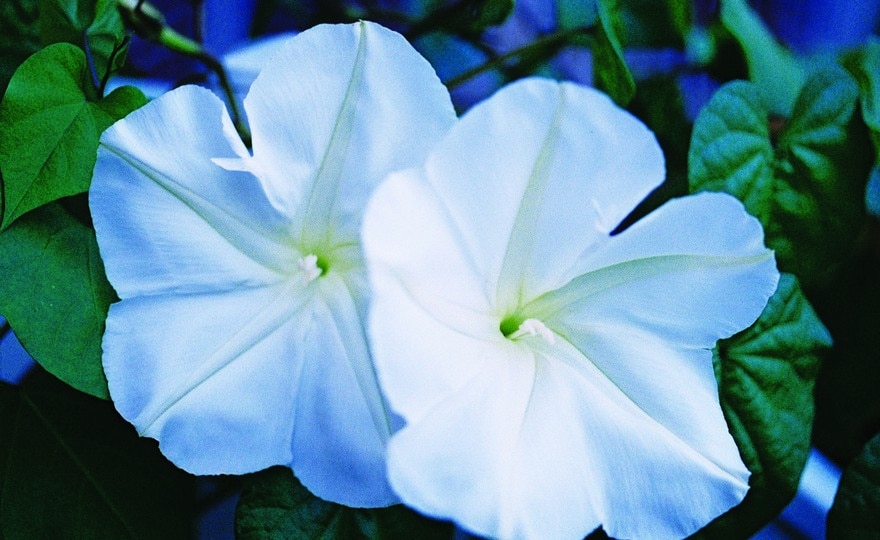
A member of the morning glory family, moonflower is a twinning vine that originated in tropical and subtropical regions of the Americas.
Blooming 5-inch wide pure white flowers, moonflower is the nocturnal counterpart to the morning glory, with fragrant blooms that open after dusk and close at dawn.
- Hardiness: USDA zones 8a to 11
- Light Requirement: Full sun
- Height / Spread: 6 to 15 feet
- Attracts: Hummingbirds and moths
2. Evening Primrose (Oenothera biennis)
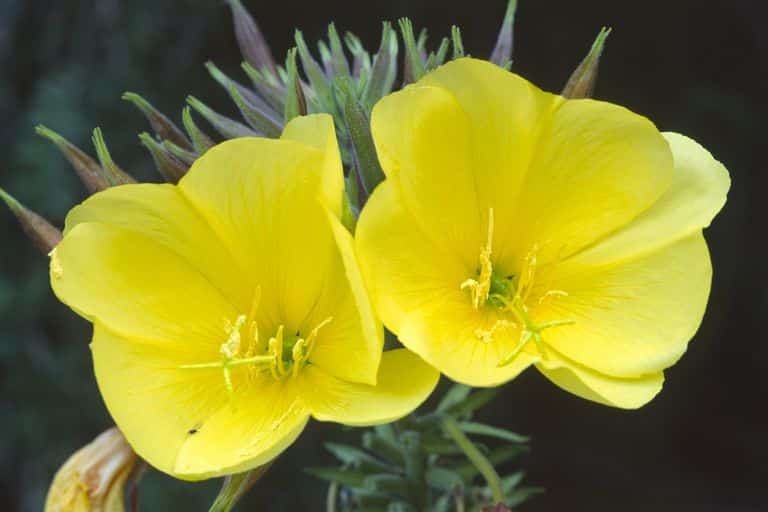
As its name implies, evening primrose flowers only bloom after dusk. The common variety features large yellow flowers that emit a lemony fragrance, but Oenothera speciosa ranges from dark pink to white.
While evening primrose oil is known for its medicinal properties, the plant’s fleshy, succulent roots are edible and its seeds can be used for bird feed.
- Hardiness: USDA zones 5a to 8b
- Light Requirements: Full sun
- Lifecycle: Biennial
- Height: Up to 3 feet
- Spread: From 8 inches to 2 feet
- Attracts: Birds, butterflies, bees, moths
3. Night Phlox (Zaluzianskya capensis)
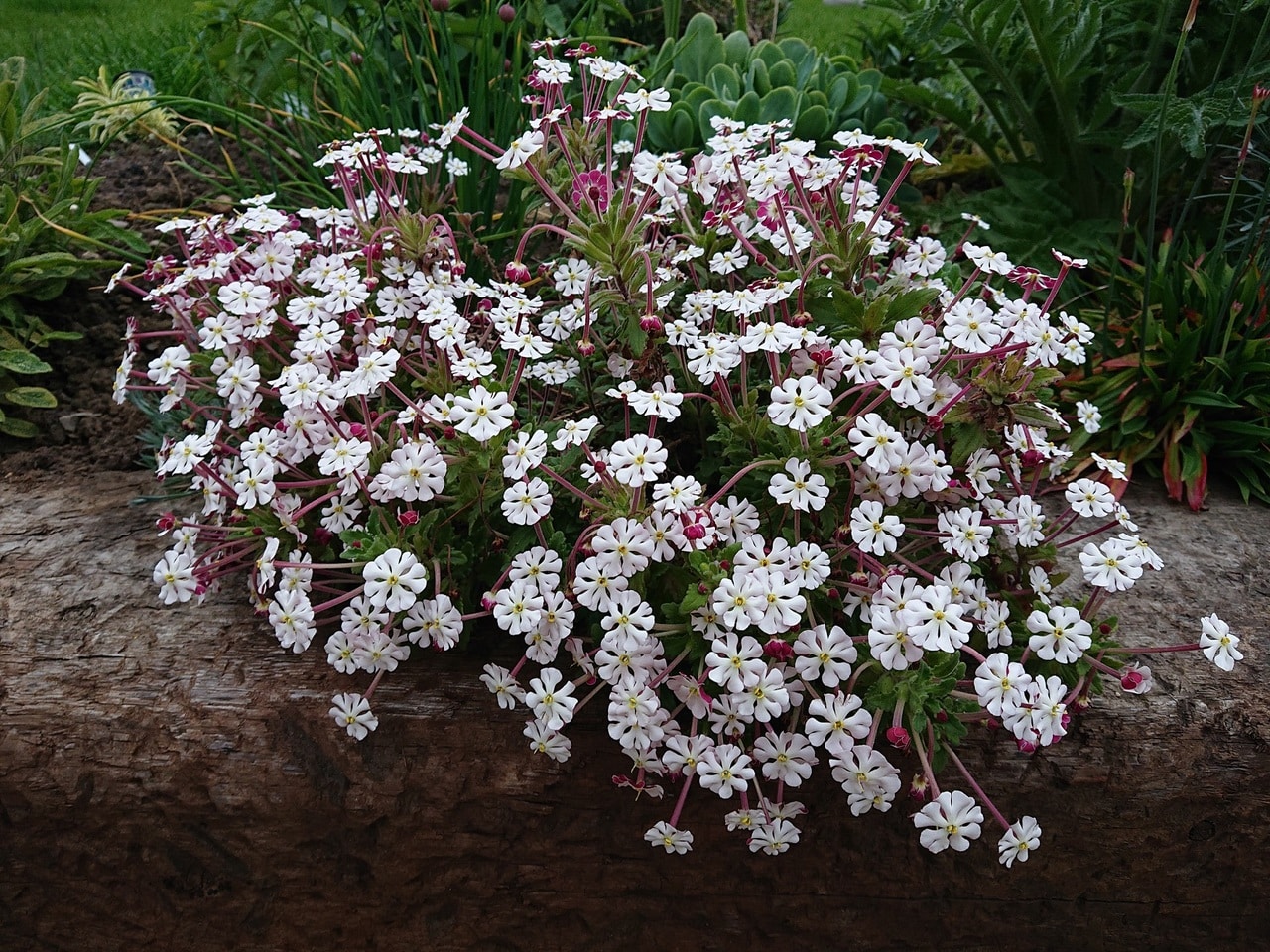
Also dubbed midnight candy due to its powerfully sweet fragrance that is reminiscent of freshly baked goods, night phlox is a must-have in a moonlight garden.
In shades of white, purple, and maroon, night phlox unfurls its pinwheel-shaped blooms once the sun sets.
- Hardiness: USDA zones 9 to 11
- Light Requirements: Full sun to partial shade
- Height / Spread: 12 inches
- Attracts: Birds, bees, butterflies
4. Four O’Clock (Mirabilis jalapa)
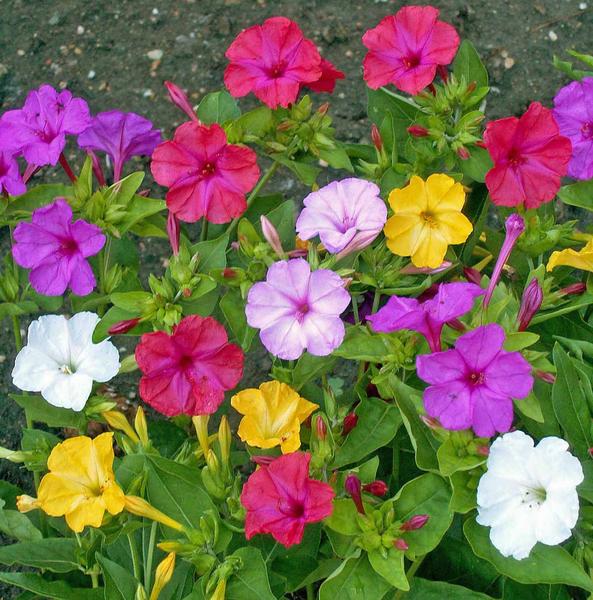
Native to Peru, four o’clocks are bushy perennials that bloom aromatic trumpet-shaped flowers in shades of red, magenta, pink, violet, yellow, or white, though sometimes different colored flowers will blossom on the same plant.
Closed for most of the day, the flowers will bloom come 4 p.m. and close up again the following morning.
- Hardiness: USDA zones 7b to 11
- Light Requirements: Full sun to partial shade
- Height / Spread: 1.5 to 2.5 feet
- Attracts: Hummingbirds, moths
5. Queen of the Night (Epiphyllum oxypetalum)
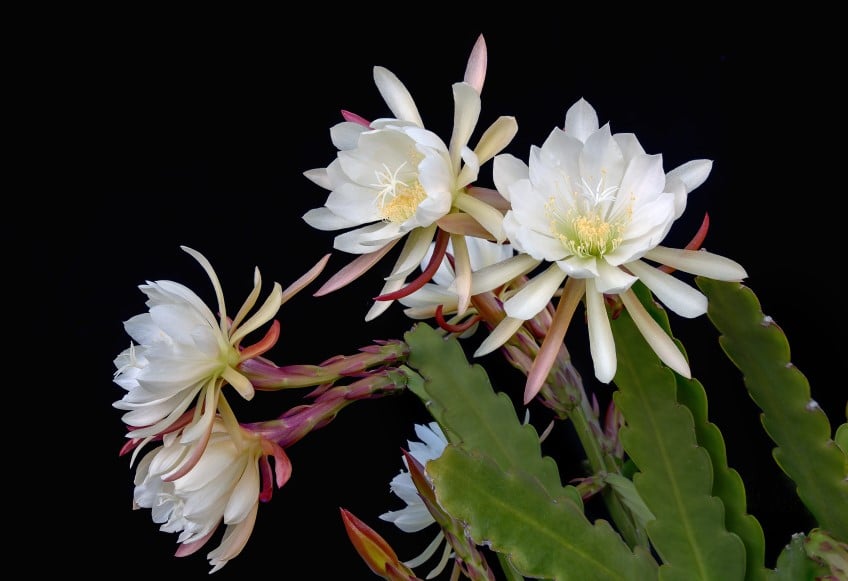
A species of cactus, queen of the night hails from Central and South America and is typically found growing on rocks or trees in its natural setting.
Producing 12-inch wide, exotic white flowers with undulating petals that open only at night, it looks a little like a water lily set upon upright green fronds.
- Hardiness: USDA zones 9 to 11
- Light Requirements: Partial shade
- Height: 5 to 8 feet
- Spread: 3 to 5 feet
- Attracts: Moths and bats
6. Night Blooming Jessamine (Cestrum nocturnum)
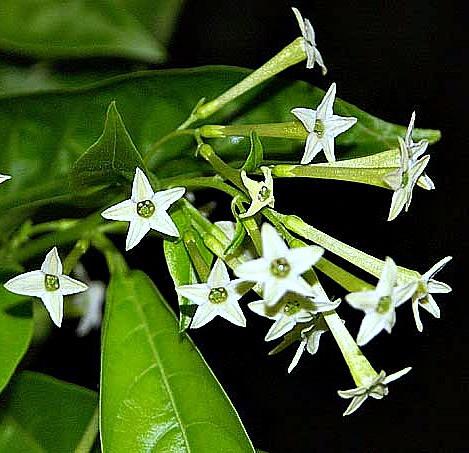
Under the sun, night blooming jessamine is an inconspicuous woody shrub. Toward the evening, its bunches of slender corollas open up with tiny star-shaped white blossoms.
Powerfully sweet in scent, this average-by-day number is well worth the late night wait.
- Hardiness: USDA zones 8b to 11
- Light Requirements: Partial to full sun
- Height: 8 to 10 feet
- Spread: 3 feet
- Attracts: Moths, bats
- Caution: All parts of night blooming jessamine are toxic when ingested
7. Angel’s Trumpet (Brugmansia)
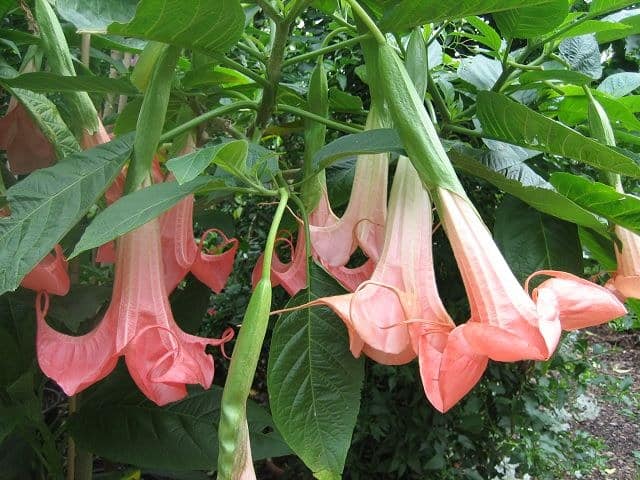
An evergreen shrub with huge, funnel-shaped flowers that droop lazily downward, angel’s trumpet is a gorgeous addition to the garden both day and night.
The blooms can grow to 20 inches in length and up to 12 inches across, in white, yellow, or pink, and radiate an intoxicating scent that is most fragrant on warm summer evenings.
- Hardiness: USDA zones 7b to 11
- Light Requirements: Full sun
- Height: 6 to 10 feet
- Spread: 5 to 10 feet
- Attracts: Birds, hummingbirds
- Caution: All parts of angel’s trumpet are poisonous if eaten
8. Evening Stock (Matthiola longipetala)
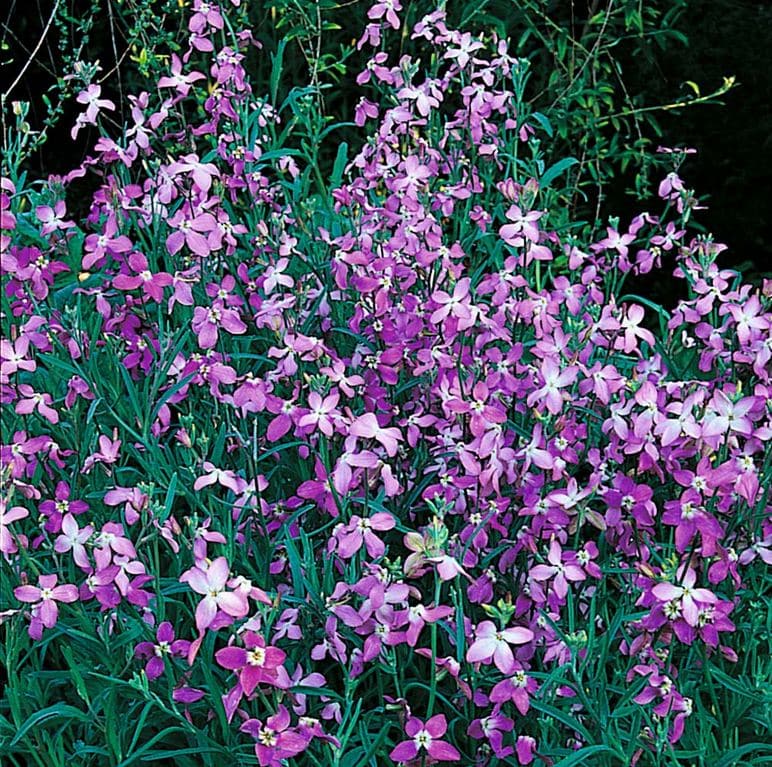
A wildflower originating in Portugal and Spain, evening stock is a pretty little number that is prized more for its fragrance than its good looks.
Tending to wilt under the heat of the sun, the purplish pink petals perk up after sunset when they release their heady perfume, described as a mix of vanilla, rose, spice, and cloves.
- Light Requirements: Full sun
- Lifecycle: Annual
- Height: 12 inches
- Spread: 10 inches
- Attracts: Bees, butterflies
9. Ever-Flowering Gladiolus (Gladiolus tristis)
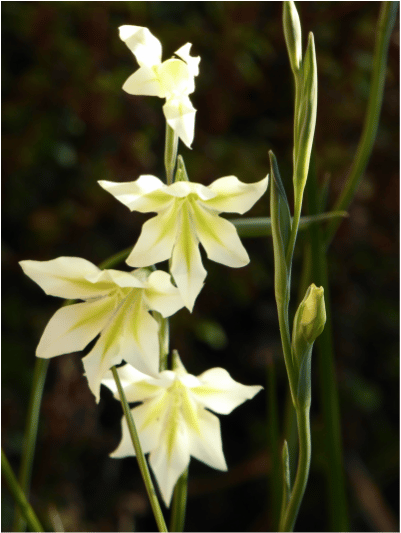
Resembling Hippeastrum, ever-flowering gladiolus has buttery cream petalled flowers perched atop a twisty stalk. They release a strong almond fragrance after dusk.
- Hardiness: USDA zones 8a to 11
- Light Requirements: Full sun
- Height: 2 feet
- Spread: 8 inches
- Attracts: Birds, bees, butterflies
10. Lilac (Syringa vulgaris)
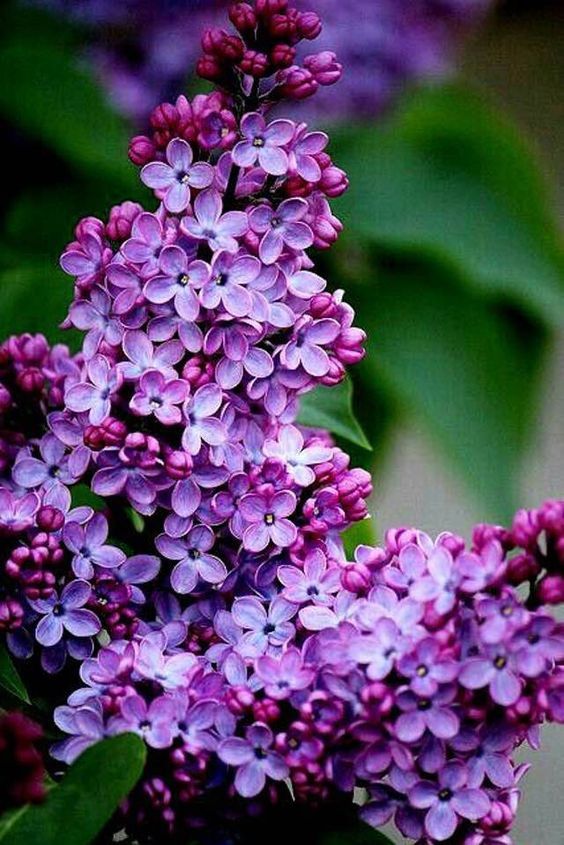
Nothing signifies the coming of spring quite like the unique fragrance of the lilac, which blooms for only two weeks in early May.
This short window can be prolonged by planting mid- and late-blooming varieties along with the common lilac, so you can enjoy its wonderful aroma – that seems so much stronger at night – for about six weeks.
- Hardiness: USDA zones 3 to 7
- Light Requirements: Full sun or partial sun
- Height: 5 to 15 feet
- Spread: 6 to 15 feet
- Attracts: Butterflies
11. Flowering Tobacco (Nicotiana)

Continuously in bloom all season long, flowering tobacco is indeed part of the tobacco family and contains high concentrations of nicotine.
With tubular, five-pointed florets that open in the late afternoon, flowering tobacco begins to release its potent fragrance – which smells like jasmine – all evening long.
- Light Requirements: Full sun to partial shade
- Lifecycle: Annual
- Height: 20 inches to 2 feet
- Spread: 1 to 2 feet
- Attracts: Hummingbirds
- Caution: All parts of flowering tobacco are toxic if ingested
Luminous Foliage & Blooms
Along with night-blooming and night-fragrant flowers, adding plants that will shine under the stars is the crowning touch of the moonlight garden.
You’ll want to select showy flowers in white or other cool colors like light blue, soft yellow, and lavender. Be sure to include reflective non-flowering plants to create a diverse range of textures, shapes, and sizes.
12. Summer Snapdragon (Angelonia angustifolia)
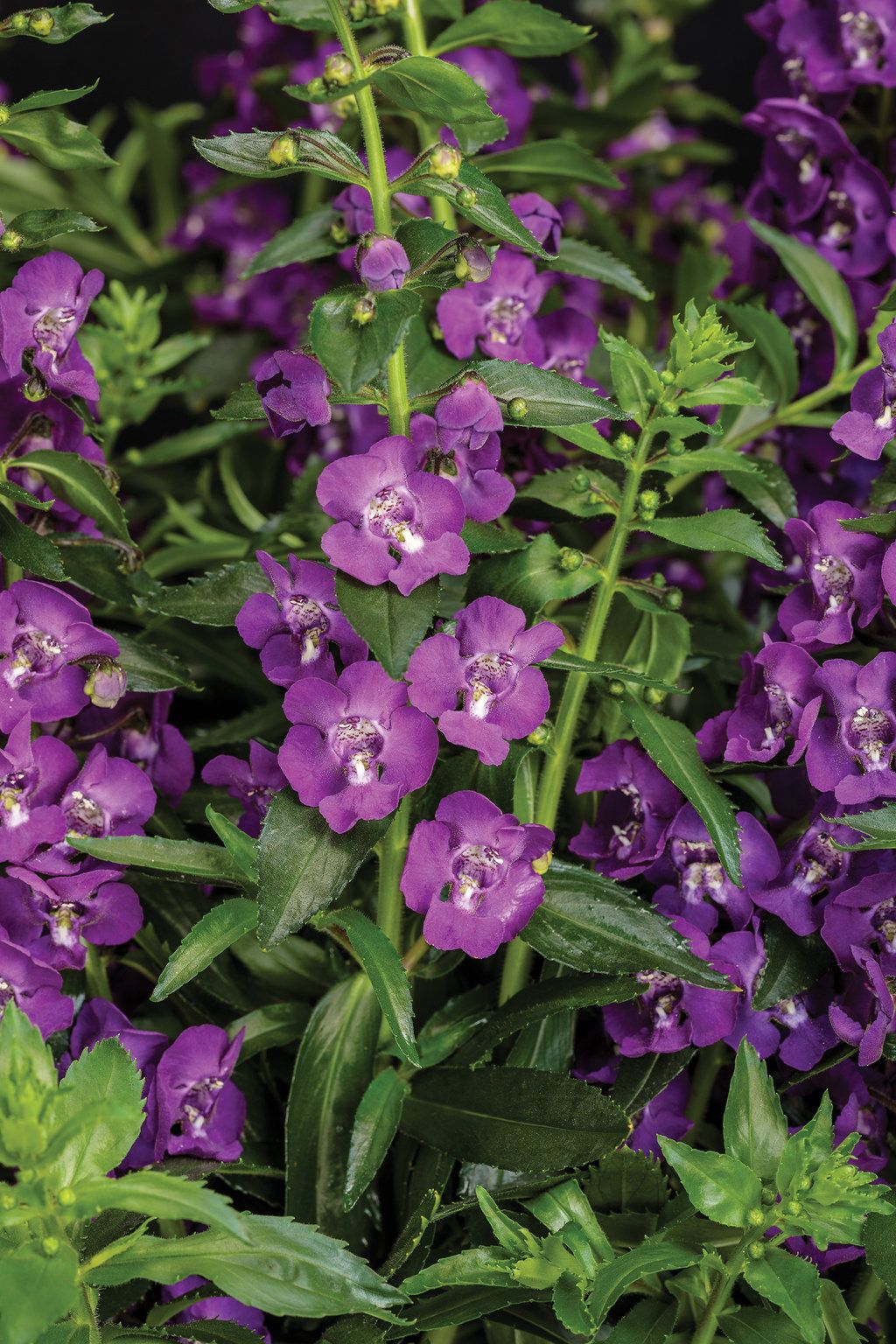
Angelonia received the common name, summer snapdragon, because its long-blooming upright 8-inch spikes resemble those of the popular dragon flower.
Available in several hues, the “serena white” variety is the best choice for a moonlight garden. With apple-scented foliage, summer snapdragons will stay in bloom from June to September.
- Hardiness: USDA zones 9 to 11
- Light Requirements: Full sun
- Height: 12 to 18 inches
- Spread: 12 inches
- Attracts: Birds, butterflies
13. Matilija Poppy (Romneya coulteri)
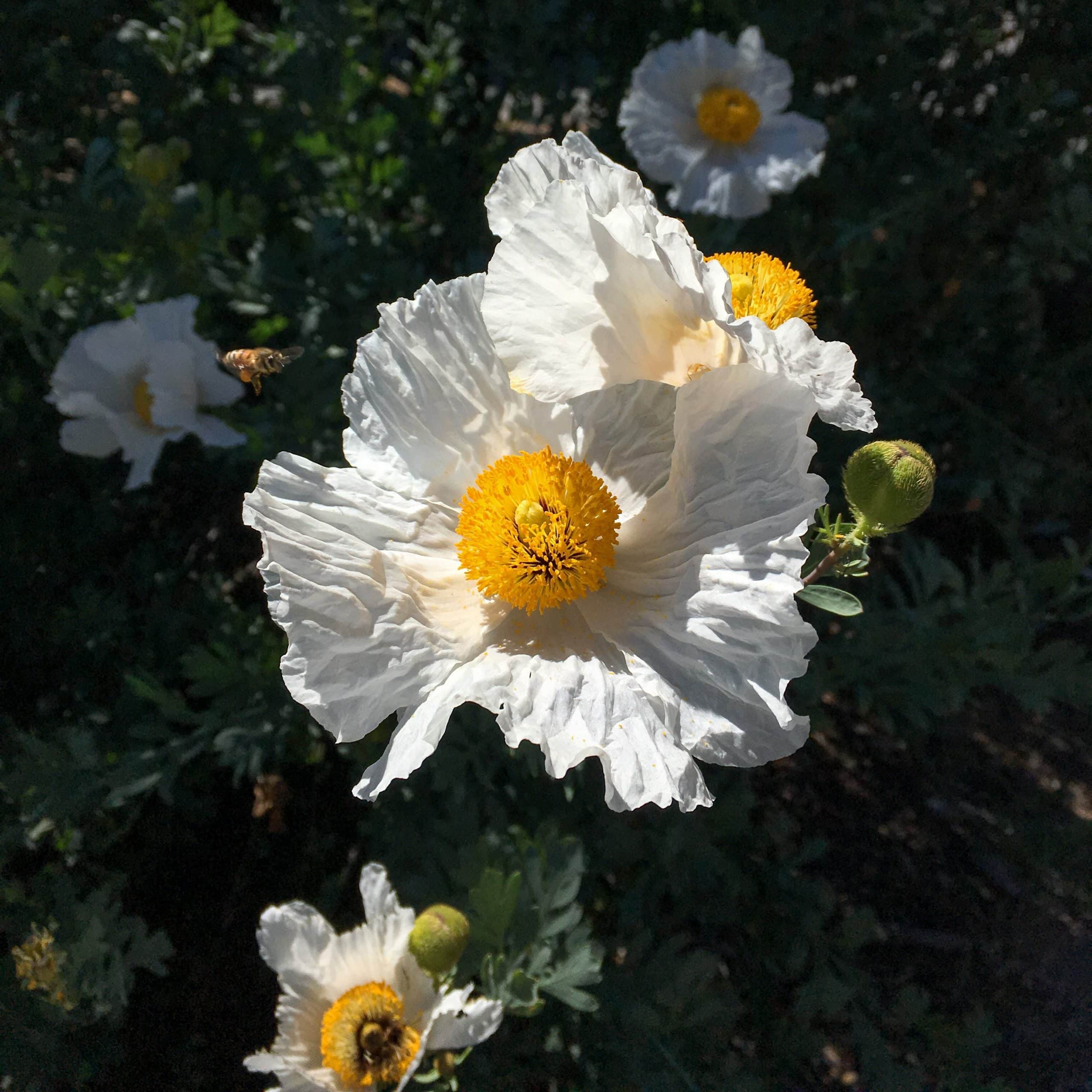
Native to the hot and sandy regions of California and Mexico, the matilija poppy is a large shrub that blooms with enormous nine-inch wide crinkled white petals and an orangey-yellow center.
Sometimes called the fried egg poppy, it can spread indefinitely when left to its own devices so regular pruning is recommended.
- Hardiness: USDA zones 7 to 10
- Light Requirements: Full sun
- Height: Up to 8 feet
- Attracts: Birds, bees, butterflies
14. Silvermound (Artemisia schmidtiana)
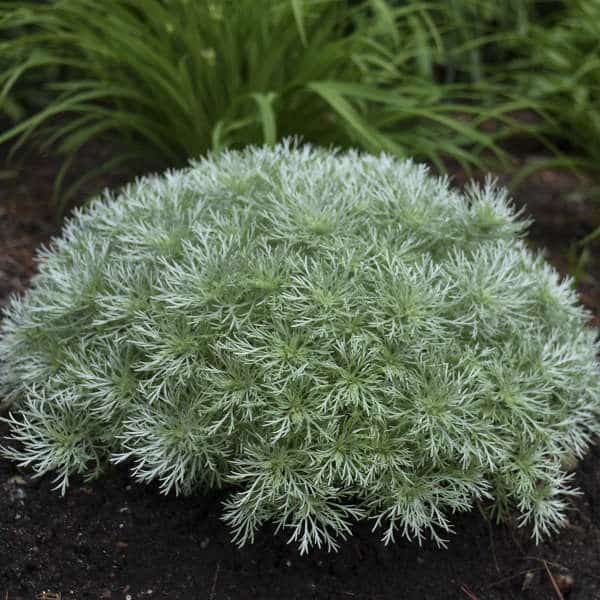
A fast growing perennial, silvermound is finely textured and dense with silver-green needle-like foliage that will shimmer under the light of the moon.
- Hardiness: USDA zones 3 to 9
- Light Requirements: Full sun
- Height: 6 to 12 inches
- Spread: 12 to 18 inches
15. Japanese Painted Fern (Athyrium niponicum ‘Pictum’)
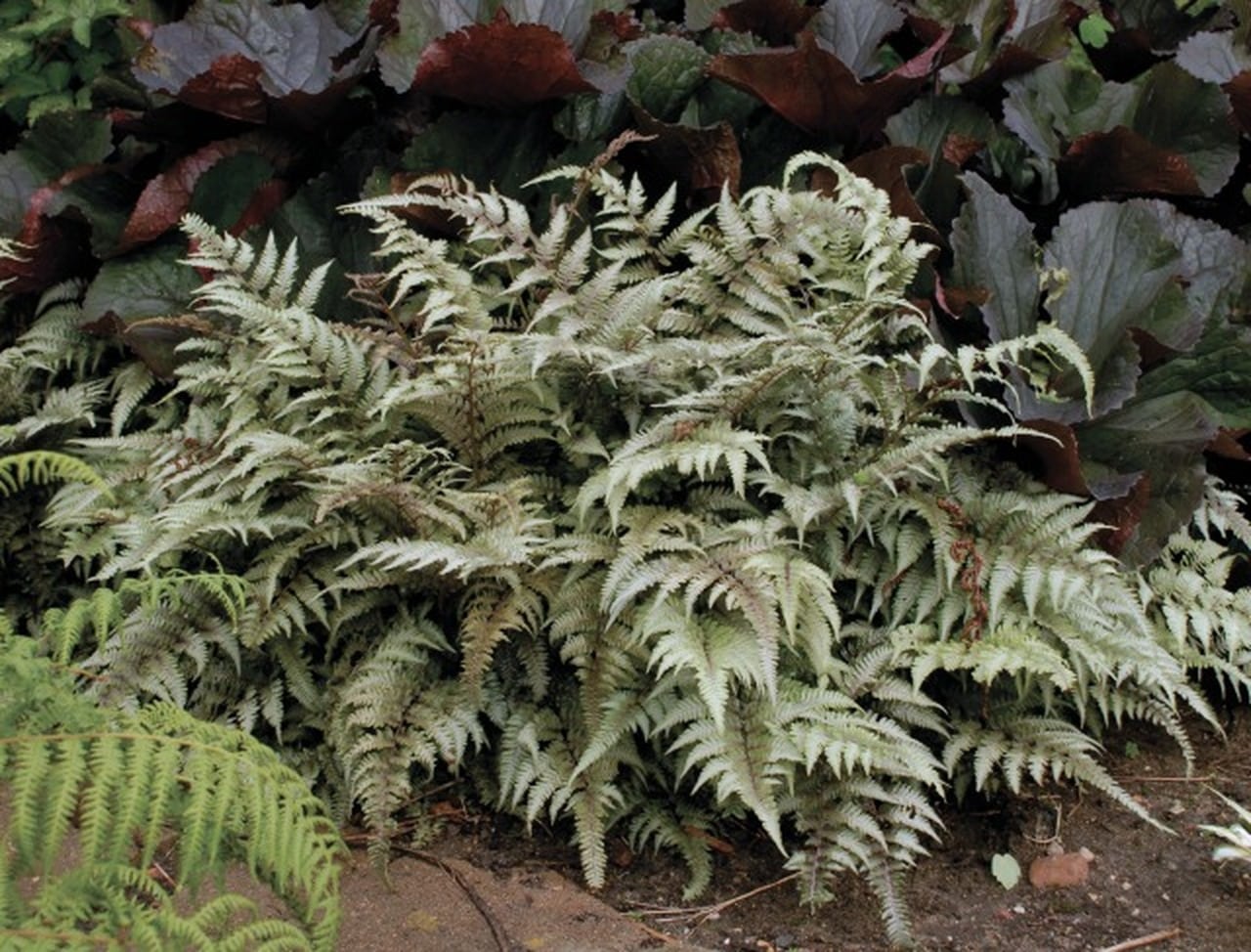
As a good ground cover and border plant, Japanese painted fern adds a note of grace and softness to the flower bed.
The willowy fronds are blue-green with silver edges, perfect for brightening up a shady spot in the garden by day and illuminating pathways by night.
- Hardiness: USDA zones 5 to 8
- Light Requirements: Full to partial shade
- Height / Spread: 18 inches to 2 feet
A moon garden is more than just a collection of night-loving plants — it’s a peaceful, romantic retreat designed for the senses.
By thoughtfully choosing white flowers, fragrant blooms, and silvery foliage, you can create an enchanting landscape that reveals its beauty under moonlight.
Whether you’re relaxing after a long day or entertaining under the stars, your moon garden will greet you with sweet scents, luminous blooms, and soft shadows — making every evening outdoors feel magical.